INTEGRATIVE PAIN MANAGEMENT, MOBILITY SUPPORT & REHABILITATION
Veterinary acupuncture can be a useful part of a comprehensive treatment plan for pets living with chronic pain, arthritis, reduced mobility, muscle tension, neurologic problems or difficulty recovering from an injury or surgery.
At Aliso Beach Animal Clinic, acupuncture is provided by Bryan Hayter, DVM, who completed veterinary acupuncture training through the International Veterinary Acupuncture Society.
Dr. Hayter combines acupuncture with conventional veterinary diagnosis and treatment rather than using it as a substitute for appropriate examination, laboratory testing, imaging, medication or surgery.
Some pets receive acupuncture as part of a broader plan that may also include:
The goal is not simply to place needles. The goal is to understand why your pet is uncomfortable and determine whether acupuncture is likely to provide a meaningful improvement in comfort, mobility or quality of life.
REQUEST AN ACUPUNCTURE CONSULTATION
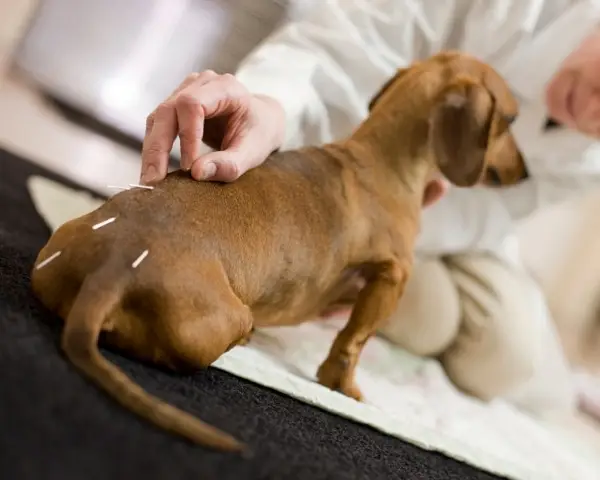
Veterinary acupuncture involves inserting very fine, sterile needles into carefully selected points on an animal’s body.
The treatment originated within traditional Chinese medicine, but modern veterinary acupuncture may also be understood through anatomy, neurology, pain physiology and the connections among nerves, muscles and connective tissues.
The location and number of needles are selected according to:
Acupuncture should be performed by a veterinarian or under appropriate veterinary supervision because the practitioner must first determine whether the patient has a condition requiring medication, imaging, surgery or urgent medical treatment.
The International Veterinary Acupuncture Society promotes veterinary acupuncture as an integrative part of veterinary medicine and provides advanced professional training for veterinarians.
Acupuncture needles provide controlled mechanical stimulation to skin, muscle, connective tissue and nearby nerve structures.
Research suggests that this stimulation may influence pain processing at several levels of the nervous system. Potential effects may include:
These effects do not mean that acupuncture can reverse every underlying disease. For example, it cannot restore worn cartilage, repair a completely torn ligament, remove a tumor or permanently stabilize an unstable joint.
It may still help improve comfort or function while the underlying condition is being medically managed.
The AAHA Pain Management Guidelines include acupuncture among the nonpharmacologic options that may be incorporated into an individualized, multimodal pain-management plan.
Research involving veterinary acupuncture continues to develop. Study quality, treatment technique and measured outcomes differ substantially among published reports.
The practical evidence is strongest for considering acupuncture as a supportive treatment for pain, mobility and rehabilitation—not as a cure for every disease.
Some patients show meaningful improvement, some show modest improvement and some show no clear response.
For that reason, we:
You may review an evidence-based review of veterinary acupuncture for pain management for a more detailed discussion of proposed mechanisms, clinical uses and limitations.
Acupuncture is most commonly considered for conditions involving chronic pain, impaired mobility, muscle tension or neurologic dysfunction.
It may be included in the management of selected pets with:
Acupuncture may also be considered as supportive treatment in selected gastrointestinal or other chronic medical cases. Evidence is more variable for these uses, and appropriate diagnostic testing remains essential.
A consultation does not guarantee that acupuncture will be recommended. Some patients need a clearer diagnosis, stabilization or another form of treatment first.
Arthritis is a progressive condition involving pain, inflammation and changes within a joint. Dogs and cats may compensate for discomfort gradually, making the signs easy to mistake for normal aging.
Possible signs include:
Acupuncture does not remove arthritis or rebuild damaged cartilage. It may help selected patients feel more comfortable and move more easily as one component of a broader arthritis plan.
A multimodal arthritis plan may include:
LEARN ABOUT SENIOR PET CARE & ARTHRITIS MANAGEMENT
LEARN ABOUT THERAPEUTIC LASER TREATMENT
Acupuncture may be considered for selected pets with:
Pain relief does not correct joint instability. A dog with a torn cranial cruciate ligament, unstable kneecap, fracture or another mechanical problem may still require surgical treatment.
Acupuncture should not be used to mask progressive lameness while an unstable joint continues to deteriorate.
LEARN ABOUT ORTHOPEDIC EVALUATION & SURGERY
LEARN ABOUT DIGITAL X-RAYS & VETERINARY IMAGING
Neurologic disorders can affect strength, coordination, balance, bladder control and the ability to walk.
Acupuncture may be used as a supportive component of rehabilitation for selected patients with:
The first priority is determining whether the neurologic condition requires urgent imaging, surgery or emergency treatment.
Seek prompt veterinary care when a pet:
Acupuncture should not delay emergency evaluation of acute paralysis, severe spinal pain or rapidly progressive neurologic signs.
LEARN ABOUT SAME-DAY URGENT VETERINARY CARE
After an injury or operation, pets may develop:
Acupuncture may be considered as part of postoperative rehabilitation once the veterinarian determines that treatment is appropriate for the healing stage.
It does not replace:
LEARN ABOUT VETERINARY SURGERY & PAIN MANAGEMENT
Senior pets often have more than one source of discomfort. Arthritis, spinal disease, muscle loss, chronic medical conditions and medication limitations may overlap.
Acupuncture may be considered when the goal is to:
For pets with advanced or terminal disease, acupuncture is not expected to cure the underlying condition. Treatment is continued only when it contributes to comfort and does not create additional stress.
Chronic pain is complex. One medication or one therapy may not adequately address inflammation, nerve pain, muscle tension, joint instability, excess body weight and reduced strength at the same time.
Multimodal treatment combines therapies that address different aspects of the problem.
For example, a dog with knee arthritis may benefit from:
Acupuncture is not inherently better because it is described as natural, and medication is not inherently worse because it is pharmaceutical. The best plan is the one that provides meaningful benefit with acceptable risk for the individual patient.
EXPLORE HOLISTIC & INTEGRATIVE VETERINARY CARE
LEARN ABOUT PET NUTRITION & WEIGHT MANAGEMENT
Not automatically.
Some pets receiving acupuncture continue to need anti-inflammatory medication, gabapentin, monoclonal-antibody therapy, Adequan or other treatments.
When a pet improves, medication changes should be made only after discussing them with the prescribing veterinarian.
Stopping pain medication too quickly can cause discomfort to return and may make it difficult to determine which part of the treatment plan is helping.
Do not stop:
unless your veterinarian specifically directs you to do so.
Before beginning treatment, Dr. Hayter reviews your pet’s symptoms, medical history, medications, previous testing and current diagnosis.
The examination may include evaluation of:
Bring previous records, laboratory reports and diagnostic images when they were performed elsewhere.
Very fine needles are placed at selected points. The number and location vary according to the patient and treatment goal.
A pet may notice a brief sensation as a needle is inserted. Many pets tolerate the procedure well and become relaxed, but treatment should not be described as completely sensation-free for every animal.
If a patient is frightened, painful or unable to remain comfortable, the plan may be modified or stopped.
Most patients remain awake. Dogs may lie on a padded surface or remain in a comfortable standing or sitting position. Cats may be treated in a position that helps them feel secure.
Owners can often remain with their pets when it helps the patient stay calm.
Session length varies according to the pet’s tolerance, the number of points used and the condition being treated. We do not force a patient to remain in treatment solely to reach a predetermined time.
Some pets appear relaxed or sleepy after treatment. Others resume normal activity without an obvious immediate change.
A pet may occasionally experience temporary soreness, fatigue or a short-lived change in symptoms. Contact us when a change is substantial, persistent or concerning.
Continue prescribed medication and activity restrictions unless Dr. Hayter gives different instructions.
There is no universal schedule.
Frequency depends on:
A pet may begin with more frequent sessions and then move to a longer maintenance interval when improvement is sustained.
Acupuncture should be discontinued or reconsidered when:
Improvement should be measured using observable changes—not simply whether the pet appears relaxed during the appointment.
Before treatment, consider recording your pet:
Useful signs of improvement may include:
Videos taken at home can be helpful because some pets move differently in the clinic.
Acupuncture is generally considered low risk when performed by a properly trained veterinarian after appropriate patient evaluation. Many animals tolerate treatment well.
Possible adverse effects or complications may include:
Acupuncture is not completely risk-free or side-effect-free.
Additional caution may be appropriate when a pet has:
The decision depends on the individual patient, not simply the diagnosis.
Dogs are the most common acupuncture patients at Aliso Beach Animal Clinic, particularly for arthritis, orthopedic pain and mobility concerns.
Cats may also receive acupuncture when they tolerate handling and the treatment is appropriate for the condition.
Selected exotic pets may be candidates, but anatomy, species, temperament and medical stability must be considered carefully. Call before scheduling so we can confirm whether acupuncture is appropriate for your pet’s species.
LEARN ABOUT EXOTIC PET VETERINARY CARE
Acupuncture should not be used to guess at the cause of unexplained pain, weakness or weight loss.
Depending on the symptoms, evaluation may require:
Diagnostics help determine whether acupuncture is appropriate and whether another treatment is more urgent.
LEARN ABOUT PET BLOOD WORK & DIAGNOSTICS
LEARN ABOUT DIGITAL VETERINARY IMAGING
The needles are very fine, and many pets tolerate placement well. Some animals notice a brief sensation or react to particular points. Treatment should be adjusted to the individual pet rather than described as completely painless for every patient.
Most acupuncture patients do not require sedation. A patient who is extremely fearful, painful or unable to remain safely positioned may not be a good candidate for a routine session that day.
Response varies. Some owners observe changes after an early session, while others notice gradual improvement after several treatments. Some patients do not show a meaningful response.
The number depends on the condition, severity and response. Dr. Hayter will recommend an initial plan and reassess whether continued treatment is justified.
No. Acupuncture cannot reverse cartilage loss or eliminate arthritis. It may help manage discomfort and mobility as part of a broader treatment plan.
Not automatically. Many pets benefit most from a combination of medication, weight management, exercise and supportive therapies. Never stop prescribed medication without veterinary guidance.
It may help manage pain in selected patients, but it cannot permanently stabilize a torn ligament, repair a fracture or correct another significant mechanical problem. The need for surgery depends on the diagnosis.
It may be included in postoperative pain management or rehabilitation when the surgeon or attending veterinarian determines that timing and treatment are appropriate.
No. Younger pets with injuries, neurologic conditions or chronic pain may also be candidates. Senior pets are common patients because arthritis and mobility problems become more prevalent with age.
Acupuncture is most useful when there is a defined clinical goal. We do not recommend unnecessary treatment simply because a pet is healthy.
Yes, when the cat’s condition and temperament make treatment appropriate. The session may need to be shorter or modified to reduce stress.
Potentially, for selected patients. Call before scheduling so our team can review the species and medical concern.
Bryan Hayter, DVM, performs veterinary acupuncture. Dr. Hayter trained in veterinary acupuncture through the International Veterinary Acupuncture Society.
Cost depends on the consultation, treatment plan and whether your pet also requires examination, diagnostic testing or another therapy. Our team can provide current pricing when scheduling.
REVIEW VETERINARY PAYMENT OPTIONS
Acupuncture is most useful when it is connected to an accurate diagnosis, realistic treatment goals and a complete medical plan.
Aliso Beach Animal Clinic provides veterinary acupuncture for dogs, cats and selected exotic pets with arthritis, chronic pain, reduced mobility, neurologic concerns and rehabilitation needs.
REQUEST AN ACUPUNCTURE CONSULTATION
Aliso Beach Animal Clinic
30816 Coast Highway
Laguna Beach, CA 92651
Directly across from the Montage Laguna Beach
Monday–Friday: 7:30 a.m.–4:30 p.m.
Saturday: 8:00 a.m.–12:00 p.m.
Sunday: Closed
Medical review: Reviewed and certified for medical accuracy by Bryan Hayter, DVM, Owner and Medical Director. Dr. Hayter completed veterinary acupuncture training through the International Veterinary Acupuncture Society. Last reviewed July 2026.