
Laguna Beach Pet Safety
Foxtails in Dogs in Laguna Beach: Paws, Ears, Nose, Eyes & Skin
Medically reviewed by Bryan Hayter, DVM, Owner and Medical Director of Aliso Beach Animal Clinic. Last reviewed: August 2026.
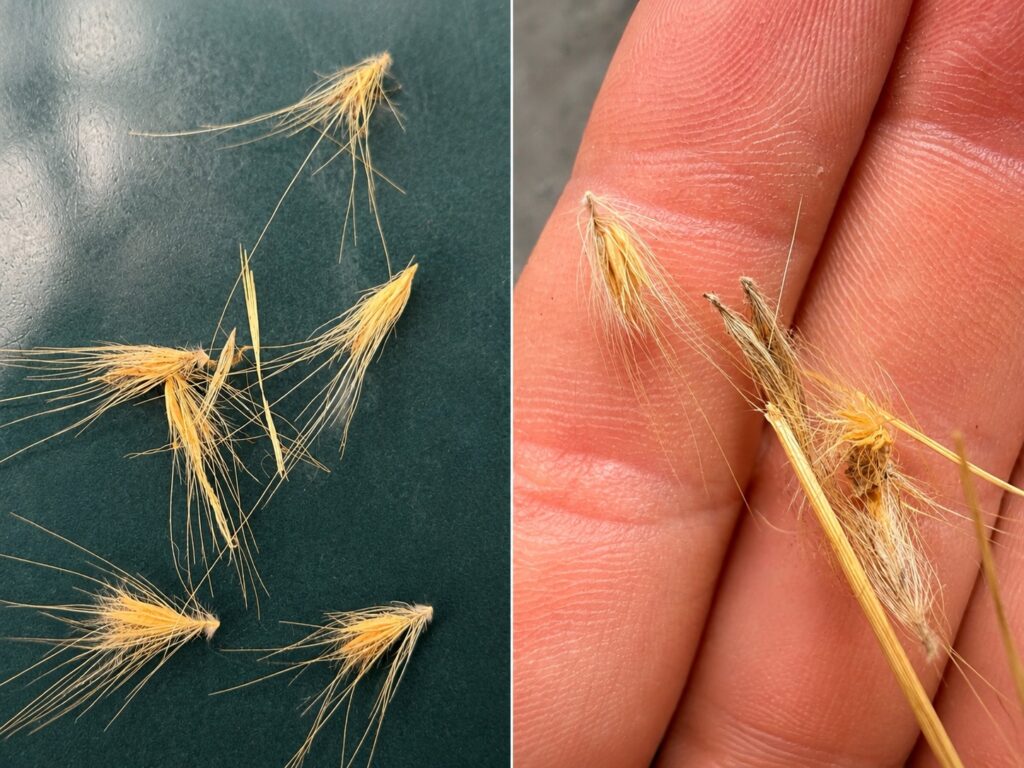
Foxtails are one of the most frustrating and painful local hazards for dogs in Laguna Beach and coastal Orange County. These dry, barbed grass awns can stick to fur, work into the skin, and hide in places that are difficult to see — especially between the toes.
At Aliso Beach Animal Clinic, the paws are one of the most common places we see foxtail problems in dogs. Foxtails can also lodge in the ears, nose, eyes, mouth, armpits, groin, and under the skin.
Treatment usually starts with finding and removing the foxtail. Some cases also need pain control, anti-inflammatory medication, antibiotics, flushing, sedation, bandaging, follow-up visits, or surgery if the foxtail has migrated or cannot be found easily.
If your dog is suddenly limping, licking a paw, shaking their head, sneezing, squinting, or has a swelling or draining wound after being near dry grass, call us during business hours.
Think Your Dog Has a Foxtail?
Call Aliso Beach Animal Clinic promptly if your dog has sudden paw licking, limping, head shaking, sneezing, squinting, swelling, pain, or a draining wound. Foxtails often become harder to find the longer they remain embedded.
Why Foxtails Are So Problematic
Foxtails are not poisonous in the way chocolate or rat bait can be. The danger is mechanical: the awn is shaped like a tiny barbed arrow. Once it enters the coat, skin, ear canal, nose, or paw, it tends to move forward rather than back out.
That is why a foxtail can start as a small irritation and become a painful abscess, infected tract, deep wound, ear infection, nasal problem, eye injury, or migrating foreign body.
In Laguna Beach, dogs may pick up foxtails along trail edges, dry grassy areas, hillsides, sidewalks bordered by weeds, yards, parks, and brushy coastal spaces. Even a short walk can be enough for a foxtail to attach to the fur and work its way inward.
Paws Are One of the Most Common Foxtail Locations
For many dogs, the most common and most easily overlooked foxtail location is the paw — especially between the toes. Dogs walk directly through dry grass and weeds, and foxtails can stick between the toes, under the paw, or near the nail beds.
A paw foxtail may look minor at first. Your dog may simply lick one foot, limp a little, or seem sensitive when you touch the toes. But once the awn buries into the skin, it can create a painful swelling, draining tract, infection, or abscess.
Signs of a foxtail in the paw
- Licking or chewing one paw
- Limping or holding up a foot
- Redness or swelling between the toes
- A small puncture wound
- Drainage, blood, pus, or a moist spot between toes
- Pain when the paw is touched
- A swelling that improves and then comes back
- A recurrent “lump” or draining hole between the toes
Paw foxtails can be hard to find because the entry wound may be tiny, the awn may move deeper, and swelling can hide the opening.
Why Multiple Visits Are Not Uncommon
Foxtail cases can be frustrating because the awn can bury itself into tissue, migrate, break apart, or hide inside swelling and inflammation. Sometimes the body walls off the foxtail and creates an abscess or draining tract. In other cases, the foxtail is suspected but not visible at the first visit.
This is why multiple visits are not uncommon. A dog may need an initial exam and medication, then a recheck if swelling persists, drainage develops, pain continues, or the foxtail works closer to the surface.
Some cases resolve quickly after removal. Other cases need repeated flushing, bandage changes, antibiotics, anti-inflammatory medication, sedation, imaging, or surgery to explore the tract and remove the foreign material.
Common Foxtail Locations and Warning Signs
| Location | Common Signs | Why It Matters |
|---|---|---|
| Paws / between toes | Licking, limping, swelling, redness, drainage, pain | Foxtails can bury into the skin, create abscesses, and require removal or surgery. |
| Ears | Sudden head shaking, ear pain, scratching, head tilt, crying | Foxtails can lodge deep in the ear canal and may require sedation for safe removal. |
| Nose | Sudden sneezing, snorting, pawing at face, nasal discharge, bleeding | Nasal foxtails are painful and can be difficult to retrieve without special equipment or sedation. |
| Eyes | Squinting, tearing, redness, pawing at eye, swelling | Foxtails can scratch the cornea or hide behind the eyelids. Eye signs should be treated promptly. |
| Skin / coat | Swelling, painful lump, draining wound, scab, licking | Foxtails can migrate under the skin and create recurring infection or abscesses. |
| Mouth / throat | Gagging, coughing, drooling, pawing at mouth, trouble swallowing | Foxtails can lodge in the mouth or throat and may need urgent veterinary evaluation. |
How Foxtails Are Treated
The most important treatment for a foxtail is removal. Medication alone may reduce swelling or infection temporarily, but if the foxtail remains embedded, signs can return.
Depending on the location and severity, treatment may include:
- Careful exam of the paw, ear, nose, eye, skin, or wound
- Removal of visible or accessible foxtails
- Clipping fur around the affected area
- Cleaning and flushing a wound or tract
- Pain control
- Anti-inflammatory medication when appropriate
- Antibiotics if infection, abscess, or cellulitis is present or suspected
- Sedation or anesthesia for painful or deep cases
- Surgery if the foxtail has migrated, is buried, or cannot be removed through a small opening
- Recheck visits to make sure pain, swelling, drainage, or infection is resolving
The earlier the foxtail is found and removed, the simpler treatment is likely to be. Once a foxtail has migrated or caused an abscess, care can become more involved.
Why Antibiotics Alone May Not Fix a Foxtail
Antibiotics can help treat infection when bacteria are involved, but they do not remove the foreign body. If a foxtail is still present, a dog may improve for a short time and then start limping, licking, swelling, or draining again.
This is one reason foxtail cases sometimes require rechecks or a second procedure. The goal is not only to calm infection and inflammation, but to find and remove the source whenever possible.
When Surgery May Be Needed
Surgery may be recommended when a foxtail is deeply buried, has migrated under the skin, is associated with a persistent draining tract, or cannot be removed safely during a basic exam.
Paw cases sometimes require surgical exploration between the toes if the foxtail has moved deeper into the tissue. Ear, nasal, eye, chest, abdominal, or deeply embedded foxtail cases may require advanced diagnostics, specialized equipment, or referral depending on location and severity.
If surgery or referral is the safest option, our team will explain why and help you understand the next step.
Learn more about our pet surgery services.
What You Can Do at Home Before the Visit
If the foxtail is loose and clearly sitting on top of the coat, you can gently remove it. After walks, check your dog’s paws, ears, armpits, belly, groin, tail, and face.
However, if a foxtail is embedded, painful, bleeding, draining, inside the ear, near the eye, in the nose, or between swollen toes, do not dig for it at home. Probing with tweezers can push it deeper, break it apart, or cause more pain.
Do not:
- Dig deeply between the toes with tweezers
- Put ear drops in a painful ear unless directed by a veterinarian
- Flush the nose
- Apply peroxide, alcohol, or harsh disinfectants to a wound
- Give human pain medication
- Wait several days if swelling, limping, or drainage is present
How to Check Your Dog for Foxtails After Walks
A quick foxtail check after walks can prevent many problems. This is especially important after hikes, trail walks, yard time, or any exposure to dry grass or weeds.
- Check between every toe. Spread the toes and look for barbed seed heads, redness, swelling, or small punctures.
- Look under the paws. Check pads, nail beds, and the fur between pads.
- Check ears. Look for grass awns around the ear openings and watch for head shaking.
- Check the face. Look around the eyes, nose, lips, beard, and whisker area.
- Check armpits and groin. Foxtails often hide where the skin folds and the coat is thicker.
- Brush the coat. Remove loose plant material before it works toward the skin.
- Watch for delayed signs. Limping, swelling, sneezing, or head shaking may start hours or days later.
Dogs at Higher Risk for Foxtails
Any dog can get a foxtail, but some dogs are more likely to pick them up or hide them in the coat.
- Dogs who hike, run, or walk near trails or dry grass
- Dogs with long coats, feathered legs, or hairy paws
- Dogs with floppy ears
- Dogs who sniff deeply into brush
- Dogs who chase wildlife or explore yard edges
- Dogs who frequently visit parks, open space, or canyon areas
Keeping paw fur trimmed, brushing after walks, using booties in high-risk areas, and avoiding dry weed patches can reduce risk.
Foxtails in Cats and Exotic Pets
Dogs are the most common foxtail patients, but cats can also pick up grass awns, especially outdoor cats or cats who spend time in yards and brush. Cats may hide pain, so watch for limping, swelling, licking, wounds, squinting, sneezing, head shaking, or sudden behavior changes.
Exotic pets are less commonly exposed, but any animal with outdoor access, hay exposure, bedding contamination, or access to dry grasses can develop irritation or injury from sharp plant material. Call us if your exotic pet has swelling, wounds, eye irritation, abnormal breathing, reduced appetite, or sudden behavior changes.
Learn more about our exotic pet care in Laguna Beach.
When to Call Aliso Beach Animal Clinic
Call us during business hours if your pet has any signs of a possible foxtail, especially if symptoms started after walking through dry grass, trails, weeds, or brush.
| Symptom | Recommended Next Step |
|---|---|
| Licking one paw, limping, swelling between toes | Call Aliso Beach Animal Clinic for urgent care guidance. |
| Head shaking, ear pain, crying, or sudden ear scratching | Call promptly. Ear foxtails can be painful and may need sedation for safe removal. |
| Sudden sneezing, snorting, or nasal bleeding | Call promptly. Nasal foxtails can be difficult to locate and may need urgent evaluation. |
| Squinting, red eye, tearing, or pawing at the eye | Call right away. Eye injuries should not wait. |
| Swelling, draining wound, abscess, or recurring lump | Call for an exam. These signs may mean an embedded or migrating foxtail. |
| Severe pain, collapse, breathing trouble, or after-hours emergency | Call a 24-hour veterinary emergency hospital immediately. |
Quick Takeaways
- Foxtails are barbed grass awns that can bury into tissue.
- Paws, especially between the toes, are one of the most common problem areas we see.
- Treatment is removal whenever possible.
- Antibiotics and anti-inflammatory medication may help, but they do not remove the foxtail.
- Multiple visits are not uncommon because foxtails can migrate, hide, or create draining tracts.
- Surgery may be needed for deep, buried, or recurring foxtail cases.
- Prompt care can make treatment simpler and more successful.
Foxtail Care in Laguna Beach
Aliso Beach Animal Clinic is an independently owned veterinary clinic serving Laguna Beach, South Laguna, Aliso Beach, Three Arch Bay, Monarch Beach, Dana Point, Laguna Niguel, and nearby coastal communities.
If your dog is limping, licking a paw, shaking their head, sneezing, squinting, or has a swelling or draining wound after being near dry grass, call us during business hours. Foxtail cases are common, painful, and often easier to treat when addressed early.
Need Foxtail Removal or Urgent Care?
Call Aliso Beach Animal Clinic during business hours so our team can help you decide the safest next step.
Aliso Beach Animal Clinic
30816 Coast Hwy
Laguna Beach, CA 92651
For after-hours emergencies, major trauma, severe breathing trouble, or pets needing overnight intensive care, call the nearest 24-hour veterinary emergency hospital before driving.
Related Aliso Beach Animal Clinic Resources
Trusted External Resources
Frequently Asked Questions
Where do dogs most commonly get foxtails?
At Aliso Beach Animal Clinic, paws — especially between the toes — are one of the most common places we see foxtail problems. Foxtails can also lodge in ears, noses, eyes, mouths, armpits, groin areas, and under the skin.
Why does my dog need another visit for a foxtail?
Multiple visits are not uncommon because foxtails can bury into tissue, migrate, break apart, or hide inside swelling and inflammation. Rechecks may be needed if pain, drainage, limping, or swelling continues.
Can antibiotics cure a foxtail problem?
Antibiotics may help treat infection, but they do not remove the foxtail. If the foreign body remains embedded, signs can return after medication is finished.
What is the treatment for a foxtail?
Treatment is removal whenever possible. Depending on the case, pets may also need pain control, anti-inflammatory medication, antibiotics, flushing, sedation, bandaging, rechecks, or surgery.
When does a foxtail need surgery?
Surgery may be needed when the foxtail is deeply buried, has migrated under the skin, is associated with a persistent draining tract, or cannot be safely removed during a basic exam.
Should I try to remove a foxtail at home?
If the foxtail is loose and clearly sitting on top of the coat, you can gently remove it. If it is embedded, painful, draining, inside the ear, near the eye, in the nose, or between swollen toes, call a veterinarian instead of digging for it at home.
Are foxtails an emergency?
Foxtails are often urgent rather than life-threatening, but they should be addressed promptly. Eye signs, nasal signs, severe pain, swelling, draining wounds, or sudden head shaking should not wait.