


Medically reviewed by Bryan Hayter, DVM, Owner and Medical Director of Aliso Beach Animal Clinic. Last reviewed September 2026.
Is there really a difference between a veterinary clinic and an animal hospital?
The answer is more nuanced than the name on the sign. In everyday veterinary medicine, the words clinic and animal hospital can overlap. A facility’s name alone does not tell you whether it can provide intravenous fluids, immediate laboratory testing, diagnostic imaging, oxygen support, hospitalization, specialist image interpretation, anesthesia, or urgent surgery.
For pet owners, a more useful question is: What can this veterinary team actually do if my pet becomes seriously sick or injured?
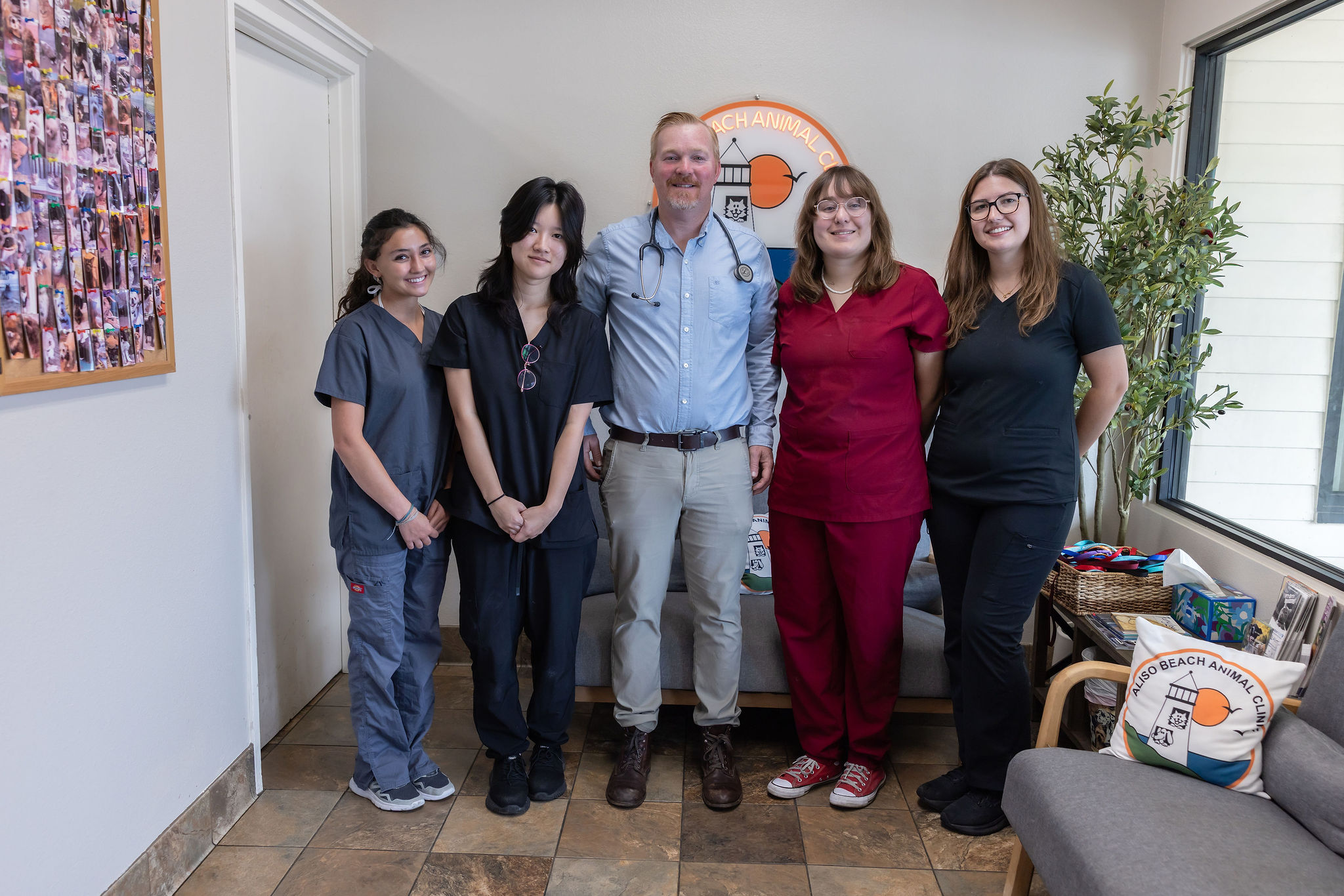
At Aliso Beach Animal Clinic, an independently owned veterinary clinic and animal hospital in Laguna Beach, our capabilities extend from preventive and routine medicine to in-house diagnostics, digital imaging, hospitalization, urgent stabilization, and surgery for selected patients.
We care for dogs, cats, and many exotic pets from our Coast Highway location directly across from the Montage Laguna Beach, serving families throughout Laguna Beach, South Laguna, Three Arch Bay, Monarch Beach, Dana Point, and nearby coastal Orange County communities.
Veterinary Clinic vs. Animal Hospital: What Do the Terms Mean?
There is substantial overlap between veterinary clinics and animal hospitals. Both may provide examinations, vaccinations, preventive care, treatment of illness, dentistry, and other veterinary services.
The more meaningful distinction is often the level of medical capability available inside the facility.
A full-service animal hospital may have resources that allow the veterinary team to move beyond an examination and outpatient prescription when a patient needs additional care.
Those capabilities can include:
- Intravenous catheterization and IV fluid therapy
- Hospitalization and medical monitoring
- STAT or same-visit laboratory testing
- Digital radiography
- Specialist radiology consultation
- Ultrasound and advanced imaging access
- Oxygen supplementation
- Emergency stabilization
- Procedures to remove abnormal air or fluid from body cavities
- Anesthesia
- Soft-tissue surgery
- Urgent or emergency surgery in appropriately selected cases
The American Animal Hospital Association (AAHA) Standards of Accreditation address areas such as patient care, laboratory medicine, diagnostic imaging, anesthesia, surgery, dentistry, pain management, and emergency and critical care when evaluating accredited companion-animal hospitals.
AAHA accreditation is voluntary, and the important takeaway for pet owners is not simply whether a practice uses the word hospital or clinic. Ask what medical, diagnostic, surgical, and stabilization resources are actually available when your pet needs them.
What Does Hospital-Level Veterinary Care Look Like?
Consider a dog that arrives because it has been vomiting repeatedly and has suddenly become weak.
An examination is only the beginning. The veterinarian may need to determine whether the patient is dehydrated, anemic, infected, experiencing pancreatitis, suffering from an intestinal obstruction, developing organ dysfunction, or facing another potentially serious condition.
The ability to perform several steps in one location can matter:
- Examine and triage the patient.
- Place an IV catheter when indicated.
- Begin fluid therapy or stabilization.
- Run immediate laboratory tests.
- Obtain digital X-rays.
- Request rapid specialist interpretation when imaging is uncertain or complex.
- Provide medications and supportive care.
- Proceed to surgery when appropriate or arrange transfer when the patient needs a higher level of critical care.
This ability to move efficiently from symptom → examination → diagnostics → stabilization → treatment is one of the practical advantages of a veterinary hospital with robust on-site capabilities.
STAT In-House Laboratory Testing: Why Speed Can Matter
When an animal is acutely ill, laboratory testing can provide information that is difficult or impossible to obtain from the physical examination alone.
At Aliso Beach Animal Clinic, our in-house veterinary laboratory and diagnostic services allow us to obtain important information during many same-day visits rather than sending every sample to an outside laboratory.
Depending on the case, testing may help assess:
- Red and white blood cells
- Platelets
- Anemia or blood loss
- Dehydration
- Kidney function
- Liver-related abnormalities
- Blood glucose
- Protein concentrations
- Electrolytes
- Evidence of inflammation or infection
- Other metabolic abnormalities
A laboratory result by itself is not a diagnosis. The veterinarian interprets the results together with the physical examination, symptoms, history, imaging, and the way the patient is responding to treatment.
Digital X-Rays With Rapid Board-Certified Radiologist Consultation
Diagnostic imaging becomes especially valuable when a veterinarian needs to look beyond the physical examination.
Aliso Beach Animal Clinic provides high-quality digital veterinary X-rays and diagnostic imaging in Laguna Beach. Digital studies are available for our veterinarians to review shortly after they are obtained.
When a study is complex, subtle, unusual, or medically urgent, we can submit the complete images and clinical history to a board-certified veterinary radiologist.
For medically urgent cases, STAT specialist consultation is available, with a complete written radiologist report often returned in under two hours. Actual turnaround varies with specialist availability, image quality, transmission time, and case complexity.
A veterinary radiologist has completed advanced postgraduate specialty training specifically in diagnostic imaging. The American College of Veterinary Radiology explains the training and role of board-certified veterinary radiologists and the use of advanced imaging in veterinary medicine.
Specialist interpretation can be particularly valuable when evaluating:
- Difficulty breathing
- Possible pneumonia
- Heart or chest abnormalities
- Major trauma
- Suspected fractures
- Possible gastrointestinal obstruction
- Abdominal distention
- Urinary stones
- Internal bleeding
- Masses or unusual organ changes
Aliso Beach Animal Clinic can also coordinate specialist abdominal ultrasound when ultrasound is the more appropriate imaging modality.
IV Fluids and Hospitalization
IV fluid therapy can be an important part of treating dehydration, circulatory problems, gastrointestinal disease, kidney disease, metabolic disorders, and many other medical conditions.
Placing an intravenous catheter also gives the veterinary team reliable vascular access when a patient needs medications, fluid support, or rapid treatment.
Hospital care may include:
- IV fluid therapy
- Injectable medications
- Pain control
- Anti-nausea treatment
- Repeated physical assessments
- Monitoring of temperature and vital signs
- Nutritional or other supportive care when indicated
- Follow-up laboratory testing
The appropriate level of monitoring depends on the patient’s illness and stability.
Aliso Beach Animal Clinic provides hospitalization during our regular business hours, but we are not a 24-hour intensive-care hospital. Patients requiring continuous overnight monitoring, mechanical ventilation, advanced critical care, or another resource beyond our capabilities may need transfer to an appropriate 24-hour emergency or specialty facility.
Oxygen and Emergency Stabilization
A pet in respiratory distress must be handled differently from a stable patient with a routine problem. Excessive restraint, unnecessary movement, or delaying stabilization for diagnostic testing can sometimes make a critical respiratory patient worse.
Our hospital can provide emergency stabilization measures including flow-by oxygen when clinically appropriate.
Veterinary emergency medicine prioritizes the most immediately life-threatening problems first. The Merck Veterinary Manual guidance on dog and cat emergencies describes rapid assessment of airway, breathing, and circulation as fundamental to emergency triage and stabilization.
Once a patient is sufficiently stable, laboratory testing, radiographs, ultrasound, or other diagnostics may help determine why the animal is having difficulty breathing.
Thoracocentesis and Abdominocentesis: When Fluid or Air Must Be Removed
Some seriously ill animals develop abnormal fluid or air inside a body cavity.
Thoracocentesis
Thoracocentesis involves placing a needle or catheter into the chest cavity to remove abnormal air or fluid surrounding the lungs.
In an animal struggling to breathe because the lungs cannot expand normally, removing that air or fluid can sometimes provide critical relief while also producing a sample that may help identify the underlying disease.
Abdominocentesis
Abdominocentesis involves obtaining fluid from the abdominal cavity. Depending on the situation, the procedure may help determine whether abnormal abdominal fluid represents blood, urine, inflammatory fluid, infection, or another process.
These procedures are performed only when medically indicated. A veterinarian first considers the patient’s stability, examination findings, imaging, and suspected disease.
Veterinary Surgery: Routine Surgery Is Only Part of Hospital Care
Many people associate veterinary surgery with planned procedures such as spays, neuters, dentistry, or mass removal.
A full-service hospital may also need to manage surgical disease that cannot wait weeks for a routine appointment.
Our veterinary surgical services in Laguna Beach include planned procedures as well as selected medically necessary and urgent surgeries.
Depending on patient stability, diagnostic findings, staffing, surgical resources, and anticipated aftercare needs, urgent surgical cases may include:
- Gastrointestinal foreign bodies and obstructions
- Bladder stones requiring surgical removal
- Serious wounds and selected traumatic injuries
- Selected abdominal emergencies
- Gastric dilatation-volvulus (GDV or bloat) when immediate surgery at our hospital is clinically appropriate
- Other urgent soft-tissue conditions
Not every surgical emergency should remain at a daytime general hospital.
A critically unstable patient, a pet requiring continuous postoperative intensive care, or a case requiring specialty surgery or resources unavailable at our hospital may be safer going directly to a 24-hour emergency or specialty center.
Making that distinction is itself part of good hospital medicine.
Veterinary Hospital Care for Cats: Why Feline Patients Deserve Special Attention
Cats are not simply small dogs. Their physiology, behavior, medication responses, disease patterns, and responses to stress differ in important ways.
For families looking for a cat veterinarian in Laguna Beach, hospital capability matters because several common feline problems can progress rapidly and may require laboratory testing, imaging, IV therapy, oxygen, hospitalization, or immediate intervention.
A Male Cat Straining in the Litter Box May Have an Emergency
One of the most important feline emergencies for owners to recognize is urethral obstruction.
A blocked cat may repeatedly enter the litter box, strain, vocalize, lick the genital area, produce only tiny drops of urine, or produce no urine at all. Owners sometimes mistake this for constipation.
Male cats are particularly vulnerable because their urethra is relatively narrow.
A complete urinary obstruction is a medical emergency. The Cornell Feline Health Center’s guidance on feline lower urinary tract disease explains that complete urethral obstruction requires immediate veterinary treatment.
As urine backs up, potentially dangerous changes in kidney function, hydration, acid-base balance, and blood electrolytes can develop.
If your cat is repeatedly straining and producing little or no urine, do not wait to see whether the problem resolves overnight.
Breathing Difficulty in Cats Is an Emergency
Cats with respiratory distress may become quiet, crouch with their chest elevated, extend their head and neck, breathe rapidly, or use their abdominal muscles noticeably when breathing.
Open-mouth breathing in a cat is particularly concerning.
Possible causes include heart disease, asthma, pneumonia, trauma, fluid surrounding the lungs, masses, and other chest disease.
A distressed cat may need oxygen and stabilization before extensive diagnostics are attempted.
Cats Often Hide Illness
Cats may show surprisingly subtle signs even when they are significantly ill. Changes such as hiding, decreased interaction, altered grooming, reduced appetite, sleeping in an unusual location, or suddenly avoiding the litter box can be medically meaningful.
That makes careful history-taking, physical examination, weight comparison, and appropriately selected diagnostics particularly important in feline medicine.
Hospitalization Should Also Consider a Cat’s Emotional Health
Modern feline veterinary guidelines emphasize reducing unnecessary fear and stress during examination, treatment, and hospitalization.
The Feline Veterinary Medical Association’s evidence-based practice guidelines provide veterinary teams with recommendations for feline-friendly handling, clinical care, and other aspects of cat medicine.
Whenever the medical situation allows, feline patients benefit from thoughtful handling, minimizing unnecessary restraint, maintaining warmth and comfort, and adapting procedures to the individual cat rather than forcing every patient through exactly the same process.
For cats requiring hospitalization, the medical team must balance the need for treatments such as IV therapy and repeated monitoring with the importance of reducing unnecessary environmental stress.
What Should Cat Owners Look for When Searching for a Cat Vet Near Me?
Convenience matters, but proximity alone should not be the only consideration when choosing veterinary care for a cat.
Useful questions include:
- Can the practice perform in-house laboratory testing?
- Are digital X-rays available?
- Can complex X-rays be reviewed by a veterinary radiologist?
- Can the hospital administer IV fluids?
- Can the team provide oxygen when needed?
- Does the veterinarian recognize feline urinary obstruction as an emergency?
- Can the practice hospitalize a sick cat during business hours?
- Is surgery available if diagnostic testing identifies a surgical problem?
- Does the team know when a cat should be transferred to a 24-hour facility?
- Is handling adapted to the individual cat’s medical and emotional needs?
Aliso Beach Animal Clinic provides comprehensive veterinary care for cats as part of our Laguna Beach veterinary services, including preventive medicine, diagnostics, dentistry, surgery, same-day urgent care, pain management, and management of chronic disease.
Urgent Care vs. Emergency Hospital: Where Should My Pet Go?
A hospital can have significant emergency capabilities without being a 24-hour emergency center.
Aliso Beach Animal Clinic provides same-day urgent veterinary care in Laguna Beach and evaluates many sudden illnesses and injuries during regular business hours.
Depending on the patient, we may be able to provide diagnostic testing, IV fluids, oxygen, hospitalization, imaging, wound treatment, procedures, or surgery.
However, some patients should go directly to a 24-hour emergency hospital.
Potentially life-threatening signs include:
- Severe difficulty breathing
- Collapse or loss of consciousness
- Uncontrolled bleeding
- Major trauma
- Repeated or prolonged seizures
- Suspected urinary obstruction
- Severe abdominal distention with weakness or unproductive retching
- Severe shock
- Rapidly worsening neurologic signs
- Other conditions requiring continuous critical-care monitoring
If you are unsure, call us before coming. Our team can help determine whether Aliso Beach Animal Clinic is an appropriate destination or whether your pet should go directly to a 24-hour emergency facility.
For additional general information about emergency triage and stabilization, see the Merck Veterinary Manual’s emergency care overview.
Why Diagnostic Capability Matters Before Surgery
The ability to perform surgery is only one part of surgical care.
Before an urgent procedure, the veterinarian may need to know whether a patient is dehydrated, anemic, experiencing electrolyte abnormalities, has evidence of organ dysfunction, or has imaging findings that change the surgical plan.
For example:
- Bloodwork may reveal anemia while imaging helps identify a possible source of internal bleeding.
- Vomiting and abdominal pain may prompt laboratory testing followed by X-rays to investigate an intestinal obstruction.
- Abnormal kidney values combined with urinary symptoms may lead to imaging for bladder or urinary stones.
- Chest abnormalities may benefit from rapid board-certified radiologist interpretation before deciding on treatment.
Hospital medicine works best when examination, laboratory testing, imaging, anesthesia, surgery, and postoperative care are considered as parts of one clinical picture rather than isolated services.
What Does a Board-Certified Veterinary Radiologist Add?
Veterinarians interpret radiographs every day, but some imaging studies benefit from another level of expertise.
A board-certified veterinary radiologist completes years of advanced postgraduate training focused specifically on diagnostic imaging.
The American College of Veterinary Radiology provides additional information for pet owners about veterinary imaging specialists and the role of diagnostic imaging.
At Aliso Beach Animal Clinic, specialist review can be requested when an X-ray contains subtle, complex, or urgent findings. The radiologist reviews the images together with relevant clinical history and provides a formal written interpretation.
This can help with decisions involving:
- Whether additional imaging is necessary
- Whether findings are more consistent with one disease than another
- Whether an apparent abnormality may be clinically significant
- Whether treatment, surgery, referral, or follow-up imaging should be considered
What Should I Look for When Searching for an Animal Hospital Near Me?
If your pet is healthy and simply needs a routine examination, many veterinary practices may be able to provide excellent care.
The differences become more important when your pet suddenly becomes ill.
Before you need urgent care, consider asking your veterinary practice:
- Do you have an in-house laboratory?
- Can you obtain digital X-rays onsite?
- Can you obtain rapid specialist interpretation of imaging?
- Do you offer IV fluid therapy?
- Can you provide oxygen support?
- Can you hospitalize patients during the day?
- Do you perform urgent soft-tissue surgery?
- Can you evaluate dogs, cats, and the species I own?
- What happens if my pet needs overnight intensive care?
- How do you determine when referral is safer than continuing treatment onsite?
Those answers tell you much more about a facility’s capabilities than whether its name contains the word clinic or hospital.
An Animal Hospital Serving Laguna Beach and Monarch Beach
Aliso Beach Animal Clinic has cared for local pets for more than three decades from our South Laguna location at 30816 Coast Highway.
Our hospital is directly across from the Montage Laguna Beach and convenient for pet owners throughout Laguna Beach, South Laguna, Three Arch Bay, Monarch Beach, Dana Point, and nearby communities.
As an independently owned and veterinarian-led practice, we combine comprehensive hospital capabilities with the continuity and personal decision-making of a locally owned veterinary team.
Our services include:
- Preventive and wellness medicine
- Dog and cat veterinary care
- Exotic pet veterinary care
- In-house laboratory diagnostics
- Digital X-rays and specialist radiology consultation
- Specialist abdominal ultrasound
- IV fluid therapy and daytime hospitalization
- Same-day urgent veterinary care
- Veterinary surgery
- Emergency stabilization during regular business hours when appropriate
Frequently Asked Questions
Is an animal hospital always better than a veterinary clinic?
No. The words in a practice name do not by themselves determine quality. Look at the veterinarians, medical philosophy, diagnostic capabilities, surgical resources, hospital equipment, communication, and ability to manage your pet’s actual needs.
Does Aliso Beach Animal Clinic provide emergency veterinary care?
We evaluate many urgent illnesses, injuries, and selected veterinary emergencies during regular business hours. Our capabilities include in-house laboratory testing, digital radiography, IV fluids, oxygen support, stabilization, daytime hospitalization, selected emergency procedures, and surgery when appropriate.
We are not a 24-hour emergency hospital. Some critically ill pets should go directly to a facility providing continuous emergency and intensive care.
Can you get a radiologist to review an X-ray the same day?
Yes. When medically indicated, digital X-rays can be submitted for STAT consultation with a board-certified veterinary radiologist. A complete written specialist report is often available in under two hours, although actual turnaround depends on specialist availability, image quality, transmission time, and case complexity.
Can Aliso Beach Animal Clinic hospitalize my pet?
Yes, selected patients can receive hospitalization, IV fluids, medications, monitoring, and supportive care during regular business hours. Pets requiring continuous overnight intensive care may need transfer to a 24-hour hospital.
Do you provide urgent veterinary care for cats?
Yes. Cats with sudden illness, vomiting, urinary problems, wounds, pain, appetite changes, respiratory symptoms, or other concerning changes can often be evaluated through our same-day urgent-care service during regular business hours when availability allows.
A cat with severe breathing difficulty, open-mouth breathing, collapse, or suspected urinary obstruction should be treated as an emergency.
Can you treat a blocked male cat?
A suspected urethral obstruction is an emergency and requires immediate veterinary assessment. Call before coming so our team can assess the situation and determine the safest destination based on the cat’s condition, current hospital capacity, and the level of monitoring or treatment likely to be required.
Does an animal hospital need to have surgery?
Surgical capability is an important component of full-service hospital medicine, but the procedures offered vary among hospitals. Just as important is knowing when a patient requires a specialty surgeon or 24-hour postoperative critical care.
Veterinary Clinic and Animal Hospital Care in Laguna Beach
If your pet needs more than a routine office visit, having diagnostic, medical, and surgical resources available in one location can make the path from examination to treatment more efficient.
At Aliso Beach Animal Clinic, our goal is not to perform every possible procedure on every patient. It is to determine what your pet needs, what we can safely provide, and when referral offers the better level of care.
For routine veterinary care, diagnostics, surgery, or a sudden illness or injury, call our Laguna Beach veterinary team.
Aliso Beach Animal Clinic
30816 Coast Highway
Laguna Beach, CA 92651
Directly across from the Montage Laguna Beach
(949) 499-4190
Monday–Friday: 7:30 a.m.–4:30 p.m.
Saturday: 8:00 a.m.–12:00 p.m.
Sunday: Closed
LEARN ABOUT OUR LAGUNA BEACH ANIMAL HOSPITAL | SAME-DAY URGENT CARE | DIAGNOSTICS & BLOODWORK
About the Medical Reviewer
Bryan Hayter, DVM is the Owner and Medical Director of Aliso Beach Animal Clinic. Dr. Hayter received his Doctor of Veterinary Medicine degree from Auburn University and completed an internship at the San Diego Zoo. His clinical work includes internal medicine, diagnostics, surgery, dentistry, urgent care, and exotic-animal medicine.
Veterinary Sources & Further Reading
This article was developed using current veterinary guidance and professional standards from the American Animal Hospital Association, Merck Veterinary Manual, American College of Veterinary Radiology, Cornell Feline Health Center, and Feline Veterinary Medical Association.
- American Animal Hospital Association — Standards of Accreditation
Professional standards addressing areas including patient care, laboratory medicine, diagnostic imaging, anesthesia, surgery, dentistry, pain management, and emergency and critical care. - Merck Veterinary Manual — Evaluation and Initial Treatment of Dog and Cat Emergencies
Veterinary guidance covering emergency triage, stabilization, airway and breathing concerns, circulation, shock, trauma, urinary obstruction, and other acute conditions. - American College of Veterinary Radiology — Information for Pet Owners
Information about board-certified veterinary radiologists, specialty training, and diagnostic imaging in veterinary medicine. - Cornell Feline Health Center — Feline Lower Urinary Tract Disease
Veterinary information about feline urinary disease, clinical signs, risk factors, and the emergency nature of complete urethral obstruction. - Feline Veterinary Medical Association — Practice Guidelines
Evidence-based feline veterinary guidelines addressing cat-friendly interaction, handling, clinical care, hospitalization, and other aspects of feline medicine.
This article provides general educational information and does not replace an individualized veterinary examination, diagnosis, or treatment recommendation. If your pet is experiencing severe breathing difficulty, collapse, uncontrolled bleeding, major trauma, repeated seizures, suspected urinary obstruction, or another potentially life-threatening emergency, seek veterinary care immediately.