
Pet Blood Work & Veterinary Diagnostics in Laguna Beach
When your dog is vomiting, your cat is drinking more water, or a senior pet is losing weight, the right diagnostic test can help explain what is happening—and guide the next medical decision.
Aliso Beach Animal Clinic offers in-house veterinary blood work and diagnostic testing for dogs, cats and many exotic pets in Laguna Beach. We combine a hands-on examination with carefully chosen blood tests, urinalysis, microscopy, reference-laboratory testing and imaging when medically appropriate.
Our approach is not to order every available test. We start with your pet’s symptoms, examination, species, age, previous results and your concerns, then explain which tests may answer a useful clinical question. Many routine results can be available during the visit or later that day; specialty tests and imaging may take longer.
Quick answer: A CBC checks blood-cell counts, a chemistry panel evaluates biochemical and organ-related markers, and a urinalysis assesses urine concentration and urinary abnormalities. These tests are complementary, not interchangeable. Additional tests—such as pancreatic lipase, thyroid hormones, cortisol testing, or abdominal imaging—are selected according to the suspected condition.
In-House Veterinary Laboratory Testing at Aliso Beach Animal Clinic
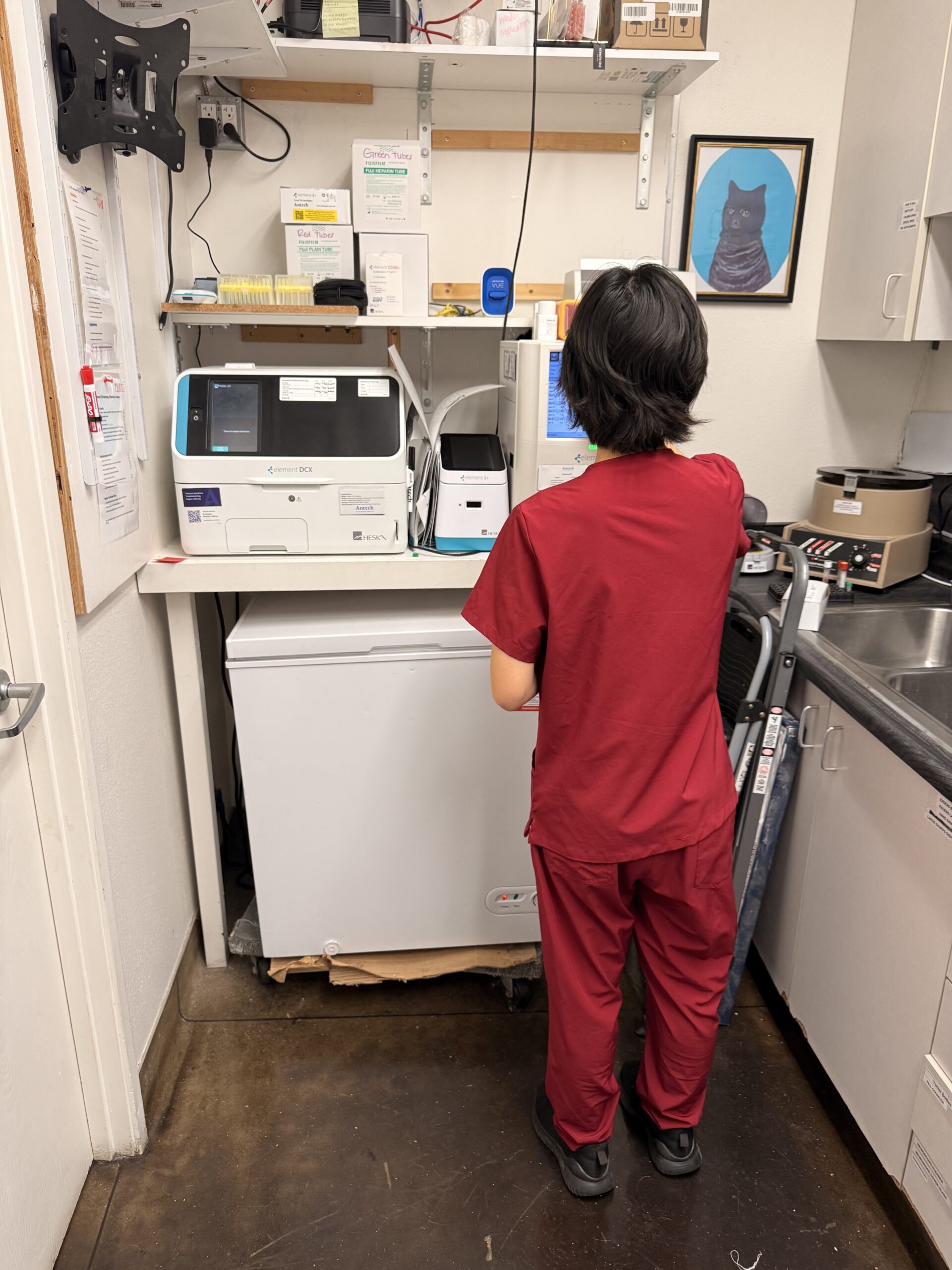
Our Laguna Beach laboratory allows our team to evaluate many common health concerns without automatically sending every sample off site. In-house capabilities may include complete blood counts, blood-chemistry profiles, electrolytes, blood glucose, urine testing, selected infectious-disease screening and microscopic evaluation. Which tests are available during a particular visit depends on the patient’s needs, sample and equipment.
In-house testing is especially valuable when a dog or cat becomes ill suddenly, needs an anesthesia evaluation, or requires monitoring for an existing condition. Fast testing is not a substitute for interpretation: our veterinarian relates the findings to the patient rather than treating a flagged laboratory number as a diagnosis by itself.
When Do We Use Specialty Reference Laboratories?
Some medical questions require tests not routinely run by a general-practice laboratory. Depending on the case, we may submit samples to the Texas A&M Gastrointestinal Laboratory, Michigan State University Veterinary Diagnostic Laboratory, or another appropriate reference laboratory. Turnaround, specimen handling, shipping and cost vary by assay. We explain these details before testing whenever possible.
Our diagnostic philosophy: Choose the test most likely to change care, explain what it can and cannot tell us, then decide together whether further testing, treatment, monitoring or referral is appropriate.
What Do Common Dog and Cat Blood Tests Show?
Complete Blood Count (CBC)
A CBC evaluates red blood cells, white blood cells and platelets. It can help investigate anemia, blood loss, inflammatory or infectious patterns, platelet abnormalities and some bone-marrow problems. Abnormal white-cell numbers do not independently prove a bacterial infection, and automated platelet counts sometimes require a blood-smear review to evaluate clumping or cell appearance.
Blood Chemistry Panel
A chemistry profile measures substances associated with metabolism and organ health, often including creatinine, blood urea nitrogen (BUN), liver-associated enzymes, bilirubin, albumin, glucose, calcium and phosphorus. Different panels contain different tests. An elevated BUN does not always mean kidney failure: hydration status, diet, gastrointestinal bleeding and other factors may contribute. Chemistry results are interpreted with urinalysis, examination findings and trends over time.
Electrolytes and Blood Glucose
Sodium, potassium, chloride and related values provide information about fluid and acid-base balance. Abnormalities may accompany vomiting, diarrhea, kidney disease, urinary obstruction, adrenal disease or certain medications. Glucose measurements are useful in evaluating diabetes, weakness, increased thirst and urination, or some emergency presentations. Stress can transiently elevate glucose, particularly in cats; repeat testing, urinalysis or fructosamine may be needed to clarify the picture.
| Test | May help evaluate | Important limitation |
|---|---|---|
| CBC | Anemia, inflammation patterns, white cells, platelets | Cell counts alone rarely establish a specific diagnosis |
| Chemistry | Kidney and liver markers, proteins, glucose, minerals | Abnormal values can have multiple causes |
| Electrolytes | Sodium, potassium, chloride and selected acid-base concerns | Severity and clinical context determine urgency |
| Urinalysis | Urine concentration, sediment, glucose, protein and infection clues | A negative sample may not exclude every urinary disease |
| Specialty assays | Pancreatic, intestinal, thyroid, adrenal or calcium disorders | Each assay answers a specific question and requires interpretation |
For additional background, see the Cornell University eClinPath clinical-chemistry resource .
Veterinary Urinalysis and Urine Specific Gravity: Why They Matter
A blood panel cannot reveal everything about urinary function. Urinalysis adds information about urine concentration, pH, protein, glucose, ketones, blood, crystals, cells, bacteria and casts. It is especially useful when a pet has increased thirst, frequent urination, urinary accidents, blood in the urine or elevated kidney-related blood values.
What Does Low Urine Specific Gravity Mean in a Dog or Cat?
Urine specific gravity (USG) compares the density of urine with water and helps assess concentration. A single dilute urine sample does not automatically indicate kidney failure: recent drinking, fluids, medications and physiologic variation can affect it. However, urine that is persistently or inappropriately dilute in a dehydrated or azotemic pet may warrant evaluation for impaired concentrating ability or other conditions.
Potential considerations include kidney dysfunction, Cushing’s disease, Addison’s disease, diabetes insipidus, hypercalcemia, liver disease, pyometra in an intact female, medication effects and primary polydipsia. Diabetes mellitus is different: urine glucose can increase USG even when the pet is drinking and urinating excessively. The clinician must assess blood glucose and urine glucose rather than equating polyuria with dilute urine.
Why Order a Urine Culture?
When bacterial infection is suspected, especially with recurring signs or complicating disease, a culture and susceptibility test may help identify the organism and appropriate treatment. A veterinarian may recommend cystocentesis—a sterile collection from the bladder—to reduce contamination. Bacteria suspected on sediment examination do not always establish a true infection.
External references: Cornell eClinPath urinalysis and International Renal Interest Society urine-specific-gravity guidance .
Texas A&M GI Panels, Pancreatic Lipase and Vitamin B12 Testing
Dogs and cats with chronic diarrhea, recurring vomiting, unexplained weight loss, weight loss despite a strong appetite or suspected malabsorption may require testing beyond a routine blood panel. Depending on history and initial results, our veterinary team may recommend assays through the Texas A&M Gastrointestinal Laboratory.
TLI: Testing for Exocrine Pancreatic Insufficiency
Trypsin-like immunoreactivity (TLI) is used primarily to diagnose exocrine pancreatic insufficiency (EPI), a condition in which the pancreas does not produce enough digestive enzymes. Signs can include weight loss, large or frequent stools, chronic diarrhea and sometimes increased appetite.
PLI: Evaluating Possible Pancreatitis
Pancreatic lipase immunoreactivity (PLI) can help support an evaluation for pancreatitis. Dogs may show vomiting, abdominal pain and reduced appetite. Cats may have more subtle signs such as reduced appetite, lethargy or hiding. PLI is not interpreted by itself; clinical findings and sometimes imaging remain important.
Cobalamin (Vitamin B12) and Folate
Low cobalamin may accompany chronic intestinal disease or EPI and can be associated with poor absorption. Folate provides additional information in selected gastrointestinal evaluations. The veterinarian determines whether supplementation or further intestinal investigation is indicated.
These tests are not necessary for every pet with one loose stool. They are selected when a specialized result would help distinguish among meaningful diagnoses. See the Texas A&M GI Laboratory’s official assay guide and our chronic diarrhea evaluation and management guide .
Thyroid, Cortisol and Other Endocrine Blood Tests
Thyroid Testing for Dogs With Low Energy or Weight Gain
Dogs with hypothyroidism may show lethargy, weight gain, cold intolerance, hair thinning, poor coat quality or recurrent skin problems. However, a low total T4 alone does not prove hypothyroidism. Illness and certain medications can lower thyroid measurements. Depending on the clinical question, we may recommend free T4, TSH or other components of a thyroid profile.
Thyroid Testing for Cats With Weight Loss or Excessive Appetite
Older cats with hyperthyroidism may lose weight despite normal or increased appetite, become more vocal or restless, or develop increased thirst, vomiting or an elevated heart rate. A total T4 is often informative, although some early cases need additional or repeat testing.
Cortisol Tests for Cushing’s Disease and Addison’s Disease
When examination, symptoms and baseline lab work raise concern for adrenal disease, tests may include a resting cortisol in a selected Addison’s evaluation, ACTH stimulation testing, or a low-dose dexamethasone suppression test. The right assay depends on which disease we are investigating. A dog drinking excessively, panting and developing thin skin presents a different question from a weak, vomiting dog with concerning electrolytes.
Specialized thyroid and adrenal testing may be submitted to an appropriate laboratory, including the Michigan State University VDL endocrinology section .
Ionized Calcium and Parathyroid Hormone Testing
Most chemistry panels measure total calcium. But total calcium is affected by factors including blood-protein concentration and does not always reflect biologically active calcium. If calcium values are persistently abnormal—or clinical signs raise particular concern—our veterinarian may recommend ionized calcium testing.
In selected cases, ionized calcium and parathyroid hormone (PTH) help distinguish disorders of calcium regulation. A PTH result must be interpreted relative to the simultaneously measured ionized calcium, not simply as “normal” or “abnormal” in isolation. Evaluation may also involve kidney function, medications, nutrition, vitamin D exposure, masses and other findings.
Testing availability matters. Michigan State’s laboratory has reported a prolonged interruption to its PTHrP testing and malignancy profile in 2026. Those assays should not be assumed available. We verify current assay availability, specimen requirements and appropriate alternatives before making a specific recommendation. See MSU’s calcium-disorders guide .
Fecal Testing, Ear Cytology, Skin Samples and Infectious-Disease Screening
Fecal and Parasite Testing
Stool testing may be recommended for puppies, kittens, newly adopted pets, animals with gastrointestinal signs or those with relevant travel or outdoor exposure. Depending on the case, tests may evaluate Giardia, roundworms, hookworms, whipworms, coccidia or other causes. A single negative sample does not exclude all parasites, since shedding may be intermittent. Learn about our parasite prevention and screening approach .
Ear and Skin Cytology
Microscopic review of ear or skin samples can help detect yeast, bacteria and inflammatory cells and guide treatment for itchy pets, recurring ear infections or skin lesions. Some cases need culture, skin scraping, fungal testing or biopsy. See our veterinary dermatology and ear-infection services .
Infectious-Disease Screening
Heartworm and selected infectious-disease tests may be recommended according to species, symptoms, travel, lifestyle and preventive history. Test choice and follow-up depend on what each assay can detect; a negative screening result is not always the end of the evaluation.
How Blood Work, X-Rays, Ultrasound and CT Fit Together
Blood and urine tests evaluate circulating cells, chemical indicators and excreted substances. Diagnostic imaging shows anatomy and may reveal structural changes that bloodwork cannot. A pet with elevated liver enzymes might benefit from abdominal ultrasound; a vomiting pet with an obstruction concern may need radiographs or additional imaging. More advanced testing is not always the right first test.
Digital Veterinary X-Rays in Laguna Beach
Our digital radiography service can help evaluate chest disease, fractures, joint conditions, abdominal changes, selected foreign bodies and some urinary stones. When appropriate, images may be sent for board-certified veterinary radiologist interpretation, including urgent specialist review. Read about digital X-rays, radiology consultations and mobile CT options .
Specialist Abdominal Ultrasound
Abdominal ultrasound provides information about the internal architecture of the liver, kidneys, spleen, intestines, pancreas, gallbladder and other structures. At ABAC, these studies are performed at our hospital by Leyla Fatourechi, DVM, DACVECC, a board-certified emergency and critical care veterinarian, when clinically indicated. Appointments are typically coordinated within one to three days, subject to availability and urgency. A critically ill patient must not wait for a scheduled study. Learn about our specialist abdominal ultrasound service .
Advanced Imaging and CT
Selected cases may benefit from mobile CT scanning coordinated at our clinic, under general anesthesia, with interpretation by a board-certified radiologist. Whether radiography, ultrasound, CT or referral is appropriate depends on the medical question and the patient’s stability.
When Might Your Pet Need Blood Work or Diagnostics?
Routine Wellness and Senior Pet Screening
Screening may help establish baselines or detect relevant trends in selected patients. A healthy young adult does not automatically need the same panel or testing interval as a senior pet. See our individualized pet wellness exams and senior pet care .
Before Anesthesia or Surgery
Blood work can help identify anemia, abnormal glucose, electrolyte or organ-related changes that may affect anesthesia, monitoring, fluid therapy or procedure timing. Recommendations depend on age, underlying disease and the intended procedure. Learn about veterinary surgery and anesthesia preparation .
Sudden Illness, Unexplained Symptoms and Medication Monitoring
Veterinary diagnostics may be recommended for repeated vomiting, diarrhea, increased thirst or urination, unexplained weight loss, poor appetite, weakness, chronic skin disease, recurring infections or medication monitoring. The right sequence may include a physical exam, basic testing and focused follow-up rather than an exhaustive panel on day one.
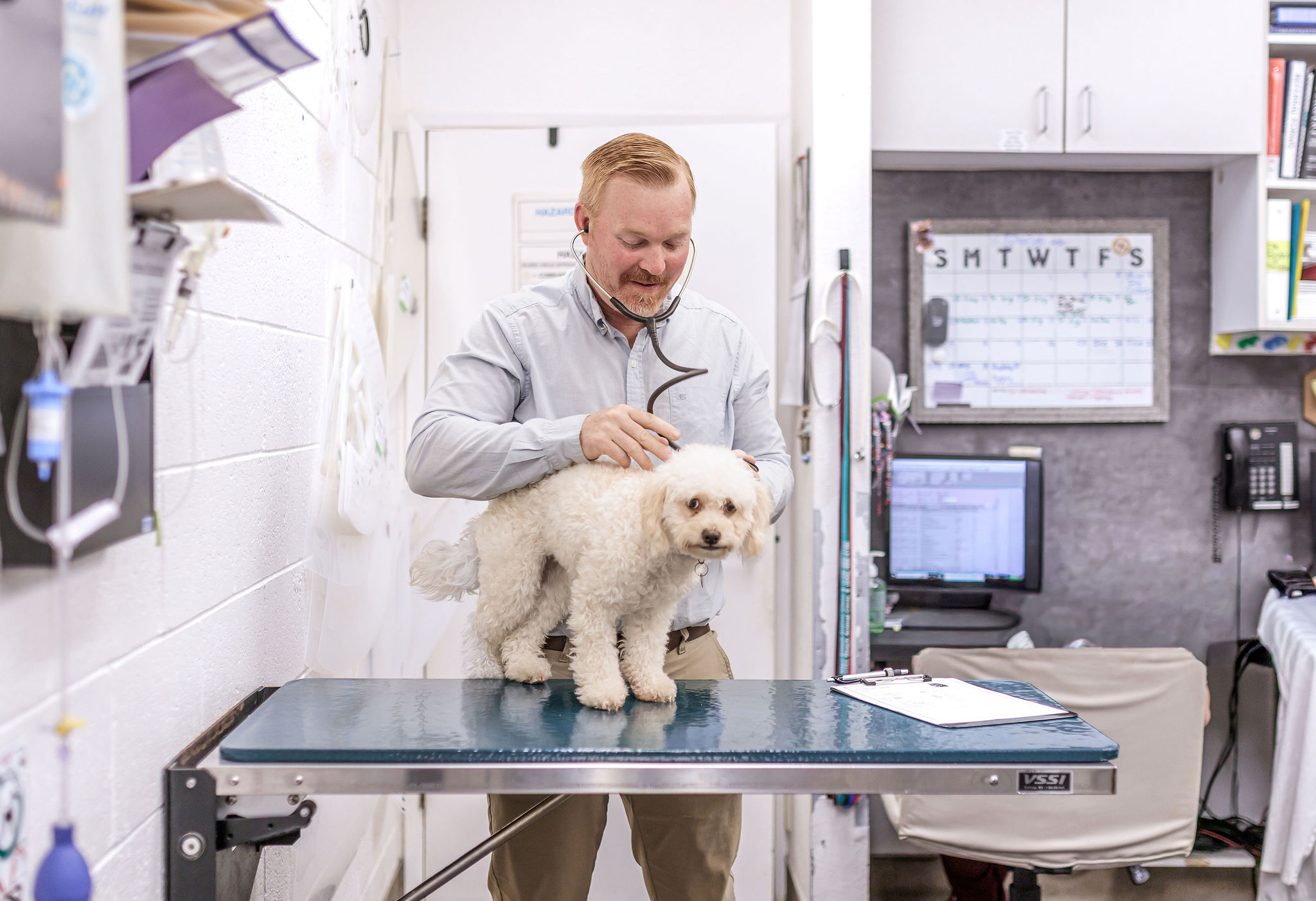
For a sudden problem, call before arriving. Our same-day urgent-care team can evaluate many stable pets during regular clinic hours when capacity allows. We are not a 24-hour emergency hospital.
Go directly to emergency care when needed. Collapse, profound weakness, severe breathing difficulty, unresponsiveness, major trauma, inability to urinate or rapidly worsening life-threatening symptoms require immediate emergency evaluation rather than waiting for routine lab work or an online appointment request.
Diagnostic Testing for Exotic Pets
Our veterinarians also evaluate many rabbits, birds, reptiles and small mammals. Sample collection, appropriate reference ranges, safe handling and imaging differ substantially by species. Call ahead so we can confirm whether a particular test and species can be accommodated. Explore exotic pet veterinary care in Laguna Beach .
How We Explain Results and Prepare Your Pet for Testing
What Does a High or Low Result Actually Mean?
Laboratory reference intervals do not divide all healthy and sick animals perfectly. Age, species, stress, recent food intake, hydration, medications, the way a sample was handled and ordinary biological variation can influence a result. We look at how far a value is abnormal, whether related findings agree, the patient’s symptoms, and whether values have changed over time. Sometimes repeating a test is more useful than immediately escalating to an extensive diagnostic panel.
Should My Pet Fast Before Blood Work?
It depends on the ordered tests, patient age and health, and any medication or diabetes concerns. Do not withhold food, water or essential medication unless our team specifically instructs you to do so. Some tests require precise timing or specimen handling; a test-specific preparation plan improves the reliability of results.
What Should I Bring?
- A complete medication and supplement list, including doses and the time last given
- Prior blood, urine or imaging reports if they are not in our medical record
- Notes on appetite, weight, thirst, urination, stool, vomiting, activity and behavior changes
- A fresh stool sample only if requested
- Questions about timing, benefits, test limitations and cost
We explain which results may be available the same day, which are sent out and whether rechecks or further diagnostics are appropriate.
In-House Pet Blood Work Near Emerald Bay, Monarch Beach and South Laguna
Aliso Beach Animal Clinic is located at 30816 Coast Highway in South Laguna, across from Montage Laguna Beach. We welcome families from Laguna Beach, Emerald Bay, Monarch Beach, Three Arch Bay, Dana Point and nearby coastal Orange County communities.
Whether you need bloodwork for a senior cat, a dog with diarrhea, an exotic pet with unexplained illness, or a pre-anesthetic evaluation, our independently owned practice focuses on a clear diagnostic pathway and continuity of care. We can often perform initial testing here and coordinate specialty laboratory testing or imaging when additional information would make a meaningful difference.
Frequently Asked Questions About Veterinary Blood Work
How quickly can I get my dog’s or cat’s blood-test results?
Some routine in-house tests may be available during the appointment or later the same day. Specialty send-out testing and certain imaging consultations take longer; timing depends on the assay, shipping and laboratory schedule.
Can a blood test diagnose every disease?
No. Blood work provides valuable clues, but some conditions require urinalysis, imaging, culture, cytology, biopsy or additional evaluation. Results need interpretation alongside symptoms and examination findings.
Does high BUN always mean my dog has kidney disease?
No. BUN can rise for several reasons, including dehydration and some nonrenal conditions. Creatinine, urinalysis, urine specific gravity, hydration status and the clinical picture help guide interpretation.
What if my cat drinks a lot of water but has normal blood work?
A normal initial panel does not exclude every cause of increased thirst. A veterinarian may recommend urinalysis, urine-specific-gravity assessment or more focused testing depending on the history and symptoms.
What’s the difference between TLI and PLI?
TLI primarily evaluates pancreatic enzyme-producing function and helps diagnose EPI. PLI is used when evaluating possible pancreatitis. They answer different questions and cannot simply be substituted for each other.
Does a low thyroid result automatically mean my dog needs thyroid medicine?
No. Nonthyroid illness and some drugs may suppress thyroid results. Appropriate follow-up testing and interpretation are important before diagnosing hypothyroidism.
Why might my veterinarian order ionized calcium?
Ionized calcium can clarify whether biologically active calcium is genuinely abnormal when total calcium is elevated or decreased. Selected cases need PTH testing and investigation of underlying causes.
Does a healthy senior pet need blood work?
Screening can be helpful for many senior pets, but which tests and how often they are repeated should reflect the individual animal’s health, prior results, medications and risks.
Do you perform blood work for reptiles, rabbits or birds?
We evaluate many exotic pets and may offer selected diagnostic testing depending on species, patient size and the clinical question. Please call first to confirm availability.
How much does veterinary diagnostic testing cost?
It depends on which tests are needed, whether samples are analyzed in-house or sent to a reference laboratory, and whether imaging or additional procedures are appropriate. We can discuss the recommended plan and an estimate before proceeding.
Veterinary Medical References
These professional diagnostic references provide additional context about the tests discussed. They are not substitutes for the individualized assessment of a patient.
Schedule Pet Blood Work or Diagnostic Testing in Laguna Beach
If your dog, cat or exotic pet needs a health-screening evaluation, blood work, urinalysis, GI testing, endocrine testing or diagnostic imaging, call our team to discuss the appropriate appointment. We will explain which tests may answer the medical question, what timing to expect and whether urgent or emergency care is more appropriate.
Aliso Beach Animal Clinic
30816 Coast Highway
Laguna Beach, CA 92651
Across from Montage Laguna Beach
Monday–Friday: 7:30 a.m.–4:30 p.m.
Saturday: 8 a.m.–12 p.m.
Sunday: Closed
For urgent symptoms, call before coming. Life-threatening medical emergencies need immediate care at an appropriate 24-hour facility.