
Medically reviewed by Bryan Hayter, DVM, Owner and Medical Director of Aliso Beach Animal Clinic. Last reviewed September 2026.
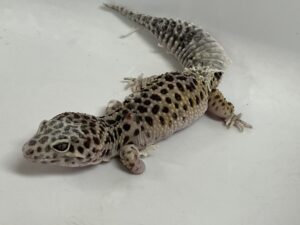
Leopard geckos (Eublepharis macularius) are hardy, long-lived reptiles, but their health depends heavily on proper temperature, lighting, humidity, nutrition, calcium balance, enclosure design, and daily observation. Many illnesses seen in captive leopard geckos are related to husbandry problems that may develop gradually before obvious symptoms appear.
This veterinarian-reviewed leopard gecko care guide explains current recommendations for housing, heating, UVB lighting, diet, supplementation, shedding, enrichment, preventive veterinary care, and common medical problems.
Aliso Beach Animal Clinic provides veterinary care for reptiles and other exotic pets in Laguna Beach, including leopard geckos and other selected lizard species. You can also explore our complete collection of veterinarian-reviewed exotic pet care guides.
On this page:
- Leopard gecko quick-care guide
- Enclosure size and setup
- Temperature and heating
- UVB and lighting
- Humidity and humid hides
- Substrate
- Diet and feeder insects
- Calcium and vitamin supplementation
- Handling and enrichment
- New leopard gecko care and quarantine
- Common leopard gecko health problems
- When to call a reptile veterinarian
- Veterinary exams and diagnostic testing
- Salmonella and household safety
- Frequently asked questions
Leopard Gecko Quick-Care Guide
| Scientific name | Eublepharis macularius |
|---|---|
| Typical lifespan | Often 10–20 years or longer with appropriate care |
| Adult length | Approximately 6–10 inches |
| Diet | Primarily insectivorous |
| Activity | Primarily crepuscular, with activity often concentrated around dusk and dawn |
| Adult enclosure | For a permanent setup, aim for approximately 36 × 18 × 18 inches or larger when practical, with generous floor space |
| Warm-zone air temperature | Approximately 82–86°F |
| Cool-zone air temperature | Approximately 75–79°F |
| Humidity | Generally about 30–40% ambient humidity, plus a humid hide |
| UVB | Low-level, protected UVB exposure is recommended |
| Housing | Generally best housed individually |
Published temperature recommendations vary somewhat because some sources report air temperature while others report the temperature of a warmed basking surface. The goal is not to make the entire enclosure uniformly hot. Leopard geckos need access to a thermal gradient so they can choose warmer or cooler conditions throughout the day.
Leopard Gecko Enclosure Size and Setup
Leopard geckos are terrestrial lizards adapted to rocky, dry scrubland environments. Floor space is more important than height, although healthy geckos will use low climbing structures when they are provided safely.
Small starter tanks are commonly marketed for leopard geckos, but they can make it difficult to create a useful thermal gradient, multiple hiding locations, enrichment, and adequate opportunities for movement. For a permanent adult enclosure, we recommend aiming for a 36 × 18 × 18 inch enclosure or larger when practical.
A well-designed enclosure should provide:
- A secure warm hide
- A secure cool hide
- A separate humid hide
- A controlled heat source located toward one end
- A clear temperature gradient
- Low rocks, cork, branches, or other sturdy enrichment
- A shallow water dish
- Appropriate substrate
- Digital temperature monitoring
- A hygrometer for humidity
- Safe access to low-level UVB
Provide enough cover that your gecko can move between warmer and cooler areas without having to choose between feeling secure and regulating its body temperature.
For help reviewing an enclosure, lighting system, diet, or supplementation plan, learn about our exotic pet husbandry and nutritional counseling.
What Temperature Does a Leopard Gecko Need?
Leopard geckos are ectothermic, meaning their body temperature and many physiologic functions depend on environmental heat. Digestion, immune function, activity, and metabolism may all be affected when temperatures are inappropriate.
A useful starting point is:
- Warm-zone air temperature: approximately 82–86°F
- Cool-zone air temperature: approximately 75–79°F
- Night: a moderate temperature drop is normal
The surface directly beneath an overhead heat source may measure several degrees warmer than the surrounding air. For this reason, we recommend checking both ambient air temperatures with digital probe thermometers and warmed surfaces with an infrared thermometer.
All heat sources should be regulated with an appropriate thermostat. Do not rely on the thermostat setting alone; verify actual enclosure temperatures independently.
Avoid heated rocks. Uneven or uncontrolled heating surfaces can cause serious thermal burns.
Visible heat lamps should be turned off at night. If the room routinely becomes unusually cold—approximately the low-to-mid 60s°F or below—discuss an appropriate thermostat-controlled, non-light-emitting nighttime heat source with your reptile veterinarian.
Do Leopard Geckos Need UVB?
Leopard geckos were historically kept without ultraviolet-B lighting because they spend much of the daytime hidden and are primarily active around dawn and dusk. Current evidence supports giving leopard geckos access to low-level, protected UVB.
UVB allows reptiles to synthesize vitamin D3, which contributes to normal calcium metabolism. Research in leopard geckos has demonstrated that even relatively short periods of UVB exposure can increase circulating vitamin D3 concentrations.
A good enclosure creates a UV gradient rather than bathing the entire habitat in ultraviolet light. A low UV Index around 0.7 in the illuminated zone with access to complete shade is a commonly used husbandry target.
Important UVB principles include:
- Provide approximately a 12-hour light/dark cycle.
- Position UVB on the warm side rather than across the entire enclosure.
- Always provide shaded hides where UV exposure approaches zero.
- Follow the lamp manufacturer’s recommended distance.
- Remember that mesh can reduce UVB reaching the animal.
- Glass and many plastics block useful UVB.
- Replace bulbs according to manufacturer specifications even when they still produce visible light.
Very light-sensitive morphs, including some red-eyed or albino animals, may need additional shade or an individualized lighting setup. The solution is generally to provide choice and an appropriate gradient rather than eliminating normal light entirely.
Leopard Gecko Humidity and the Humid Hide
Leopard geckos need a relatively dry general environment but also benefit from access to a humid microclimate.
Aim for approximately 30–40% ambient humidity in the general enclosure while providing a dedicated humid hide containing an appropriate moisture-retaining material.
The humid hide is particularly important during shedding. Check it regularly so that it remains moist but not dirty, stagnant, or moldy.
Persistently high humidity combined with poor ventilation may contribute to skin and respiratory problems. Conversely, an excessively dry enclosure without access to a humid retreat increases the risk of retained shed.
What Is the Best Substrate for a Leopard Gecko?
Substrate recommendations should take the individual gecko’s age, health, husbandry, feeding method, and monitoring needs into account.
For newly acquired, juvenile, debilitated, or medically ill leopard geckos, a simple substrate such as paper towel can make eating, stool production, parasites, bleeding, and other abnormalities easier to monitor.
For a healthy adult in a properly managed enclosure, a well-designed naturalistic substrate can permit digging and other normal behaviors. Textured slate and appropriately formulated soil/sand mixtures are options when husbandry is otherwise correct.
Avoid substrates with a higher risk of injury or gastrointestinal obstruction, including:
- Calcium sand
- Crushed walnut shell
- Gravel or pebbles
- Coarse wood chips
- Sharp or dusty material
Substrate ingestion should not automatically be dismissed as simply a “sand problem.” Repeated ingestion or gastrointestinal obstruction may also be associated with inappropriate temperatures, dehydration, nutritional disease, or another medical problem.
What Should a Leopard Gecko Eat?
Leopard geckos are primarily insectivorous. A healthy diet should contain a variety of appropriately sized, commercially raised feeder insects rather than relying on one feeder species for every meal.
Useful feeder insects may include:
- Crickets
- Dubia roaches
- Silkworms
- Black soldier fly larvae
- Mealworms
- Appropriately sized hornworms
- Other nutritionally appropriate commercially raised insects
Waxworms and other particularly fatty feeders are better used sparingly rather than as dietary staples.
Feeder insects should be appropriately sized and should generally not exceed the size your gecko can comfortably swallow. Remove uneaten insects that could bite or stress the gecko.
Gut-Loading Feeder Insects
Most commonly used feeder insects contain relatively little calcium on their own. Feeding the insects a nutritionally complete diet before they are offered to the gecko—known as gut-loading—improves their nutritional value.
A practical approach is to gut-load feeder insects for approximately 24–48 hours before feeding.
How Often Should a Leopard Gecko Eat?
Young, rapidly growing leopard geckos generally need food more frequently than adults. Juveniles may eat daily, while healthy adults commonly eat every few days.
There is no ideal feeding schedule for every animal. Feeding frequency and quantity should be adjusted according to age, reproductive status, activity, body condition, feeder size, and weight trend.
A small gram scale is an excellent tool for leopard gecko owners. Record your gecko’s weight periodically so that gradual weight gain or loss can be recognized before it becomes visually obvious.
Calcium, Vitamin D3, and Leopard Gecko Supplements
Insect-based diets require thoughtful supplementation because many common feeder insects naturally contain much more phosphorus than calcium.
Feeder insects are commonly dusted with a phosphorus-free calcium supplement immediately before feeding. A reptile-appropriate multivitamin may also be required.
The appropriate amount of vitamin D3 depends partly on the gecko’s UVB exposure and the products being used. More is not automatically better. Excessive vitamin and mineral supplementation can also cause disease.
For that reason, rather than applying a universal supplement schedule to every leopard gecko, we recommend reviewing:
- The exact feeder insects being used
- How they are gut-loaded
- The calcium product
- The multivitamin product
- Whether vitamin D3 is included
- UVB type and intensity
- The gecko’s age and reproductive status
Bring photographs of supplement labels to veterinary appointments. This allows the veterinarian to calculate what your gecko is actually receiving rather than relying on terms such as “reptile calcium” or “multivitamin.”
Metabolic Bone Disease in Leopard Geckos
Nutritional secondary hyperparathyroidism, commonly called metabolic bone disease (MBD), is one of the most important preventable medical disorders of captive reptiles.
Inadequate calcium intake, inappropriate calcium-to-phosphorus balance, inadequate vitamin D metabolism, and poor husbandry can contribute.
Warning signs may include:
- Weakness
- Tremors
- Difficulty walking
- Soft or abnormal jaw structure
- Swollen or deformed limbs
- Fractures
- Reduced appetite
- Reluctance to move
Simply adding calcium powder is not adequate treatment for a gecko that already has suspected metabolic bone disease. Veterinary evaluation is important because fractures, severe calcium abnormalities, dehydration, nutritional deficiencies, and other complications may also be present.
Fresh Water and Hydration
Provide clean, fresh water in a shallow, stable dish at all times. Replace it at least daily and immediately if contaminated.
Do not assume that a desert-adapted reptile does not need regular access to water. Hydration is influenced by drinking, food moisture, ambient humidity, temperature, kidney function, and access to humid microclimates.
Leopard Gecko Shedding Problems
Healthy leopard geckos periodically shed their skin and frequently consume the shed afterward. Retained skin is particularly common around the toes, tail tip, and eyes.
Repeated shedding difficulty may be associated with:
- Inadequate access to a humid hide
- Dehydration
- Nutritional imbalance
- Illness
- Eye disease
- Vitamin deficiencies
- Other husbandry problems
Retained shed around the toes can restrict circulation and eventually damage tissue. Do not aggressively pull firmly attached skin from your gecko.
Veterinary evaluation is appropriate when retained shed affects the eyes, causes toe swelling or discoloration, repeatedly recurs, or accompanies appetite or behavior changes.
Handling, Enrichment, and Social Housing
Leopard geckos can become accustomed to gentle handling, but handling should not be forced. Scoop the gecko from underneath and support the body and all four feet.
Never pick up or restrain a leopard gecko by the tail. Leopard geckos can intentionally detach the tail as a defense mechanism. Although it can regenerate, the replacement tail will not be identical to the original and tail loss consumes important energy reserves.
Provide environmental enrichment such as:
- Multiple hides
- Low rocks and ledges
- Cork pieces
- Stable branches
- Textured surfaces
- Opportunities for exploration and hunting
Leopard geckos do not require another gecko for companionship. Individual housing makes it easier to prevent fighting, competition, unwanted breeding, chronic stress, and difficulty determining which animal is eating or producing abnormal stool.
Bringing Home a New Leopard Gecko
Set up and test the enclosure before bringing the gecko home. Confirm the temperature gradient, thermostat function, humidity, UVB placement, and hiding areas in advance.
Allow a newly acquired leopard gecko time to acclimate. Unnecessary handling during the first several days can increase stress.
Quarantine New Reptiles
If you already keep reptiles, a new leopard gecko should be housed separately from established animals. Veterinary reptile references recommend extended quarantine periods because some infectious and parasitic diseases may have long or uncertain incubation periods.
A 3–6 month quarantine is a reasonable conservative approach for a new reptile, particularly in a multi-reptile household.
During quarantine:
- Use separate equipment whenever possible.
- Wash hands between animals.
- Monitor weight and stool production.
- Do not share substrate, hides, water dishes, or feeding equipment.
- Schedule an initial veterinary examination.
- Discuss fecal parasite testing with your veterinarian.
Common Health Problems in Leopard Geckos
Common medical concerns seen in leopard geckos include:
- Metabolic bone disease
- Retained shed or dysecdysis
- Eye inflammation, ulcers, or infection
- Vitamin A deficiency
- Stomatitis or mouth infection
- Internal parasites
- Cryptosporidium infection
- Chronic weight loss or “stick tail” syndrome
- Gastrointestinal obstruction or impaction
- Constipation
- Respiratory disease
- Dystocia or retained eggs
- Skin infections
- Thermal burns
- Traumatic injuries
- Obesity
What Does “Stick Tail” Mean?
A progressively thin tail is a clinical sign, not a diagnosis. Chronic weight and tail-fat loss may be associated with parasites, gastrointestinal disease, inadequate nutrition, inappropriate husbandry, chronic infection, or Cryptosporidium.
Do not assume that simply feeding more insects will correct unexplained tail thinning. A leopard gecko losing weight despite eating—or becoming progressively thin—should be evaluated by a veterinarian.
When Should a Leopard Gecko See a Veterinarian Urgently?
Contact a reptile veterinarian promptly if your leopard gecko develops:
- Persistent refusal to eat
- Rapid weight loss or obvious tail thinning
- Marked lethargy or weakness
- Difficulty breathing
- Tremors or difficulty walking
- Swelling of the limbs, jaw, or abdomen
- Repeated vomiting or regurgitation
- Persistent diarrhea or blood in the stool
- Inability to pass stool
- Eye swelling, discharge, or inability to open an eye
- Severe or repeated shedding problems
- Suspected egg retention
- Prolapse
- Burns
- Trauma or wounds
- Seizures or other neurologic abnormalities
- Any rapid and significant change from normal behavior
Aliso Beach Animal Clinic provides same-day urgent care for many exotic pets in Laguna Beach during regular clinic hours when the species, medical condition, availability, and hospital resources allow.
We are not a 24-hour emergency hospital. If your leopard gecko is critically ill, requires continuous intensive care, or becomes ill outside our regular hours, an appropriate 24-hour facility may be necessary. Call before arriving whenever possible.
Learn more about our same-day urgent veterinary care.
Routine Veterinary Care for Leopard Geckos
A baseline veterinary examination is particularly useful after acquiring a new leopard gecko. Periodic examinations can help identify changes in weight, body condition, eyes, mouth, skin, musculoskeletal health, reproductive status, and husbandry before a problem becomes advanced.
Bring photographs of your complete enclosure to the appointment, including:
- Heat source and thermostat
- Warm- and cool-side thermometer readings
- UVB bulb and fixture
- Distance between the UVB lamp and animal
- Humidity readings
- Substrate
- Hides
- Food and supplements
Whenever possible, photograph the actual product labels. Exact information is far more useful than simply telling your veterinarian that you use “a UVB bulb” or “calcium powder.”
Diagnostic Testing for Leopard Geckos
Depending on the patient’s size, symptoms, and medical question, diagnostic testing may include:
- Fecal parasite examination
- Specialized testing for infectious organisms when indicated
- Blood-cell and chemistry testing when technically appropriate
- Digital radiographs
- Additional imaging in selected cases
- Cytology, culture, or other laboratory testing
Digital radiographs can be particularly useful when evaluating suspected fractures, metabolic bone disease, gastrointestinal obstruction, abnormal eggs, mineralized structures, and selected internal abnormalities.
Learn more about our veterinary laboratory and diagnostic testing and digital veterinary radiology and advanced imaging.
Leopard Geckos, Salmonella, and Household Safety
Healthy reptiles can carry Salmonella and other microorganisms without appearing ill. Good hygiene protects both the reptile and the people caring for it.
- Wash hands with soap and water after handling your gecko, feeder insects, feces, enclosure, dishes, or equipment.
- Keep reptile equipment away from areas where human food is prepared or eaten.
- Do not clean reptile enclosures or feeding equipment in the kitchen sink.
- Supervise children carefully around reptiles.
- People at increased risk of severe infection should discuss reptile exposure with their physician.
Reptile husbandry is not only about keeping the animal healthy. Appropriate sanitation also protects the household.
Frequently Asked Questions About Leopard Gecko Care
Are leopard geckos good beginner reptiles?
They can be. Leopard geckos are generally manageable in size and can tolerate gentle handling, but “beginner reptile” should not be mistaken for a low-maintenance pet. Proper heating, UVB, supplementation, live feeder insects, enclosure monitoring, and veterinary care are still required.
Do leopard geckos need UVB if they receive vitamin D3?
Protected low-level UVB is recommended. Leopard geckos are capable of using UVB to synthesize vitamin D3, and providing an appropriate light-to-shade gradient allows the animal behavioral choice. Supplementation should be adjusted to the complete husbandry plan rather than used as a reason to ignore lighting.
Do leopard geckos need a heat mat?
Not necessarily. Different safe heat sources can create an appropriate thermal gradient. What matters is that the heat source is properly controlled by a thermostat, temperatures are independently measured, and the gecko cannot contact an unsafe heating element.
Can leopard geckos live on sand?
A healthy adult in an otherwise well-designed enclosure may be kept successfully on an appropriate naturalistic substrate. Pure calcium sand and other inappropriate loose substrates should be avoided. Young, newly acquired, or medically ill geckos are often easier to monitor on paper towel.
Why is my leopard gecko not eating?
Temporary appetite changes can occur with environmental changes, shedding, reproductive cycles, or normal seasonal behavior, but appetite loss can also accompany inappropriate temperature, pain, gastrointestinal disease, parasites, egg retention, infection, obstruction, or other illness. Persistent appetite loss, weight loss, weakness, or other symptoms warrant veterinary evaluation.
Why is my leopard gecko’s tail getting skinny?
The tail is an important energy-storage site. Progressive thinning may indicate loss of body condition from inadequate intake, husbandry problems, parasites, gastrointestinal disease, chronic infection, or other illness. Significant unexplained tail thinning should not be treated simply by offering fattier insects.
Should leopard geckos be housed together?
We generally recommend individual housing. Leopard geckos do not require another gecko for psychological companionship, and solitary housing avoids fighting, competition, accidental breeding, and difficulty monitoring each animal’s appetite and stool.
Leopard Gecko Veterinary Care in Laguna Beach
Aliso Beach Animal Clinic provides veterinary care for leopard geckos and many other reptiles and exotic companion animals in Laguna Beach and surrounding South Orange County communities.
Our exotic-pet care may include physical examinations, husbandry and nutritional review, fecal and laboratory testing, digital radiography, treatment of illness and injury, and same-day urgent evaluation when medically appropriate and availability allows.
Learn more about:
- Exotic pet veterinary care in Laguna Beach
- Veterinarian-reviewed exotic species care guides
- Bearded dragon veterinary care and husbandry
- Exotic pet husbandry and nutritional counseling
Aliso Beach Animal Clinic
30816 Coast Highway
Laguna Beach, CA 92651
(949) 499-4190
Monday–Friday: 7:30 a.m.–4:30 p.m.
Saturday: 8:00 a.m.–12:00 p.m.
Sunday: Closed
About the Medical Reviewer
Bryan Hayter, DVM is the Owner and Medical Director of Aliso Beach Animal Clinic. His veterinary training at Auburn University included an interest in exotic species, and he later completed an internship at the San Diego Zoo. Dr. Hayter provides medical and husbandry-focused veterinary care for many exotic companion animals at Aliso Beach Animal Clinic.
Sources reviewed for medical and husbandry accuracy: Merck Veterinary Manual; Journal of Herpetological Medicine and Surgery; LafeberVet; VCA Animal Hospitals; RSPCA leopard gecko husbandry guidance; current veterinarian-reviewed PetMD leopard gecko guidance; CDC Healthy Pets, Healthy People reptile guidance.
This guide provides general educational information and does not replace an individualized veterinary examination, diagnosis, or treatment recommendation. Husbandry requirements may need to be adjusted for age, morph, reproductive status, medical condition, enclosure design, and the individual animal.