Urgent Soft-Tissue & Abdominal Surgery | Laguna Beach
Emergency Veterinary Surgery in Laguna Beach: Foreign Bodies, Bladder Stones & Abdominal Emergencies
Some surgical conditions cannot wait for a routine appointment. A swallowed toy, intestinal obstruction, urinary blockage or suddenly painful abdomen may require urgent diagnostic testing, stabilization and surgery.
At Aliso Beach Animal Clinic, our Laguna Beach veterinary hospital evaluates urgent illnesses and selected surgical conditions during regular clinic hours. Depending on the patient and procedure, appropriate cases may be treated at ABAC.
Potential procedures include foreign-body surgery, gastrotomy, enterotomy, cystotomy, selected abdominal exploration and wound surgery. A suspected gastric dilatation-volvulus (GDV or twisted stomach) is an immediate life-threatening emergency.
Not every emergency surgical patient can safely be treated at a daytime veterinary hospital. We assess the pet’s stability, the surgery required, available staffing and anticipated postoperative needs before determining whether treatment at ABAC or direct referral is safest.
What Conditions May Require Emergency Surgery in Dogs and Cats?
A surgical emergency is a condition in which delaying an operation could increase the risk of organ damage, infection, prolonged pain or death.
Some conditions are clearly surgical from the outset. Others begin with symptoms such as vomiting, urinary difficulty or abdominal pain and require testing before the correct treatment can be determined.
| Condition | Possible Procedure | Urgency and Treatment Considerations |
|---|---|---|
| Stomach foreign body | Gastrotomy or, for selected objects, endoscopic retrieval at an equipped facility | Treatment depends on the object, its location and whether obstruction or injury has occurred. |
| Intestinal obstruction | Enterotomy or exploratory abdominal surgery | Complete obstruction, ongoing vomiting, worsening pain and bowel compromise require prompt intervention. |
| Damaged or perforated intestine | Intestinal resection and anastomosis | More complex and higher-risk surgery; many patients need advanced care and postoperative monitoring. |
| Bladder stones | Cystotomy when surgery is indicated | Stone type, urinary obstruction, infection and patient stability affect the treatment plan. |
| GDV or twisted stomach | Emergency stomach derotation, gastropexy and other procedures as needed | Immediate life-threatening emergency. Direct 24-hour emergency care is generally the safest default when GDV is suspected. |
| Severe infected uterus (pyometra) | Emergency ovariohysterectomy | May require rapid stabilization, surgery and intensive monitoring. |
| Traumatic wounds | Debridement, wound repair or other soft-tissue procedures | Treatment depends on wound depth, contamination, tissue damage and associated trauma. |
These are examples of surgical problems, not a promise that every listed procedure can be performed immediately at ABAC. The veterinarian must determine the appropriate treatment setting.
Foreign-Body Surgery: What Happens When a Dog Swallows Something It Shouldn’t?
Dogs sometimes swallow toys, socks, pieces of clothing, corncobs, bones, plastic, rocks and other objects that cannot pass safely through the gastrointestinal tract.
Cats may swallow string, thread, ribbon or other linear objects. These can be particularly dangerous because the intestine may bunch around the material, leading to tissue injury or perforation.
Signs of a Possible Intestinal Blockage
- Repeated vomiting
- Loss of appetite
- Abdominal pain or guarding
- Unusual lethargy
- Dehydration
- Difficulty keeping food or water down
- Diarrhea or abnormal stool production
- A painful or distended abdomen
- Progressive weakness
Not every dog with vomiting has an intestinal obstruction. Gastroenteritis, pancreatitis, metabolic disease, toxins and many other problems can produce similar symptoms.
However, a pet with a confirmed or strongly suspected obstruction should not be managed with repeated home remedies or prolonged observation without veterinary direction.
Can a Foreign Body Pass Without Surgery?
Occasionally, yes. A small, smooth object may pass with carefully supervised medical management when the pet is stable and the veterinarian has determined that observation is appropriate.
Other objects cause complete obstruction, intestinal damage or perforation. These often require surgical removal.
Certain stomach foreign bodies may be removable by endoscopy at a facility with appropriate equipment and staff. An object causing intestinal obstruction generally requires a different approach.
The American College of Veterinary Surgeons describes the diagnostic and surgical options for gastrointestinal foreign bodies.
What Is a Gastrotomy? Emergency Stomach Surgery
A gastrotomy is a surgical incision into the stomach. It may be performed to remove a foreign object or address another selected stomach condition.
During the procedure, the surgeon accesses the stomach, removes the material or addresses the identified problem, evaluates the surrounding tissue and carefully closes the incision.
The pet is placed under general anesthesia and receives appropriate surgical monitoring, pain control and supportive care.
The veterinarian determines whether a gastrotomy is necessary after considering the patient’s condition, imaging findings and available alternatives.
A stomach foreign body does not automatically mean intestinal surgery is required. The correct procedure depends on where the object is located and what damage has occurred.
What Is an Enterotomy? Surgery for Intestinal Obstruction
An enterotomy is an incision made into the intestine to remove an obstruction or address another selected intestinal problem.
In a typical foreign-body operation, the surgeon evaluates the affected segment of intestine, makes a controlled incision, removes the object and closes the intestinal wall.
An important part of the operation is determining whether the surrounding intestinal tissue still has an adequate blood supply and appears capable of healing.
When Is Intestinal Resection Necessary?
Sometimes an obstruction has caused severe tissue injury, poor blood flow, perforation or tissue death.
If the intestine is no longer viable, removing the object alone may be insufficient.
The surgeon may need to perform intestinal resection and anastomosis: removal of the damaged segment followed by surgical reconnection of the healthy intestinal ends.
This is a more complex procedure with greater potential for postoperative complications.
Patients requiring intestinal resection, particularly those with sepsis, shock or significant contamination, may need referral for advanced surgery and continuous postoperative care.
How Do Veterinarians Diagnose a Gastrointestinal Obstruction?
A diagnosis typically begins with a physical examination and the patient’s medical history.
The veterinarian considers the duration of symptoms, possible exposure to foreign objects, abdominal discomfort, hydration and circulation.
Recommended tests may include:
- Blood work to evaluate electrolytes, organ function, hydration-related changes and other abnormalities
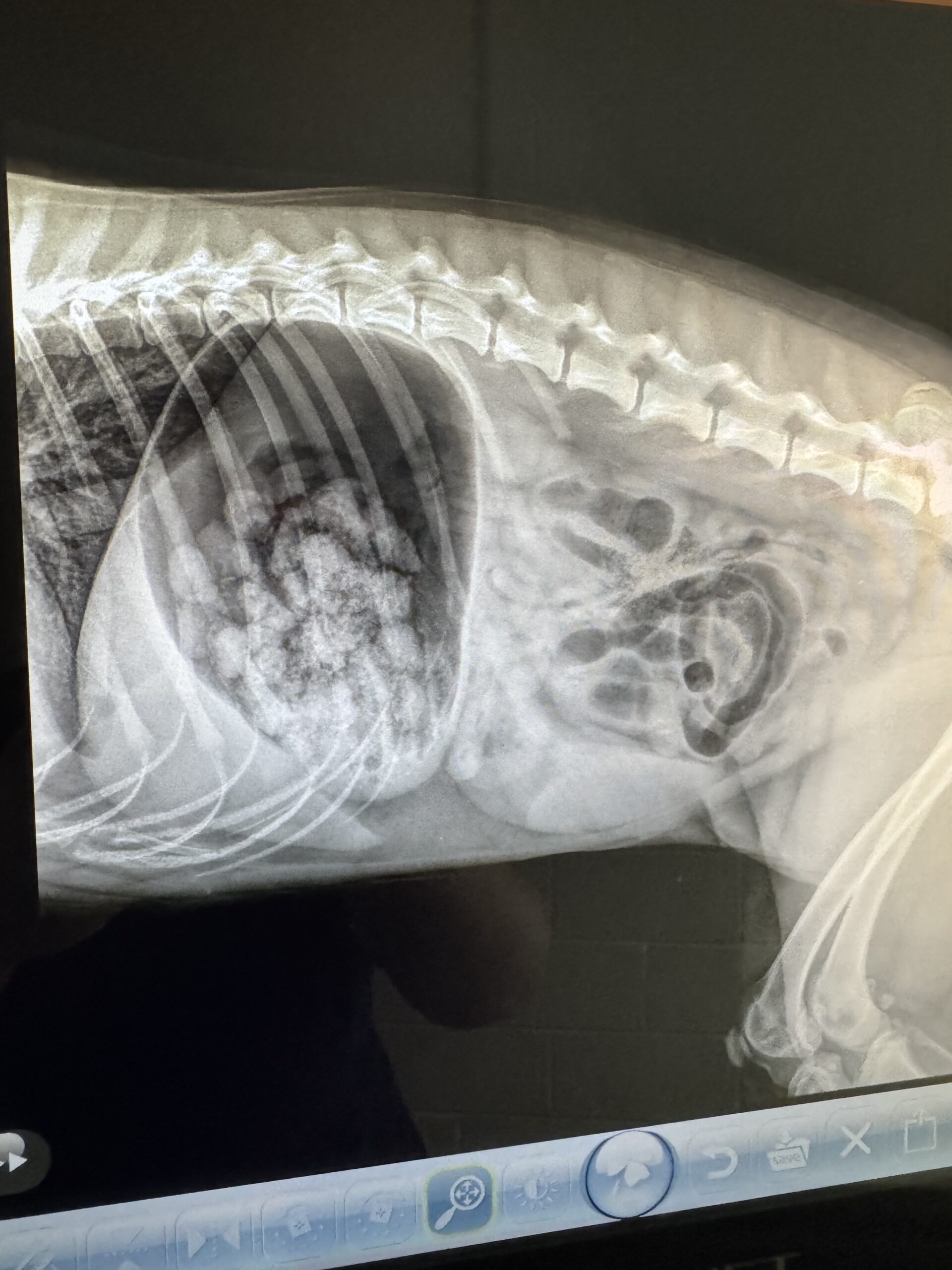
- Abdominal digital radiographs
- Serial X-rays in selected stable cases
- Abdominal ultrasound when useful and available
- Additional diagnostic testing when necessary
Not all swallowed objects are visible on an ordinary X-ray. The veterinarian interprets imaging together with symptoms, examination findings and laboratory results.
ABAC provides in-house laboratory testing and digital veterinary radiography . Specialist imaging consultation may be coordinated when appropriate.
A critically ill pet should not wait for a non-emergency imaging appointment if immediate surgery or intensive care is indicated.
Cystotomy: Emergency and Urgent Bladder-Stone Surgery
A cystotomy is a surgical incision into the urinary bladder. One common indication is the removal of bladder stones that cannot be appropriately managed through other methods.
Bladder stones may cause blood in the urine, straining, frequent urination, discomfort or recurrent urinary problems.
Some stones can be dissolved under carefully selected medical circumstances. Others cannot.
When surgery is indicated, the veterinarian may recommend removing the stones, examining and flushing the urinary tract, and submitting stones for analysis.
Urinary Obstruction Is an Emergency
A pet that cannot urinate requires immediate veterinary care. A blocked urinary tract can cause serious electrolyte abnormalities, kidney injury and other life-threatening complications.
Male cats are especially at risk for urethral obstruction from plugs, stones or other causes.
An obstructed cat often requires emergency catheterization, stabilization and monitoring. A cystotomy is not the automatic treatment for every blocked cat.
For dogs with bladder stones, the surgical decision depends on stone characteristics, urinary findings, the degree of obstruction and the patient’s overall health.
The American College of Veterinary Surgeons’ urinary-obstruction guide provides additional explanation of cystotomy and other treatments.
GDV Surgery: When a Dog’s Stomach Twists
Gastric dilatation-volvulus (GDV), also called bloat or a twisted stomach, is a life-threatening emergency requiring immediate treatment.
In GDV, the stomach expands and rotates, potentially compromising blood circulation, damaging stomach tissue and causing shock.
Large, deep-chested dogs are among those at increased risk, although GDV can occur in other dogs.
Emergency GDV Warning Signs
- Repeated retching without producing vomit
- A swollen, tight or painful abdomen
- Restlessness or pacing
- Heavy drooling
- Weakness or pale gums
- Rapid breathing
- Collapse
Suspect GDV? Go to an Emergency Hospital Immediately.
Do not wait for an appointment, attempt to give food or water, or try to treat bloat at home.
Prompt stabilization and surgery are essential. The safest default is immediate transport to an appropriately equipped 24-hour emergency surgical hospital.
What Happens During GDV Surgery?
Emergency treatment generally includes rapid assessment of circulation, shock management, decompression of the stomach, and surgery when GDV is confirmed.
The surgeon repositions the stomach, evaluates stomach and spleen viability, and typically performs a gastropexy, which attaches the stomach to the body wall to help prevent future twisting.
Severely damaged tissue may require additional procedures.
GDV patients can develop abnormal heart rhythms, shock-related complications and other problems that require intensive postoperative monitoring.
Although selected GDV surgery may be within ABAC’s surgical capabilities under appropriate circumstances, this does not mean ABAC can provide immediate GDV surgery or round-the-clock postoperative intensive care for every patient.
Read the ACVS guide to GDV in dogs .
Other Conditions That May Need Urgent Soft-Tissue Surgery
Pyometra
Pyometra is a potentially life-threatening uterine infection in an unspayed female dog or cat. Signs may include lethargy, vomiting, increased drinking, vaginal discharge or abdominal enlargement. Some cases have no visible discharge.
Emergency surgery and stabilization may be needed. The appropriate treatment setting depends on patient stability and hospital resources.
Traumatic Wounds and Bite Injuries
Deep wounds, damaged tissue, penetrating injuries and serious animal bites may require wound exploration, cleaning, debridement or surgical closure.
A wound that looks small externally can sometimes hide substantial damage underneath. Major trauma requires emergency-hospital assessment.
Abdominal Exploration
An exploratory laparotomy allows a surgeon to inspect abdominal organs when diagnostic findings suggest a serious problem requiring surgical evaluation.
The exact procedure may only become clear after the surgeon evaluates the affected organs.
Severe Abdominal Disease
Certain internal injuries, perforations and rapidly progressive abdominal conditions may require surgery, intensive stabilization or specialist intervention.
Patients with peritonitis, sepsis, shock or significant internal bleeding often require advanced emergency resources.
The presence of a surgical diagnosis does not by itself determine where surgery should be performed. The ability to monitor and support recovery is also part of the decision.
Can Aliso Beach Animal Clinic Perform My Pet’s Emergency Surgery?
ABAC evaluates selected urgent surgical cases during regular business hours.
The decision to operate at our hospital depends on more than the procedure name. We consider:
Patient Stability
Is the pet breathing comfortably? Is circulation adequate? Is there shock, severe dehydration, significant blood loss or organ dysfunction?
Surgical Complexity
Is the suspected problem appropriate for the available surgical team and equipment? Could the operation require more complex procedures than expected?
Timing and Staffing
Can surgery be performed without a dangerous delay? Is the appropriate surgical and anesthesia team available?
Postoperative Monitoring
Will the pet require overnight IV therapy, continuous monitoring, blood products, intensive care or emergency reoperation?
An appropriate referral is not a failure of veterinary care. For some patients, choosing a facility with 24-hour surgical and intensive-care capabilities offers a safer treatment pathway.
Learn more about same-day urgent veterinary care at ABAC and our urgent care versus emergency hospital guide .
What Happens Before, During and After Urgent Veterinary Surgery?
-
1. Triage and Examination
The veterinarian evaluates the pet’s immediate stability, symptoms, medical history and likely surgical problem.
-
2. Diagnostic Testing
Depending on the case, the team may recommend blood work, urinalysis, digital radiographs or other diagnostic studies.
-
3. Stabilization
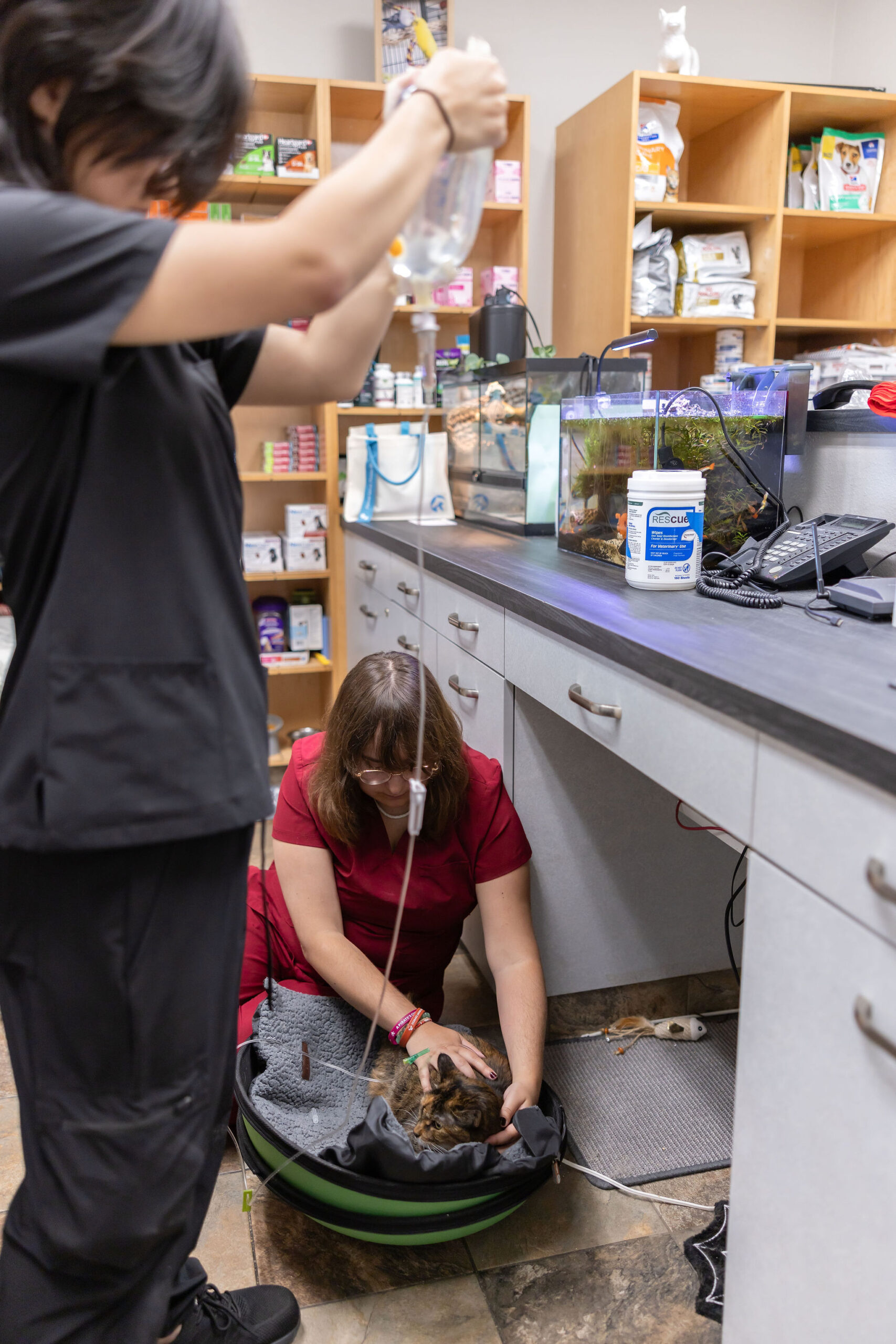
The pet may need IV fluids, pain medication, correction of electrolyte abnormalities or other supportive treatment.
-
4. Surgical Planning
The team discusses the proposed procedure, anesthetic risks, alternative options, likely aftercare and the estimated cost when circumstances allow.
-
5. General Anesthesia and Surgery
The anesthetic protocol and monitoring are tailored to the individual patient. The surgeon addresses the identified problem and assesses for complications.
-
6. Recovery and Monitoring
Careful assessment continues after anesthesia. Some pets need referral or continued hospitalization at a 24-hour facility.
Emergency cases do not always follow a predictable schedule. A pet that is unstable may need immediate stabilization before further testing.
Anesthesia and Surgical Monitoring: Why They Matter
Emergency abdominal surgery often involves patients who are dehydrated, painful, vomiting or metabolically unstable.
Those conditions can increase anesthesia risk and may affect how the veterinary team prepares for surgery.
ABAC’s published surgical safety protocols include:
- Pre-anesthetic examination and laboratory evaluation
- Individualized anesthetic drug selection
- IV catheter placement
- Fluid therapy tailored to the patient
- Airway protection and oxygen delivery
- ECG and heart-rhythm monitoring
- Pulse oximetry
- Blood-pressure measurement
- Capnography to evaluate ventilation
- Temperature monitoring and active warming
- A dedicated anesthesia-monitoring technician
- Multimodal pain management
- Supervised anesthetic recovery
No general anesthetic is without risk. The goal is to recognize and manage problems promptly while supporting the patient through surgery and recovery.
Learn more about ABAC’s veterinary surgery and anesthesia protocols .
Recovery After Intestinal or Abdominal Surgery
The recovery plan depends on the procedure performed, the degree of tissue damage, the pet’s medical condition and whether complications develop.
Some patients recover after relatively straightforward foreign-body or bladder-stone surgery. Others require extended hospitalization, repeat laboratory testing or intensive postoperative care.
The First Several Days After Intestinal Surgery Are Important
A serious potential complication after intestinal surgery is dehiscence: breakdown of the intestinal closure, which can allow intestinal contents to leak into the abdomen.
Cornell University and the American College of Veterinary Surgeons identify the first several days after intestinal surgery, particularly approximately days three to five, as an important period for monitoring this risk.
An intestinal leak can cause septic peritonitis and may require emergency reoperation.
Warning Signs After Surgery
- Repeated or persistent vomiting
- Worsening abdominal pain
- Extreme lethargy or collapse
- Progressive abdominal swelling
- Refusing food or water beyond the expected recovery course
- Fever or concerning temperature changes
- Discharge or unexpected swelling at the incision
- Opening of the surgical incision
- Difficulty breathing
- Inability to urinate
If these symptoms occur after intestinal or abdominal surgery, contact a veterinarian immediately. Severe or rapidly worsening symptoms require emergency-hospital care.
Home-Care Instructions
Depending on the procedure, the discharge plan may include:
- Prescribed pain medication
- Individualized feeding instructions
- Restricted activity
- Incision checks
- An Elizabethan collar or recovery suit
- Medication administration instructions
- Follow-up examination and testing
- Clear instructions on when to seek emergency care
Do not automatically begin a bland diet, discontinue medication, or encourage unrestricted exercise unless directed by the treating surgeon.
For cystotomy patients, temporary urinary changes may occur, but inability to pass urine, severe bleeding or marked pain requires immediate assessment.
What Should You Do at Home If You Suspect Your Pet Needs Emergency Surgery?
- Call the appropriate veterinary facility. During ABAC business hours, call us for urgent symptoms in a stable pet. For life-threatening symptoms, go directly to an emergency hospital.
- Do not give human pain medication. Ibuprofen, naproxen, acetaminophen and other human medications can be dangerous to pets.
- Do not induce vomiting on your own. Some swallowed objects are sharp or can cause additional injury.
- Do not pull on visible string. If a string or ribbon protrudes from the mouth or anus, pulling it can seriously damage the intestine.
- Ask about food and water. If anesthesia may be required, follow the veterinarian’s specific instructions. Do not force food or water into a vomiting or distressed pet.
- Transport safely. Use a secure carrier or leash. Minimize activity in an injured pet.
- Bring useful information. A medication list, recent records, photographs or a sample of the swallowed material may help, if readily available.
Do not delay emergency transport to obtain paperwork, wait for online appointment confirmation or complete nonessential preparation.
How Much Does Emergency Pet Surgery Cost?
Emergency surgery costs vary widely depending on the medical problem, patient stability, procedure complexity and postoperative care required.
For example, removing a foreign object from the stomach may differ substantially from treating a perforated intestine with severe abdominal infection.
A surgical estimate may include:
- Emergency examination and stabilization
- Blood work and diagnostic imaging
- Anesthesia and monitoring
- Surgical treatment
- IV fluid therapy and medications
- Pain management
- Hospitalization
- Specialist consultation when necessary
- Postoperative examinations
When possible, the veterinary team will discuss anticipated costs and treatment options. However, an emergency estimate may change if the surgeon discovers unexpected tissue damage or the patient develops complications.
A reliable patient-specific estimate requires a medical evaluation. We do not publish a single price for every type of emergency surgery.
Emergency and Urgent Veterinary Surgery Near Laguna Beach and Dana Point
Aliso Beach Animal Clinic is an independently owned veterinary hospital located on Coast Highway in South Laguna Beach.
We serve pet families from Laguna Beach, South Laguna, Three Arch Bay, Emerald Bay, Monarch Beach, Dana Point, The Strand at Headlands and nearby coastal Orange County communities.
Our veterinary services include urgent examinations, in-house diagnostic testing, digital radiography, individualized anesthesia planning, soft-tissue surgery and coordinated postoperative care for appropriate patients.
When your pet’s condition requires immediate intensive care or resources not available at our clinic, our team can recommend an appropriately equipped emergency or specialty hospital.
If you are searching for an urgent care vet near me, emergency dog surgery, intestinal foreign-body surgery or a veterinary surgeon near Laguna Beach, the most important first step is to determine your pet’s medical stability and appropriate treatment destination.
For an apparently stable pet during clinic hours, call us at (949) 499-4190 .
Emergency Veterinary Surgery: Frequently Asked Questions
Can Aliso Beach Animal Clinic perform emergency surgery?
ABAC evaluates selected urgent surgical cases during regular business hours. Whether surgery can be performed depends on patient stability, the procedure needed, staffing, available resources and postoperative monitoring requirements. Call before arriving.
Can ABAC remove a foreign object from my dog’s stomach?
Selected gastrointestinal foreign bodies may be treated surgically at ABAC. A veterinarian must first determine the location of the object, whether obstruction is present and whether treatment at our hospital is appropriate.
What is the difference between gastrotomy and enterotomy?
A gastrotomy is a surgical incision into the stomach. An enterotomy is an incision into the intestine. Both may be used to remove foreign objects, depending on location.
What if my dog needs part of the intestine removed?
If intestinal tissue is severely damaged or no longer viable, resection and anastomosis may be required. This procedure carries additional risks and may require advanced surgical and intensive-care resources.
Do all dogs with intestinal blockages need surgery?
Not every suspected foreign body requires surgery. Some small, smooth objects may pass with carefully supervised monitoring. Confirmed complete obstruction, worsening symptoms, perforation or tissue damage generally require more urgent intervention.
Can bladder stones be removed surgically?
Yes. Cystotomy is one established procedure for removing bladder stones when indicated. Some stone types may be managed medically instead. The veterinarian recommends treatment based on the pet and stone type.
My cat cannot urinate. Should I schedule a cystotomy?
No. A cat unable to pass urine needs immediate emergency assessment. Urinary obstruction may require urgent catheterization and stabilization. Cystotomy is not automatically the appropriate procedure.
Can ABAC perform GDV surgery?
Selected GDV procedures may be considered at ABAC when immediate surgical treatment is clinically appropriate and resources permit. However, GDV is an immediate life-threatening emergency. Direct transport to an equipped 24-hour emergency surgical hospital is generally the safest default.
What are the signs of a twisted stomach?
Repeated attempts to vomit without producing material, a swollen painful abdomen, restlessness, weakness, pale gums and collapse are concerning for GDV. Seek emergency veterinary care immediately.
How dangerous is intestinal surgery in dogs?
Risk varies with the degree of obstruction, tissue damage, contamination and the patient’s overall condition. One serious complication is intestinal leakage after surgery, which can cause life-threatening infection. Prompt diagnosis and treatment can improve the outlook.
Will my pet need overnight hospitalization?
Some pets need prolonged fluid therapy, pain control, repeat testing or continuous monitoring. ABAC is not a 24-hour hospital. Patients requiring overnight intensive care may need transfer to an emergency facility.
Should I call before bringing my dog for surgery?
Yes, for an urgent but stable pet during regular clinic hours. Call (949) 499-4190 so our team can assess the situation. For collapse, severe trauma, suspected GDV or another life-threatening emergency, go directly to an appropriately equipped emergency hospital.
Veterinary Medical References
- American College of Veterinary Surgeons: Gastrointestinal Foreign Bodies
- Cornell University: Gastrointestinal Foreign-Body Obstruction in Dogs
- American College of Veterinary Surgeons: Urinary Obstruction in Dogs
- American College of Veterinary Surgeons: Gastric Dilatation-Volvulus
- Merck Veterinary Manual: Gastrointestinal Obstruction in Small Animals
- AAHA: Anesthesia and Monitoring Guidelines for Dogs and Cats
Educational information only. No online article can diagnose an obstruction, determine whether surgery is necessary, or guarantee that an individual pet is stable enough for treatment at a particular hospital.