



Medically reviewed by Bryan Hayter, DVM, Owner and Medical Director of Aliso Beach Animal Clinic. Last reviewed: August 2026.
Summer brings beautiful sunny weather to the coast, but as temperatures rise, our exotic pets require extra attention to stay safe. If you have a pet rabbit, summer heat is more than just uncomfortable—it can be incredibly dangerous.
To understand how your bunny feels, imagine wearing a fur coat outside on a hot day. Unlike humans, rabbits cannot sweat to cool themselves down, and they do not pant effectively like dogs do. Instead, they rely on the blood vessels in their ears to release body heat, which is simply not enough when the ambient temperature climbs.
At Aliso Beach Animal Clinic, we want to ensure your furry companions enjoy a safe and comfortable summer. Here is what you need to know about protecting your rabbit from heatstroke and secondary health emergencies.
Special Considerations for Senior Rabbits
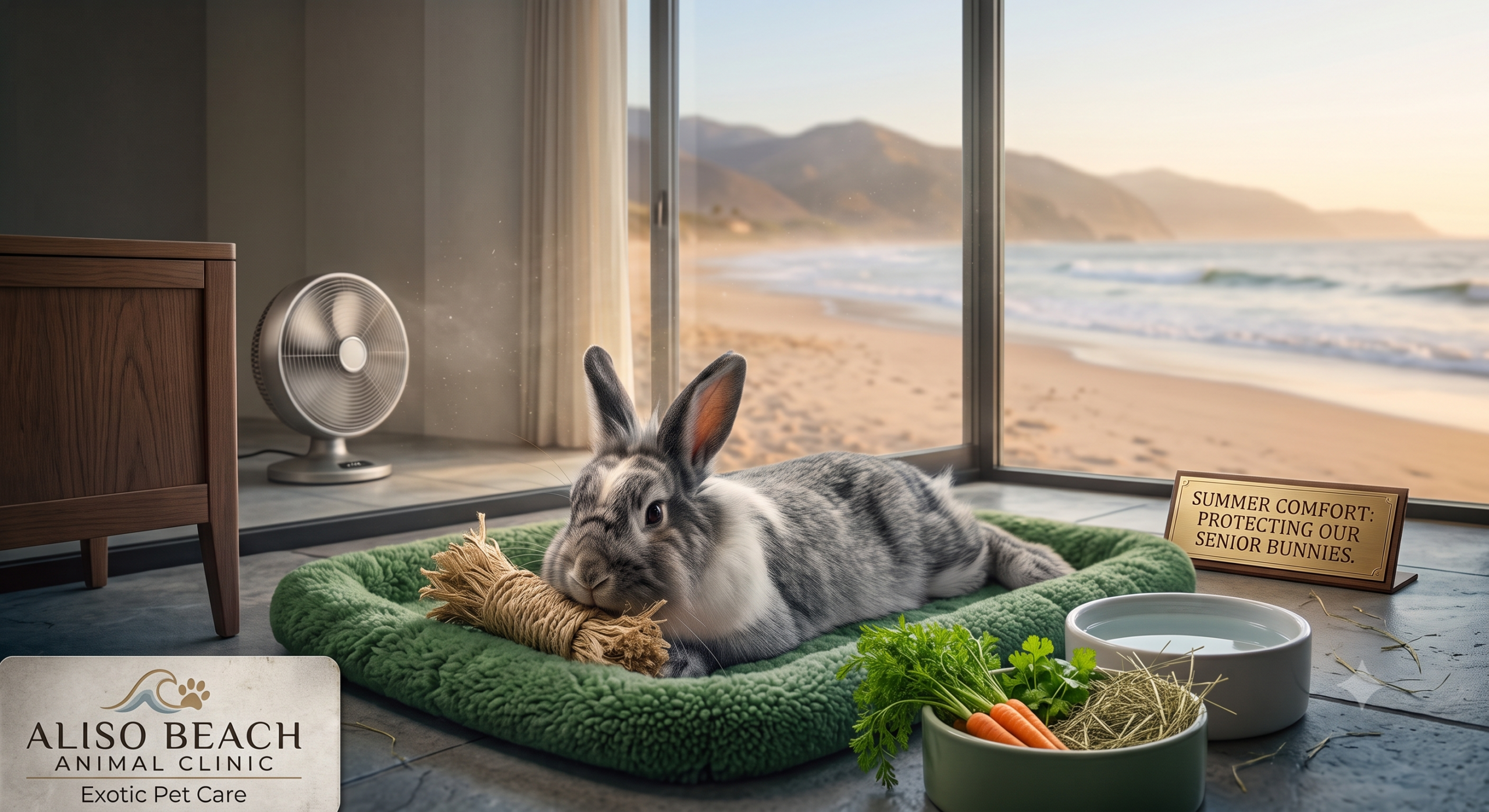
While all rabbits are highly sensitive to heat, senior rabbits are especially vulnerable. As rabbits age, their ability to regulate their body temperature naturally declines, and underlying conditions like arthritis can make it harder for them to move to a cooler spot on their own.
During the hot summer months, it is absolutely critical that senior rabbits—and ideally, all pet rabbits—are kept strictly indoors during the hottest parts of the day. A climate-controlled environment is their best defense against heat exhaustion.
Simple Ways to Keep Your Rabbit Cool Indoors
Even indoors, you may need to take extra steps to ensure your bunny is comfortable. Here are highly effective ways to lower their temperature:
- Continuous Air Conditioning: Keeping the ambient room temperature between 60°F and 72°F is ideal for rabbits.
- Circulating Fans: Keep the air moving in the room, but do not point the fan directly at your rabbit. Instead, angle it so it blows near them or circulates the air overhead.
- Cooling Mats: Pet-specific gel cooling mats placed on the floor provide a great spot for your bunny to stretch out and absorb the cool surface.
- Frozen Water Bottles: Fill a plastic water bottle, freeze it solid, wrap it in a thin towel, and place it in your rabbit’s enclosure. They can lean against it when they feel too warm.
- Fresh Hydration: Always provide unlimited access to fresh, cool water. Consider adding an extra bowl to their space to encourage more drinking.
⚠️ The Silent Danger: Heat Stress and GI Stasis
One of the most dangerous side effects of heat stress in rabbits is a sudden loss of appetite. When a rabbit gets too hot, they become lethargic and often stop eating and drinking.
Because a rabbit’s digestive system must be constantly moving to stay healthy, not eating can rapidly trigger Gastrointestinal Stasis (GI Stasis). This is a painful, life-threatening condition where the digestive tract slows down or stops completely.
Not eating or producing stool is a strict medical emergency in rabbits. It requires swift veterinary attention. Do not wait to see if they improve on their own.
If you notice your rabbit is lethargic, breathing rapidly, drooling, or refusing their favorite treats and hay, you must act immediately.
Exotic Pet Care at Aliso Beach Animal Clinic
Your rabbit’s health and comfort are our top priorities. If you are ever concerned about your rabbit’s behavior in the heat, or if you suspect they are entering GI stasis, do not hesitate to reach out to our exotic pet care team.
Contact Aliso Beach Animal Clinic today to schedule a wellness exam or to learn more about keeping your exotic pets safe year-round!