






Tortoise Diet Guide: What to Feed Your Pet Tortoise and What to Avoid
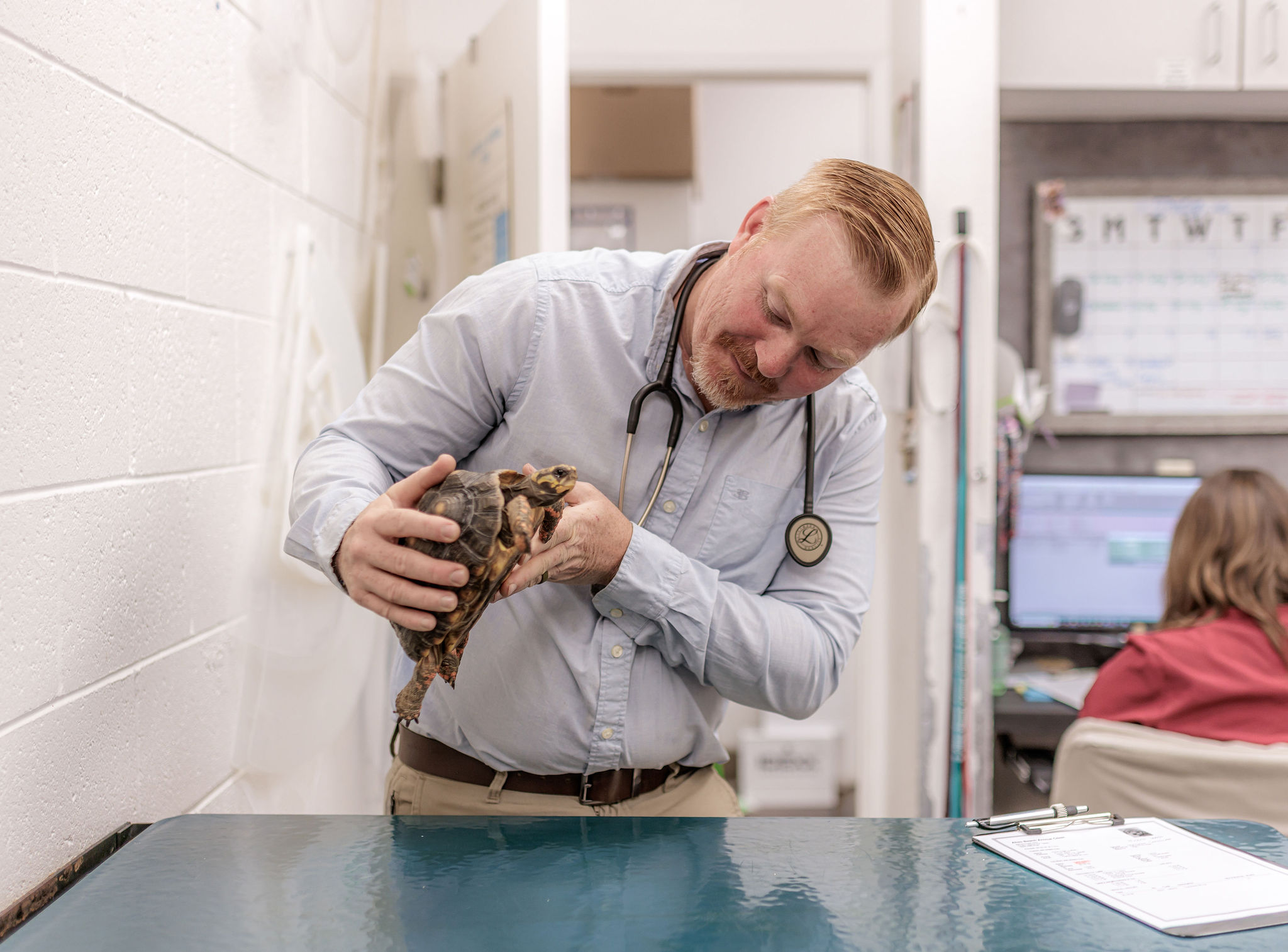
Medically reviewed by Bryan Hayter, DVM, Owner and Medical Director of Aliso Beach Animal Clinic
Last reviewed: August 2026
A healthy tortoise diet should usually look much more like a patch of natural vegetation than a bowl of fruit.
Many commonly kept tortoises are herbivores adapted to eating fibrous grasses, weeds, leaves and flowers. In captivity, however, it is easy to replace that natural variety with grocery-store produce, fruit, treats or foods that are simply too rich.
Over time, an inappropriate diet can contribute to abnormal growth, digestive problems, obesity and nutritional disease.
At Aliso Beach Animal Clinic, diet is considered part of the medical history when we evaluate tortoises and other reptiles. A tortoise’s species, age, weight, shell growth, habitat, access to ultraviolet light, supplements and hydration all matter.
If you are unsure about your tortoise’s species or nutritional needs, our exotic-pet veterinary team in Laguna Beach can review the animal’s diet and husbandry as part of an examination.
Important: There is no single correct diet for every tortoise species. This guide focuses primarily on commonly kept herbivorous and grazing tortoises, including desert tortoises and similar species. Red-footed, yellow-footed and certain other tortoises have different nutritional requirements and should receive species-specific recommendations.
What Do Tortoises Eat?
In nature, many herbivorous tortoises consume a remarkably diverse assortment of plant material.
Depending on the species and geographic range, this may include:
- Grasses
- Broadleaf weeds
- Wildflowers
- Leaves
- Stems
- Succulents
- Cactus pads and seasonal flowers
- Other fibrous vegetation
The Merck Veterinary Manual’s review of tortoise nutrition emphasizes the importance of plant material and fiber to normal gastrointestinal function in herbivorous tortoises.
For desert tortoises specifically, the U.S. Fish & Wildlife Service describes their natural foods as including grasses, herbs, cacti and wildflowers. Read the U.S. Fish & Wildlife Service desert tortoise information
That natural feeding pattern gives us an important principle:
Variety, fiber and species-appropriate vegetation should form the foundation of the diet—not sweet fruit or a repetitive bowl of lettuce.
A Good Tortoise Diet Starts With Grasses, Weeds and Edible Plants
For many grazing tortoises, appropriately selected growing plants are an excellent way to encourage natural feeding behavior while providing fiber and variety.
Depending on your tortoise species, suitable choices may include:
- Dandelion leaves and flowers
- Hibiscus leaves and flowers
- Mulberry leaves
- Grape leaves
- Safe grasses
- Mallow
- Clover
- Endive
- Escarole
- Chicory
- Nopales or prickly-pear cactus pads
- Other veterinarian-approved edible weeds and flowers
Our existing Desert Tortoise Care Guide discusses outdoor habitat, natural sunlight, edible plants, hydration, shell health and other considerations specifically for desert tortoises.
Be Careful With Plants From the Yard
“Natural” does not automatically mean safe.
Do not allow your tortoise to graze on plants that:
- Have been treated with herbicides or pesticides
- May have systemic nursery chemicals
- Are growing in an area exposed to toxic substances
- Have not been positively identified
- Are known to be poisonous
Oleander, for example, should never be available to a tortoise.
If you are redesigning an outdoor tortoise enclosure, bring photographs or a plant list to your veterinarian rather than assuming that every weed or ornamental plant is edible.
What Leafy Greens Can Tortoises Eat?
Grocery-store greens can be useful when adequate natural forage is unavailable, but ideally they should add variety rather than become the entire diet.
Depending upon the species, options may include:
- Endive
- Escarole
- Dandelion greens
- Collard greens
- Mustard greens
- Turnip greens
- Green-leaf or romaine lettuce
- Selected herbs and other dark leafy vegetables
Rotating appropriate foods is generally better than feeding the same vegetable every day.
What About Iceberg Lettuce?
Iceberg lettuce contains a great deal of water but provides comparatively little nutritional value.
A tortoise that fills up on iceberg lettuce may eat less of the more fibrous, nutrient-dense vegetation it actually needs.
It should therefore not be used as the foundation of a tortoise diet.
Can Tortoises Eat Fruit?
This is one of the most common tortoise-feeding questions.
For many desert and grassland tortoise species, fruit should be very limited or avoided except when appropriate for the particular species.
Fruit is appealing because many tortoises readily eat it. But whether an animal enthusiastically accepts a food tells us very little about whether that food belongs in its regular diet.
Cultivated fruit is generally sweeter and nutritionally different from much of the vegetation eaten by grazing tortoises in nature.
The Arizona-Sonora Desert Museum’s tortoise husbandry guidance specifically cautions against diets rich in fruit for desert tortoises. Review its desert tortoise diet and husbandry guidance
This is another area where species identification matters. Some tropical tortoise species naturally consume more fruit than desert or Mediterranean grazing species.
Can Tortoises Eat Dog or Cat Food?
For herbivorous tortoises, no.
Dog food, cat food and other animal-protein foods are not appropriate substitutes for a species-appropriate tortoise diet.
A food can contain plenty of vitamins, minerals and protein and still have the wrong nutritional profile for a tortoise.
This is why feeding recommendations should be based on the biology of the species rather than whether a food is marketed as “healthy.”
Should Tortoises Eat Commercial Pellets?
Commercial tortoise foods require a little more nuance.
A properly formulated diet designed for the appropriate tortoise species can sometimes be incorporated into a feeding program. Merck notes that appropriately formulated tortoise diets can be useful in captive nutrition. See Merck Veterinary Manual’s tortoise nutrition review
However:
“Tortoise food” on a package does not automatically mean it is appropriate as the sole diet for your particular tortoise.
The nutritional needs of a sulcata, desert tortoise and red-footed tortoise are not identical.
If you use a commercial food, bring the package or a photograph of its ingredient and nutritional panels to your tortoise’s veterinary examination.
Why Fiber Matters So Much
Herbivorous tortoises are designed to process fibrous plant material.
Their gastrointestinal tract contains microorganisms that help ferment plant fiber. A naturalistic, high-fiber diet therefore supports more than simply calorie intake—it helps support normal digestive physiology.
This is one reason a bowl made primarily of soft supermarket produce may not adequately reproduce the nutritional characteristics of a grazing diet.
Allowing appropriate tortoises to browse safe, pesticide-free plants can also provide enrichment by encouraging natural foraging behavior.
Calcium, Vitamin D and UVB: Diet Is Only Part of the Equation
A tortoise can consume calcium and still develop serious problems if calcium metabolism is impaired.
Many reptiles depend on appropriate ultraviolet-B exposure to produce vitamin D3 and utilize dietary calcium normally.
The Merck Veterinary Manual notes that inadequate calcium and vitamin D3—often associated with inappropriate diet and lighting—can contribute to secondary nutritional hyperparathyroidism, commonly called metabolic bone disease. Read Merck’s reptile husbandry guidance
For many tortoises, appropriate natural sunlight is particularly valuable. Indoor animals may require properly selected UVB equipment.
But simply owning a UVB bulb is not enough.
UVB exposure can be affected by:
- Bulb type
- Bulb strength
- Distance from the tortoise
- Fixture design
- Screen or mesh
- Glass barriers
- Age of the bulb
- Duration of exposure
- Enclosure layout
Glass can block useful UVB radiation, and a bulb can continue producing visible light even after its useful UVB output has substantially declined.
Our Exotic Pet Husbandry & Nutrition Counseling page explains why lighting, temperature, humidity and enclosure design are evaluated alongside nutrition.
Does My Tortoise Need a Calcium Supplement?
Sometimes—but supplementation should not be treated as a substitute for correcting the diet and habitat.
Calcium requirements vary according to:
- Species
- Age
- Growth rate
- Reproductive status
- Diet
- Natural sunlight exposure
- UVB setup
- Medical history
More supplementation is not automatically better.
Before routinely adding calcium, vitamin D3 or multivitamin products, particularly to a tortoise already eating a varied diet, have the complete feeding and lighting program reviewed.
Don’t Forget Hydration
Desert-adapted does not mean “doesn’t need water.”
Desert tortoises have remarkable adaptations for surviving dry environments, but access to water remains biologically important. The U.S. Fish & Wildlife Service notes the importance of available water to desert tortoises. Learn more from the U.S. Fish & Wildlife Service
Appropriate hydration practices depend on species, age, enclosure and environmental conditions.
For many tortoises, this may involve access to a clean, shallow water source that the animal can safely enter and exit.
Hatchlings and juvenile tortoises may have different hydration requirements from adults.
Laguna Beach Tortoise Owners Should Consider the Local Climate
Southern California provides opportunities for natural outdoor housing and sunlight, but Laguna Beach has a different microclimate from the inland desert.
Cool coastal mornings, marine-layer conditions, seasonal temperature changes and shaded yards can all affect the actual temperature experienced by a tortoise.
Do not assume that because a yard is in Southern California, it automatically provides the correct thermal environment.
For an outdoor tortoise, we recommend knowing:
- Daytime basking temperatures
- Shaded temperatures
- Overnight temperatures
- Available sunlight
- Shelter conditions
- Soil and drainage
- Exposure to sprinklers or excessive moisture
- Predator risks
- Available edible vegetation
Nutrition, temperature and lighting work together. Correcting only the diet may not solve a husbandry-related health problem.
Common Tortoise Feeding Mistakes
Some of the most important improvements are surprisingly simple.
1. Feeding too much fruit
A tortoise may love strawberries, melon or banana, but preference does not establish nutritional suitability.
2. Feeding the same lettuce every day
Tortoises benefit from appropriate variety and, for grazing species, substantially more fibrous plant material than a repetitive lettuce-based diet provides.
3. Assuming all tortoises eat the same foods
Species matters enormously.
4. Using dog or cat food as a protein source
This is inappropriate for herbivorous tortoise species.
5. Ignoring UVB and sunlight
Calcium nutrition cannot be separated from vitamin D and UVB biology.
6. Overusing supplements
Unnecessary supplementation can create its own problems. Diet, lighting and supplementation should be considered together.
7. Feeding unidentified yard plants
A tortoise should never be used to determine whether a plant is safe.
8. Allowing access to chemically treated landscaping
Herbicides, pesticides and other lawn or garden products can make otherwise edible plants unsafe.
What Does a Healthy Tortoise Diet Look Like?
For a typical herbivorous grazing tortoise, a simplified model looks like this:
Foundation:
Species-appropriate grasses, edible weeds, leaves and flowers.
Supplemental variety:
Selected leafy greens and vegetables when natural forage is unavailable or insufficient.
Limited or species-dependent:
Fruit.
Usually inappropriate for herbivorous tortoises:
Meat, eggs, dog food, cat food and other animal-protein foods.
Also essential:
Correct temperatures, hydration, natural sunlight or appropriate UVB exposure and species-specific husbandry.
That framework is intentionally broader than a rigid “diet chart.” A good tortoise diet should be built around the species rather than a universal percentage formula copied from the internet.
When a Diet Problem May Be a Medical Problem
Contact a reptile veterinarian if you notice:
- Reduced or absent appetite
- Weight loss
- Unusual weight gain
- Soft or abnormal shell
- Irregular shell growth
- Significant pyramiding
- Weakness
- Difficulty walking
- Swollen limbs
- Abnormal beak growth
- Persistent diarrhea
- Constipation or markedly reduced stool production
- Straining
- Changes in urination
- Nasal discharge
- Noisy or difficult breathing
- Eye swelling or discharge
- Persistent lethargy
- A major change in normal behavior
Some of these signs can have nutritional or husbandry components, but many can also indicate infections, parasites, respiratory disease, reproductive disease, gastrointestinal problems or other medical conditions.
A diet change alone should not be used to treat an unexplained illness.
What to Bring to a Tortoise Veterinary Appointment
You can make a reptile examination much more informative by bringing details about what happens at home.
If possible, bring:
- A list or photographs of everything your tortoise eats
- Photographs of food and supplement labels
- Photos of the entire enclosure
- The brand and model of UVB bulb
- The date the bulb was installed
- Basking and cool-zone temperatures
- Information about outdoor sunlight exposure
- Recent weight records
- A fresh stool sample if requested
- Previous veterinary records
- A list of medications and supplements
Our exotic pet care guides provide additional species-specific information for tortoises, reptiles, rabbits and other nontraditional pets.
Special Note About California Desert Tortoises
California desert tortoises are protected animals, and ownership is regulated.
They should never be removed from the wild, purchased from an unauthorized source or released into the wild after living in captivity.
The California Department of Fish and Wildlife provides information about desert tortoises and the state’s permitting process. California Department of Fish and Wildlife desert tortoise information
The California Turtle & Tortoise Club’s desert tortoise care information is another useful resource for California keepers.
If you already have a desert tortoise and are uncertain about identification, legal status, housing or medical care, ask for guidance rather than releasing or relocating the animal.
Tortoise Diet FAQs
What is the best food for a tortoise?
It depends on the species. For many herbivorous grazing tortoises, the diet should emphasize fibrous grasses, safe weeds, leaves and flowers, with selected greens providing additional variety.
What greens can tortoises eat?
Depending on the species, suitable choices may include dandelion greens, endive, escarole, collard greens, mustard greens and other veterinarian-approved leafy plants. Variety is preferable to relying on one green exclusively.
Can tortoises eat fruit?
Some can, but fruit should be very limited for many desert and grassland species. Tropical species can have substantially different dietary requirements. Identify your tortoise species before deciding how fruit fits into its diet.
Can tortoises eat strawberries?
Many will readily eat them, but that does not mean strawberries should be a regular food. For many grazing species, sugary cultivated fruit should be limited or avoided.
Can tortoises eat lettuce?
Some lettuces can form part of a varied supplemental diet, but lettuce should not replace fibrous grasses, weeds and other species-appropriate vegetation. Iceberg lettuce is particularly poor as a dietary staple.
Do tortoises need calcium powder?
Some tortoises may benefit from supplementation, while others eating a properly balanced diet with appropriate UVB or sunlight may have different needs. Calcium and vitamin D supplementation should be individualized rather than automatically added in large amounts.
Does a tortoise need UVB light?
Many tortoise species require adequate UVB exposure for normal vitamin D and calcium metabolism. Natural sunlight may provide this for appropriately housed outdoor tortoises; indoor reptiles generally require a species-appropriate lighting plan.
Why is my tortoise’s shell becoming bumpy?
Shell growth can be influenced by multiple factors, including nutrition, growth rate, hydration, humidity and environmental conditions. Pronounced or abnormal shell changes should be evaluated rather than assumed to be purely cosmetic.
Tortoise & Reptile Veterinary Care in Laguna Beach
Tortoises can live for decades, and small nutritional or environmental mistakes can become significant when repeated year after year.
A veterinary visit is an opportunity to evaluate more than whether your tortoise appears sick today. We can review species identification, body condition, shell and beak health, diet, supplementation, hydration, enclosure design, sunlight or UVB exposure, temperatures and preventive-care needs.
Aliso Beach Animal Clinic provides veterinary care for tortoises and many other exotic pets in Laguna Beach and surrounding South Orange County communities.
Our independently owned practice is led by Bryan Hayter, DVM, who earned his veterinary degree from Auburn University and has longstanding professional interests in exotic-animal medicine. Dr. Hayter also completed an internship at the San Diego Zoo working with a broad range of animal species. Meet Dr. Hayter and the Aliso Beach Animal Clinic team
For more information, explore our:
- Exotic Pet Veterinary Services
- Desert Tortoise Care Guide
- Exotic Pet Husbandry & Nutrition Counseling
- Veterinarian-Reviewed Exotic Pet Care Guides
Have questions about what your tortoise is eating?
Bring photographs of the enclosure, lighting, supplements and foods you currently use. That information can help us evaluate the complete picture rather than looking at diet in isolation.
Aliso Beach Animal Clinic
30816 Coast Highway
Laguna Beach, CA 92651
Call: (949) 499-4190
Please call before scheduling or arriving with an exotic pet so our team can confirm that we can appropriately accommodate your tortoise’s species and medical needs.
About the Medical Reviewer
Bryan Hayter, DVM is the owner and veterinarian at Aliso Beach Animal Clinic in Laguna Beach. He earned his Doctor of Veterinary Medicine degree from Auburn University, where his professional interests included internal medicine, dentistry and exotic species. Dr. Hayter also completed an internship at the San Diego Zoo and later trained in veterinary acupuncture through the International Veterinary Acupuncture Society.
Medical review: Bryan Hayter, DVM
Last reviewed: August 2026
This article is for educational purposes and is not a substitute for examination, diagnosis or individualized veterinary advice.