Medically reviewed by Bryan Hayter, DVM, Owner and Medical Director of Aliso Beach Animal Clinic. Last reviewed: August 2026.
Therapeutic laser treatment may provide additional support for pets experiencing arthritis, inflammation, muscle soreness, orthopedic injuries, postoperative discomfort or reduced mobility.
Aliso Beach Animal Clinic offers veterinary laser therapy for dogs, cats and selected exotic pets in Laguna Beach using K-Laser equipment. The treatment is also known as photobiomodulation, low-level laser therapy or cold-laser therapy.
Laser therapy delivers selected wavelengths of red and near-infrared light to targeted tissues. Depending on the condition and treatment settings, this light may influence cellular activity, local circulation, inflammation and pain signaling.
We use laser therapy as one component of an individualized veterinary plan—not as a substitute for diagnosing the cause of pain or illness.
A treatment plan may also include:
Prescription pain or anti-inflammatory medication
Veterinary acupuncture
Weight management
Controlled exercise or rehabilitation
Joint-supportive medication or supplements
Diagnostic imaging
Orthopedic evaluation
Surgery when a structural problem requires correction
Treatment of an underlying medical condition
Our veterinarian will examine your pet, review the diagnosis and determine whether laser treatment is appropriate, which tissues should be treated and how response will be measured.
REQUEST A LASER-THERAPY CONSULTATIONCALL (949) 499-4190
What Is Veterinary Laser Therapy?
Veterinary laser therapy is a noninvasive treatment that directs therapeutic light energy toward a selected area of the body.
The more precise medical term is photobiomodulation therapy. “Photo” refers to light, “bio” refers to living tissue and “modulation” refers to influencing biological activity.
Therapeutic laser treatment is different from:
A surgical laser that cuts or removes tissue
A laser used to destroy abnormal tissue
Diagnostic X-rays
Ultrasound imaging
Radiation therapy
The therapeutic K-Laser used at Aliso Beach Animal Clinic is applied externally with a handheld treatment head. No incision is made, and most patients remain awake throughout treatment.
Some people use “cold laser” as a general term for photobiomodulation. Higher-powered therapeutic devices may create a mild warming sensation, however, so “cold” does not necessarily mean that no warmth will ever be felt.
The American Animal Hospital Association’s veterinary laser resource provides a general overview of photobiomodulation as a supportive option for pain, inflammation and tissue recovery.
How May Photobiomodulation Work?
Photobiomodulation uses selected wavelengths of visible red and near-infrared light. When an appropriate dose reaches tissue, light may be absorbed by cellular molecules and influence biological processes.
Proposed effects include:
Changes in cellular energy activity
Modulation of inflammatory signaling
Changes in local blood flow
Effects on peripheral pain signaling
Support of selected tissue-repair processes
Reduction of muscle tension in some patients
The response depends on more than simply shining a light on an area. Treatment variables include:
Wavelength
Power
Energy delivered
Treatment duration
Size and depth of the target tissue
Coat and skin characteristics
Acute versus chronic disease
How frequently treatment is performed
More energy is not automatically better. An appropriate dose must be selected for the tissue and clinical goal.
A 2023 veterinary review describes photobiomodulation as an adjunctive, noninvasive modality using red and near-infrared light, with growing evidence for some conditions but mixed or limited evidence for others. You can review the peer-reviewed veterinary photobiomodulation update.
What Does the Veterinary Evidence Show?
Laser therapy is widely used in veterinary rehabilitation, sports medicine, pain management and general practice. However, the quality and consistency of research vary substantially.
Published studies differ in:
The type and power of the laser
Wavelengths used
Energy dose
Treatment technique
Number and frequency of sessions
Condition being treated
Method used to measure improvement
This variation makes it difficult to assume that the results of one protocol apply to every device, disease or patient.
The 2022 AAHA Pain Management Guidelines classify laser therapy as a physical modality that may be considered as an adjunct for selected acute or chronic pain cases. The guidelines also emphasize diagnosis, multimodal treatment and regular reassessment.
Review the AAHA Pain Management Guidelines for Dogs and Cats.
The American College of Veterinary Surgeons notes that laser therapy is commonly recommended as part of rehabilitation, although strong evidence remains limited for some orthopedic applications.
For that reason, we do not promise that laser treatment will:
Cure arthritis
Repair a torn ligament
Heal every wound faster
Eliminate the need for medication
Prevent orthopedic surgery
Work after a predetermined number of treatments
Produce the same response in every patient
We establish specific goals and continue treatment only when it provides a meaningful benefit for the individual pet.
Conditions That May Benefit From Veterinary Laser Therapy
Laser therapy is most commonly considered for painful, inflammatory or rehabilitative conditions.
It may be incorporated into the treatment of selected pets with:
Osteoarthritis
Chronic joint stiffness
Muscle soreness or spasm
Tendon or ligament injuries
Selected back or neck discomfort
Postoperative pain and inflammation
Orthopedic rehabilitation needs
Soft-tissue injuries
Selected wounds or incisions
Chronic mobility limitations
Palliative comfort needs
A consultation does not guarantee that laser therapy will be recommended. Unexplained pain, swelling or lameness may require laboratory testing, radiographs, ultrasound, advanced imaging or surgical evaluation before treatment begins.
Laser Therapy for Arthritis and Reduced Mobility
Osteoarthritis is a progressive joint disease that can cause pain, inflammation, stiffness and reduced function.
Signs may include:
Difficulty standing after rest
Stiffness in the morning
Slower or shorter walks
Reluctance to climb stairs
Difficulty entering a vehicle
Reduced jumping
Limping that comes and goes
Loss of muscle
Restlessness at night
Reduced play or interaction
Difficulty entering a litter box
Reduced grooming in cats
Laser therapy cannot restore missing cartilage or permanently correct an unstable joint. It may be used to help manage discomfort or inflammation in selected patients.
Arthritis is generally managed most effectively through a multimodal plan that may include:
Maintaining a lean body condition
Veterinary pain and anti-inflammatory medication
Monoclonal-antibody treatment when appropriate
Adequan or other joint-supportive therapy
Omega-3 fatty acids
Controlled exercise
Physical rehabilitation
Home and flooring modifications
Veterinary acupuncture
Therapeutic laser treatment
Surgery when joint instability requires correction
Laser therapy may be incorporated into rehabilitation plans for selected orthopedic conditions, including:
Muscle strains
Tendon injuries
Ligament injuries
Joint inflammation
Compensatory muscle soreness
Recovery following fracture repair
Recovery following joint surgery
Chronic discomfort associated with hip or elbow dysplasia
A patient should receive an appropriate orthopedic diagnosis before repeated laser treatment is used to manage lameness.
Laser treatment cannot mechanically stabilize:
A torn cranial cruciate ligament
A luxating patella
An unstable fracture
A dislocated joint
A severely unstable hip
Reducing discomfort without addressing significant instability may allow continued abnormal movement and progressive joint damage.
Schedule an orthopedic examination when a limp:
Laser treatment may be incorporated into recovery after selected orthopedic or soft-tissue procedures.
Possible goals include:
Supporting postoperative comfort
Modulating local inflammation
Supporting rehabilitation
Reducing muscle tension around a protected area
Supporting selected incision or tissue-recovery plans
Laser treatment is not a replacement for:
Preemptive pain medication
Local anesthesia
Postoperative anti-inflammatory medication
Activity restriction
Incision protection
Antibiotics when medically indicated
Recheck examinations
Follow-up radiographs
Physical rehabilitation
The timing and area treated depend on the surgery, tissues involved, implant location, healing stage and surgeon’s instructions.
The AAHA pain guidelines emphasize that perioperative pain control should rely first on appropriate analgesic medication, local anesthetics, nursing care and other proven measures. Physical modalities such as laser may be added when appropriate, but should not replace foundational pain management.
LEARN ABOUT PET SURGERY & ANESTHESIA
Laser Therapy for Wounds and Soft-Tissue Inflammation
Photobiomodulation may be considered as supportive treatment for selected wounds, incisions and inflammatory soft-tissue conditions.
Before treatment, the veterinarian must determine:
Whether infection is present
Whether damaged tissue requires removal
Whether the wound needs closure
Whether a foreign object is present
Whether bandaging is required
Whether antibiotics or pain medication are needed
Whether the wound is associated with a tumor
Whether circulation to the area is adequate
Laser therapy cannot clean a contaminated wound, remove dead tissue, drain an abscess or close a significant tissue defect.
Any wound that is deep, contaminated, painful, swollen, draining or failing to heal requires veterinary evaluation.
Laser Therapy for Back and Neck Pain
Back or neck discomfort may result from muscle strain, arthritis, disc disease, nerve compression, trauma or another neurologic condition.
Laser treatment may be incorporated into the care of selected stable patients, but treatment should not begin until serious causes have been considered.
Seek prompt veterinary evaluation when your pet:
Older pets may have multiple overlapping sources of discomfort, including arthritis, muscle loss, spinal disease and chronic medical conditions.
Laser therapy may be considered when the goal is to:
Improve comfort
Support mobility
Reduce stiffness
Complement medication
Support participation in gentle activity
Maintain quality of life
For a pet with advanced or terminal disease, treatment is continued only when it provides benefit without creating excessive travel, handling or stress.
Laser treatment does not cure cancer or reverse advanced degenerative disease.
LEARN ABOUT COMPASSIONATE END-OF-LIFE CARE
Laser Therapy and Veterinary Acupuncture
Laser therapy and acupuncture are different treatment methods, but they may be incorporated into the same multimodal plan.
Therapeutic Laser Treatment
Uses red and near-infrared light
Does not require needles
Can cover a broader treatment area
May be easier for pets that dislike needle placement
Veterinary Acupuncture
Uses fine sterile needles at selected points
May target local and neurologic pain pathways differently
May be useful for muscle tension, chronic pain and selected neurologic conditions
Some pets tolerate one method better than the other. Some receive both. The choice depends on the diagnosis, treatment goal, temperament and response.
EXPLORE HOLISTIC & INTEGRATIVE VETERINARY CARE
Does Laser Therapy Replace Medication?
Not automatically.
Pets receiving laser treatment may still need:
Veterinary NSAIDs
Gabapentin or another pain-modulating medication
Monoclonal-antibody treatment
Antibiotics
Adequan
Postoperative pain medication
Treatment of an underlying endocrine, infectious or neurologic condition
Never stop or reduce prescribed medication solely because your pet appears better after a laser session.
Medication changes should be based on sustained improvement, the underlying disease and veterinary guidance.
When Your Pet Needs Diagnostic Testing First
Laser therapy should not be used to guess at the cause of unexplained pain, weakness, swelling or weight loss.
Depending on the symptoms, evaluation may require:
Before beginning treatment, the veterinarian reviews:
The diagnosis
Medical history
Current medication and supplements
Previous imaging or laboratory results
Location and type of discomfort
Skin, coat and tissue condition
The intended treatment goal
The area may be examined for swelling, heat, pain, muscle tension, wounds or changes in range of motion.
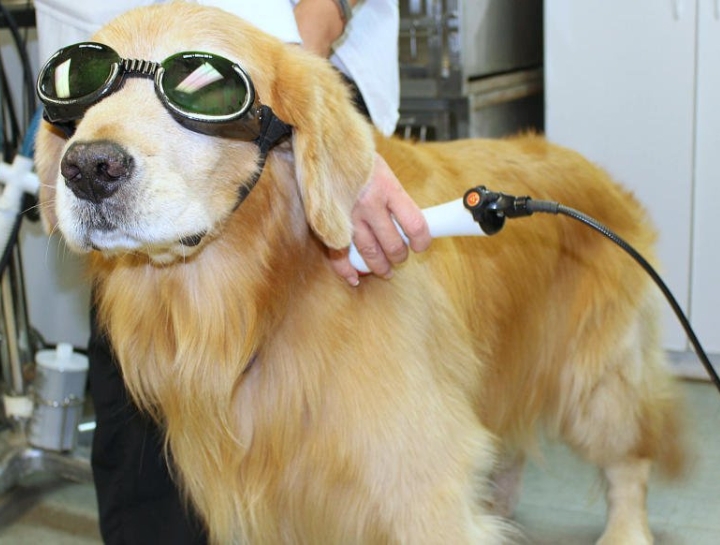
Protective Eyewear
Therapeutic laser light can injure the eyes. Appropriate protective eyewear is used for people in the treatment area, and the pet’s eyes are protected according to the treatment location and equipment protocol.
The laser is never intentionally directed into the eyes.
During Treatment
A handheld treatment head is moved over or positioned near the selected area according to the prescribed protocol.
Depending on the treatment settings, your pet may feel:
Nothing noticeable
Mild warmth
Gentle contact or movement from the treatment head
Most pets remain awake. Sedation is generally not required solely for routine laser therapy.
However, no procedure should be described as completely sensation-free for every patient. A pet with an extremely painful injury may react to handling even when the laser itself is well tolerated.
How Long Does a Session Last?
Treatment time depends on:
The number of areas treated
Size of the treatment area
Depth of the target tissue
Device settings
Acute or chronic nature of the condition
The pet’s ability to remain comfortable
Many individual treatments take only several minutes. A session is not automatically 30 minutes, and a longer session is not necessarily more effective.
After Treatment
Most pets can return home without a special recovery period from the laser treatment itself.
Continue all prescribed:
Medication
Activity restrictions
Bandage care
Incision care
Rehabilitation exercises
Laser therapy may reduce discomfort before the underlying tissue has fully healed. Do not allow unrestricted activity simply because your pet appears more comfortable.
How Often Will My Pet Need Laser Therapy?
There is no universal treatment schedule.
Frequency depends on:
The diagnosis
Severity and duration of symptoms
Acute versus chronic injury
Other treatments being used
How long any improvement lasts
The pet’s comfort during visits
The veterinarian’s treatment goals
An acute injury or postoperative plan may involve a shorter series of more closely spaced treatments.
A chronic arthritis patient may begin with a trial series followed by less frequent maintenance treatment when a clear benefit is sustained.
Some pets do not need maintenance therapy. Some show no measurable improvement and should not continue indefinitely.
How Will We Know Whether Treatment Is Helping?
Response should be evaluated through observable function and comfort—not simply because the pet appeared relaxed during treatment.
Before beginning, record or video your pet:
Standing from rest
Walking
Climbing stairs
Entering a vehicle
Jumping
Using the litter box
Settling into bed
Participating in play or walks
Possible signs of benefit include:
Easier rising
Less stiffness
Improved willingness to walk
Better sleep
Reduced sensitivity to touch
More normal grooming
Improved litter-box use
More comfortable rehabilitation exercises
We reassess whether the treatment is producing enough improvement to justify continued visits and expense.
Is Veterinary Laser Therapy Safe?
Therapeutic laser treatment is generally considered low risk when the patient has been properly evaluated, appropriate settings are used and eye-safety precautions are followed.
Potential concerns include:
Eye injury from direct or reflected laser exposure
Excessive heating when equipment is used incorrectly
Temporary sensitivity or discomfort
Stress from restraint or handling
Treating the wrong area because the underlying diagnosis was missed
Delayed medical or surgical care when laser is used as a substitute for necessary treatment
Laser therapy is not completely risk-free and should not be marketed as having no possible adverse effects.
When Treatment May Be Modified or Avoided
The veterinarian may modify, postpone or avoid treatment when:
The diagnosis is uncertain
A tumor is known or suspected in the treatment field
There is active bleeding
The skin cannot be safely treated
The patient has a condition requiring urgent stabilization
The pet cannot be handled safely
Treatment would interfere with another medical or surgical plan
Pregnancy, reproductive tissue, growth plates, implanted devices and other medical considerations should be discussed with the veterinarian before treatment.
Can Dogs, Cats and Exotic Pets Receive Laser Therapy?
Dogs commonly receive laser therapy for arthritis, orthopedic conditions, muscle soreness and postoperative recovery.
Cats may also be candidates, particularly when arthritis or reduced mobility is present. Treatment must be adapted to feline handling needs and tolerance.
Selected exotic pets may receive therapeutic laser treatment when:
The species and anatomy are appropriate
The condition has been diagnosed
The patient can be positioned safely
Eye protection and dosing can be managed appropriately
The expected benefit justifies the handling involved
Frequently Asked Questions About Veterinary Laser Therapy
Is laser therapy the same as cold-laser therapy?
“Cold laser” is a commonly used term for photobiomodulation. Some therapeutic devices can create mild warmth, so veterinary laser therapy or photobiomodulation is often more precise terminology.
Does laser therapy hurt?
Most pets tolerate treatment well. Some feel nothing, while others may feel gentle warmth or contact from the treatment head. Handling a painful area can still cause discomfort.
Will my pet need sedation?
Usually not. Most routine treatments are performed while the pet is awake. A patient that is extremely frightened, painful or unsafe to handle may need a modified plan.
How long does treatment take?
Many treatments take several minutes, but the time varies according to the number and size of areas being treated and the prescribed dose. Treatment is not automatically 30 minutes.
How many sessions will my pet need?
The number depends on the diagnosis and response. Some acute conditions use a short treatment series, while chronic conditions may begin with a trial followed by maintenance only when benefit is sustained.
How quickly will I see improvement?
Some owners notice a change after an early treatment, while others observe gradual improvement after several sessions. Some patients do not show a meaningful response.
Can laser therapy cure arthritis?
No. It cannot restore lost cartilage or reverse arthritis. It may help selected patients manage discomfort as part of a broader arthritis plan.
Can it repair a torn ligament?
It cannot mechanically repair or stabilize a significantly torn ligament. It may be used for surrounding discomfort or rehabilitation, but an unstable joint may still need surgery.
Can laser therapy replace pain medication?
Not automatically. Many patients benefit most from a combination of medication, weight management, controlled exercise and supportive therapies. Do not stop medication without veterinary guidance.
Can it be used after surgery?
Yes, in selected cases and at an appropriate stage of recovery. It does not replace pain medication, incision care, activity restriction or postoperative examinations.
Can laser therapy be used over cancer?
A known or suspected tumor requires veterinary evaluation before treatment. Laser should not be applied over a mass without the veterinarian considering the diagnosis, treatment goal and available evidence.
Does laser therapy have side effects?
It is generally low risk when performed appropriately, but no treatment is completely free of risk. Eye injury, excess heating, handling stress and delayed diagnosis are potential concerns.
Will my pet need recovery time afterward?
There is generally no recovery period from the laser session itself. Existing restrictions related to surgery, injury or disease still apply.
Can cats receive laser therapy?
Yes. Cats with selected painful or inflammatory conditions may be candidates when they tolerate treatment safely.
Can exotic pets receive laser therapy?
Selected exotic patients may be treated, depending on species, anatomy, diagnosis, temperament and the ability to deliver a safe protocol.
How much does veterinary laser therapy cost?
Cost depends on the consultation, condition, number of areas treated and recommended treatment schedule. Our team can provide current pricing after reviewing your pet’s needs.
REVIEW VETERINARY PAYMENT OPTIONS
Schedule Veterinary Laser Therapy in Laguna Beach
Therapeutic laser treatment is most useful when it is connected to an accurate diagnosis, realistic goals and a complete pain or rehabilitation plan.
Aliso Beach Animal Clinic provides K-Laser photobiomodulation for dogs, cats and selected exotic pets experiencing arthritis, chronic pain, orthopedic injuries, postoperative discomfort and reduced mobility.
CALL (949) 499-4190REQUEST A LASER-THERAPY CONSULTATIONAliso Beach Animal Clinic
30816 Coast Highway
Laguna Beach, CA 92651
Directly across from the Montage Laguna Beach
Monday–Friday: 7:30 a.m.–4:30 p.m.
Saturday: 8:00 a.m.–12:00 p.m.
Sunday: Closed
Medical review: Reviewed and certified for medical accuracy by Bryan Hayter, DVM, Owner and Medical Director. Last reviewed July 2026.