



Does Cold Laser Therapy Help Dogs With Arthritis? What Pet Owners Should Know
Your older dog hesitates before getting up. A familiar neighborhood walk becomes shorter. Or your cat quietly stops jumping onto the windowsill. Could cold laser therapy help—and how would you know if it is working?
At Aliso Beach Animal Clinic in South Laguna , K-Laser therapy is one of several supportive options we may consider for pets with arthritis, stiffness, and selected recovery needs. The important first step is understanding why the pet is painful. Then we can choose treatment based on diagnosis, comfort, medical history, and meaningful goals.
What Is Cold Laser Therapy for Dogs and Cats?
Cold laser therapy is a commonly used name for photobiomodulation therapy (PBM) . It applies specific wavelengths of red or near-infrared light to targeted tissues with the aim of influencing biological processes involved in inflammation, pain signaling, and tissue recovery.
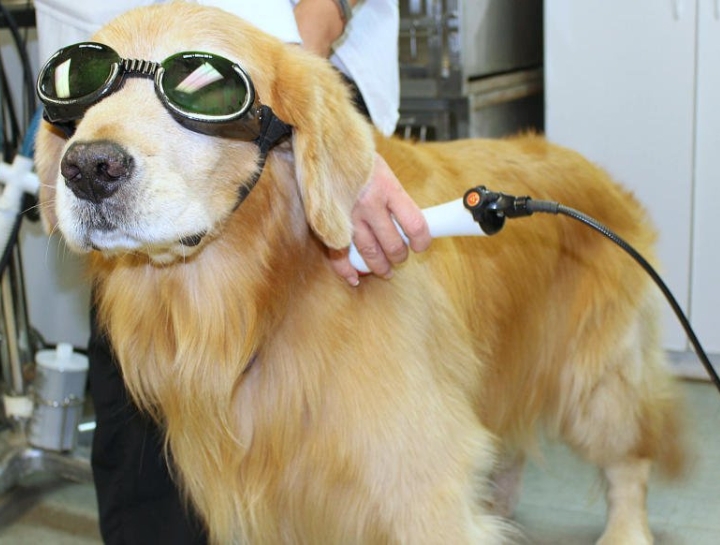
At our clinic, we use veterinary K-Laser equipment. Treatment is delivered externally with a handheld applicator; it does not cut tissue or require an incision. Unlike a surgical laser, the purpose is supportive treatment rather than removing tissue.
Despite the name “cold laser,” some higher-powered therapeutic devices may produce mild warmth. Most routine sessions are performed while the pet is awake.
Photobiomodulation is one part of a broader care plan. Read about our equipment, clinical applications, and consultation process on the veterinary laser therapy service page .
Does Veterinary Laser Therapy Actually Work? What the Evidence Says
The most useful answer is neither “it works for everything” nor “there is no reason to try it.” Research into photobiomodulation in companion animals is developing, and studies use different devices, doses, treatment schedules, and outcome measures.
A 2022 randomized controlled study involving 20 dogs with hip osteoarthritis reported improvements in several pain and functional measurements in laser-treated dogs compared with the study’s medication-based comparison group during portions of follow-up.
That is encouraging, but a small study cannot establish that every laser protocol or every painful condition will respond. Larger studies and more standardized treatment protocols are still needed.
The 2022 American Animal Hospital Association pain-management guidelines discuss physical modalities, including laser treatment, as possible components of multimodal care while recognizing evidence limitations.
What this means for your pet: We should consider laser treatment as a monitored trial with clear goals, not a guarantee of healing or a substitute for established pain control. If a pet is not benefiting, the plan needs reassessment.
Which Pets Might Be Reasonable Candidates?
Our goal is not to recommend laser therapy simply because a pet is old or has a limp. We first determine whether a specific diagnosis and treatment goal make it a reasonable adjunct.
A dog with an established arthritis diagnosis may be considered for laser treatment alongside weight management, medication, suitable exercise, and environmental changes.
Cats may show pain by jumping less, grooming poorly, hiding, or struggling with the litter box. Some may be candidates for a gentle, individualized protocol.
After certain surgeries or soft-tissue injuries, a veterinarian may consider laser treatment as an adjunct to appropriate pain control and rehabilitation.
Why Earlier Arthritis Evaluation Matters
One concern we have seen in practice is that some families ask about laser therapy only after arthritis has become advanced. It is understandable to hope a noninvasive treatment will help a pet who is struggling.
But waiting until a dog can barely rise or a cat cannot comfortably reach a favorite resting place can make care more difficult.
Signs worth discussing early include stiffness after sleep, shorter walks, difficulty with stairs, hesitation before jumping, reduced grooming, changes in posture, and a reluctance to play.
An examination can help distinguish arthritis from spinal pain, muscle injuries, neurologic disease, or other causes.
For a comprehensive plan involving multiple treatment options, see our integrative pain and mobility program for dogs and cats or senior veterinary care .
What Happens During a Cold Laser Therapy Appointment?
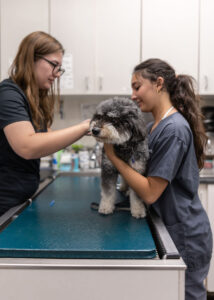
Most routine laser treatments are performed with the pet awake. The exact approach depends on the diagnosis, the area involved, and whether the pet can be handled comfortably.
Our team follows appropriate laser-eye safety precautions. The protective goggles shown in the photographs help illustrate that safety requirement.
- Evaluation first. We confirm the working diagnosis, examine the painful area, review current medication, and decide whether imaging or another test is needed before treatment.
- A tailored treatment plan. The team determines which tissues should be treated and which equipment settings are appropriate for the patient and indication.
- A brief, supervised session. The handheld treatment head is positioned or moved over selected tissues. Some pets feel gentle contact or warmth. Painful pets may still dislike handling.
- Home instructions and reassessment. Existing pain medication, incision care, and activity restrictions continue unless your veterinarian changes them.
How Long Does a Session Take, and How Many Visits Are Needed?
Individual laser applications often take several minutes, but treatment length varies with the area, dose, and number of sites.
There is no evidence-based, one-size-fits-all schedule of “once or twice a month” for every pet. An initial series may be more closely spaced, with maintenance considered only if meaningful benefit occurs and lasts.
Ask the team about the expected number of visits, estimated charges, other components of the treatment plan, and when the first progress review will occur.
Visit our main veterinary laser therapy page for the full service overview and appointment details.
How Can You Tell if Cold Laser Therapy Is Helping?
“My dog seemed happier after a visit” is encouraging, but it is not enough by itself.
In chronic pain, the most useful measures are everyday activities that matter to that pet. Choose the same two or three activities to observe before treatment and during veterinary follow-up.
| Pet | Activity to Track | What to Record |
|---|---|---|
| Dog with arthritis | Standing after a nap | Time, hesitation, or assistance needed |
| Dog with knee or hip discomfort | Comfort on a familiar short walk | Limping, stopping, or willingness to walk |
| Senior cat | Reaching a favorite perch | Normal jump, alternate route, or avoidance |
| Cat with chronic stiffness | Grooming and litter box use | Changes from the pet’s usual routine |
A Simple At-Home Mobility Check
Once or twice weekly, record a brief phone video of the same activity on a similar surface, at a similar time of day.
Note medications and unusual exertion, since those can affect comfort independently of laser treatment. Show the videos to the veterinary team during follow-up.
Three questions to ask at reassessment:
- Is the pet demonstrably more comfortable?
- Is the improvement lasting?
- Is the benefit sufficient to justify continued visits, costs, and handling?
If not, we should adjust the plan rather than continuing indefinitely.
Our approach is consistent with AAHA’s emphasis on regular pain assessment, home observations, and treatment reassessment .
Is Cold Laser Therapy Safe? Important Limitations
Veterinary laser treatment is generally well tolerated when performed with an appropriate diagnosis, trained personnel, correct settings, and eye protection.
But noninvasive does not mean entirely risk-free.
- Eyes must be protected. Direct or reflected therapeutic laser exposure can injure eyes.
- Settings matter. Excessive heating or skin injury is possible with improper use of higher-powered equipment.
- Unknown masses require assessment. We do not assume that laser should be used over a known or suspected tumor.
- Handling matters. A frightened cat, very painful dog, or medically unstable pet may require a different plan.
- Missing a diagnosis is a serious risk. Repeated laser sessions cannot correct a fracture, unstable joint, infection, or spinal compression.
AAHA’s veterinary laser therapy safety guide discusses eye protection and the risk of thermal injury with improperly used higher-powered units.
Important: Laser therapy does not reverse osteoarthritis, regenerate lost cartilage, stabilize a torn cranial cruciate ligament, remove a foxtail, drain an abscess, or replace veterinary pain medicine.
Do not stop or reduce prescribed medication because of a good day after treatment without speaking with the veterinarian.
When Is Limping or Pain Too Urgent to Wait for Laser Therapy?
If a dog suddenly limps after running, or a cat stops bearing weight on a leg, the first question is what caused the change—not when to book a laser session.
Around South Laguna and Monarch Beach, active pets may experience paw wounds, foxtails, orthopedic injuries, and other painful problems during everyday walks.
Call for same-day veterinary advice for a new limp, painful swelling, inability to bear weight, a painful paw, or marked discomfort.
Seek emergency care immediately for major trauma, paralysis, dragging limbs, collapse, or severe or rapidly worsening pain, particularly after hours.
Our related articles explain when a limping dog needs a veterinarian and how our same-day urgent veterinary care in Laguna Beach works.
Laser therapy may be considered later if it fits the final diagnosis.
Comfort and Mobility Matter in Coastal Orange County
For many families around Laguna Beach, a pet’s quality of life is measured in ordinary routines: walking a gentle neighborhood route, joining a family outing, climbing a few steps at home, or settling comfortably after time outdoors.
For senior dogs from Dana Point or Monarch Beach, and cats living in South Laguna or Emerald Bay, the goal is the same: preserve meaningful daily activity without pushing beyond what the pet can safely do.
That goal may call for weight management, non-slip rugs, controlled walks, physical rehabilitation, medication, acupuncture, laser treatment, or a combination.
Our veterinary acupuncture and broader integrative-care services are available when medically appropriate. Neither replaces conventional diagnosis and treatment.
Common Questions About Cold Laser Therapy for Pets
Does cold laser therapy hurt dogs?
Most dogs tolerate treatment well. Some feel gentle warmth or contact. Handling an acutely painful area can still be uncomfortable, and treatment should be modified if a pet is distressed.
Can laser therapy help an older dog walk better?
Some dogs with diagnosed osteoarthritis may show improved comfort or mobility. Response is variable and should be measured against activities recorded before treatment. Laser therapy cannot reverse advanced joint degeneration.
How soon after laser therapy should my dog feel better?
Some owners notice changes early, others only after several sessions, and some pets do not meaningfully improve. The veterinarian should establish when response will be reassessed before an extended series is started.
Can cats receive cold laser therapy for arthritis?
Selected cats may be candidates after diagnosis. Their treatment, temperature monitoring, restraint, and eye protection must be adapted to feline needs. Laser therapy does not replace appropriate feline pain management.
Can laser therapy replace anti-inflammatory medication?
Not necessarily. It is generally considered a supportive modality within a broader plan. Medication changes should be guided by sustained improvement, underlying disease, and the veterinarian’s recommendations.
Will laser therapy repair a torn ACL or cruciate ligament?
No. It does not restore mechanical stability to a ruptured ligament. A dog with suspected cruciate injury needs an orthopedic examination and an appropriate treatment plan; some require surgery.
How much does cold laser therapy cost in Laguna Beach?
Cost depends on the initial evaluation, number of treatment areas, and agreed treatment schedule. Contact our team for current pricing and ask when benefit will be evaluated before purchasing a series of visits.
Is K-Laser the same as cold laser therapy?
K-Laser is a therapeutic laser equipment brand. “Cold laser” is an informal term often used for photobiomodulation, although some higher-powered therapeutic lasers generate mild warmth. It is not the same as surgical laser cutting.
Veterinary References and Further Reading
- AAHA: 2022 Pain Management Guidelines for Dogs and Cats — multimodal pain management and reassessment.
- AAHA: Acute vs. Chronic Pain — role and evidence limitations of physical modalities.
- AAHA: Veterinary Laser Therapy, Uses, Benefits & Safety — clinical safety precautions.
- Alves et al., American Journal of Veterinary Research (2022) — randomized trial of photobiomodulation in 20 dogs with hip osteoarthritis.
Could Laser Therapy Be Part of Your Pet’s Care Plan?
If your dog has diagnosed arthritis, your senior cat is moving less comfortably, or your pet needs a supervised recovery plan, contact Aliso Beach Animal Clinic.
We’ll help determine whether K-Laser therapy, another treatment, or further diagnostic testing makes the most sense.
Located on Coast Highway in South Laguna, across from Montage Laguna Beach, we welcome pets from Laguna Beach and nearby coastal communities.
Aliso Beach Animal Clinic
• 30816 Coast Highway,
Laguna Beach, CA 92651
Mon–Fri 7:30 a.m.–4:30 p.m.
• Sat 8 a.m.–noon
• Sun closed.
For sudden illness or injury,
call before arriving.
Life-threatening emergencies may
require a 24-hour emergency hospital.