

Laguna Beach Wildlife Safety & Pet Protection
Mountain Lion Safety in Laguna Beach: Protecting Pets, Families and Neighborhoods
Practical, evidence-based guidance for living safely alongside mountain lions in coastal Orange County.
Mountain lions are native to Southern California and play an important role in our natural ecosystems. They generally avoid people, but may travel through neighborhoods bordering hillsides, canyons and open space.
If a mountain lion is repeatedly seen near homes, the appropriate response is neither panic nor indifference. Families, neighborhood associations and wildlife professionals can work together to reduce risks while respecting the animal.
This guide from Aliso Beach Animal Clinic explains what to do during an encounter, how to protect pets and children, when to report sightings, and how neighborhoods can implement a coordinated, humane safety plan.

Keep pets supervised, prevent easy access to outdoor animals, avoid feeding wildlife, stay aware near natural habitat, and report credible mountain lion sightings to the California Department of Fish and Wildlife.
A mountain lion passing through a neighborhood is not automatically a public-safety threat. Repeated appearances, however, are a reason to document activity, improve prevention and seek professional wildlife guidance.
Report a Mountain Lion Sighting to CDFWMountain Lions Belong in Southern California
Mountain lions, also known as cougars or pumas, are native predators that help regulate prey populations and contribute to ecosystem balance.
Coastal Orange County contains a complex landscape of residential communities, open-space preserves, hillsides, canyons and wildlife corridors.
Where homes border natural habitat, animals sometimes travel through areas shared with people. An occasional sighting does not necessarily mean that a mountain lion is behaving abnormally.
Mountain lions primarily hunt deer, although they may opportunistically take other animals, including pets and small livestock.
They may be active at any time, but activity commonly increases around dawn, dusk and nighttime. Seeing one during daylight does not, by itself, prove that it is sick or aggressive.
Respecting Wildlife and Protecting People
Some residents understandably emphasize that mountain lions inhabited these landscapes long before modern neighborhoods developed.
That perspective is compatible with thoughtful prevention. Respecting native wildlife means preserving natural habitat, avoiding unnecessary conflict and recognizing that human activities can unintentionally attract animals toward homes.
Protecting children, companion animals and residents does not require treating mountain lions as pests. In fact, reducing avoidable encounters also helps protect mountain lions from conflict with humans.
California Department of Fish and Wildlife guidance emphasizes prevention, public education, appropriate reporting and professional management.
California Department of Fish and Wildlife: Mountain Lions in California
What to Do If You Encounter a Mountain Lion
The National Park Service and California wildlife authorities provide specific precautions for close encounters.
Running may trigger pursuit. Your goal is to remain upright, appear larger, maintain awareness of the lion and avoid provoking a confrontation.
1. Stop and Face the Animal
Do not approach the mountain lion or move closer for a photograph.
If the animal is at a distance and moving away, allow it to leave undisturbed.
2. Do Not Run or Turn Away
Remain standing. Keep the lion in view and avoid sudden fleeing movements.
3. Make Yourself Look Larger
Raise your arms, open a jacket if appropriate, and speak firmly in a loud voice.
If small children are present, keep them close. Pick them up if possible without crouching, bending low or turning your back.
4. Give the Lion an Escape Route
Do not corner the animal, block its path or approach a cub.
When safe, slowly back away while remaining oriented toward the animal.
5. Respond Firmly If It Approaches
If a mountain lion behaves aggressively or continues approaching, appear larger, make loud noise and use appropriate objects as directed by established wildlife-safety guidance.
Rocks, sticks or other available objects may be used to discourage an approaching lion, but do not bend over or turn your back to retrieve them. Do not pursue a departing animal.
6. Fight Back If Attacked
The National Park Service advises fighting back aggressively during an attack. Try to remain standing, protect your head and neck, and use available objects to defend yourself.
Once safe, call 911 and obtain immediate medical evaluation for injuries.
How to Protect Dogs, Cats and Other Pets
Mountain lions generally avoid humans, but pets can be vulnerable because they may be smaller, easier to approach or left unattended outdoors.
The most dependable protection is to prevent direct access to vulnerable animals.
Dogs
- Keep dogs on a short, secure leash while walking near open space or where recent sightings have occurred.
- Avoid allowing dogs to roam unattended, even in fenced yards.
- Supervise nighttime and early-morning bathroom trips.
- Keep dogs indoors overnight whenever possible.
- Do not allow dogs to chase wildlife.
Cats
- Keep cats indoors, especially in neighborhoods bordering wildlife habitat.
- Consider a secure, roofed outdoor cat enclosure or catio.
- Do not leave pet food outdoors.
- Avoid unsupervised outdoor access, including at dawn and dusk.
- Maintain up-to-date microchip registration.
Rabbits and Small Pets
Rabbits, guinea pigs and other small animals should not be left in ordinary open-top outdoor pens where predators may gain access.
Secure indoor housing or properly constructed, covered enclosures provide better protection.
Outdoor Poultry and Livestock
Poultry, goats and other outdoor animals should be protected by well-designed, predator-resistant enclosures.
Consult wildlife professionals regarding appropriate fencing, roofs, gates and structural improvements for local conditions.
Is a Six-Foot Fence Enough?
No ordinary residential fence should be treated as a guarantee against mountain lions. These animals are capable climbers and jumpers.
For vulnerable pets, a strong enclosure with a secure roof, appropriately constructed sides and reliable access points is more protective than relying on fence height alone.
Do Lights, Bells or Protective Collars Work?
Outdoor lighting, human presence and certain noise-producing devices can contribute to a prevention strategy.
However, no light, wearable collar, bell, sound device or repellent should be considered reliable protection for an unattended pet.
Physical protection and direct supervision remain essential.
Source: CDFW guidance on protecting pets from mountain lions .
Make Your Property Less Attractive to Wildlife
Effective prevention focuses on the conditions that may bring predators and prey close to homes. This is particularly important when neighboring properties share open-space boundaries.
Avoid Attracting Deer
Deer are an important prey species for mountain lions. Do not intentionally feed deer or establish feeding stations that encourage deer to remain near patios, homes or playgrounds.
Consider deer-resistant landscaping and appropriate garden protection while respecting local conservation and property requirements.
Remove Easy Food Sources
- Feed companion animals indoors.
- Remove outdoor pet-food bowls after feeding.
- Keep garbage and food waste secured.
- Do not deliberately feed wildlife.
- Remove fallen fruit and other food attractants where practical.
- Manage birdseed spills that attract rodents or other prey.
Improve Visibility Around Homes
Dense vegetation immediately beside entrances, patios, pet enclosures and narrow walking paths can reduce visibility.
Consider selective trimming near homes to improve sightlines, while preserving native habitat and following local rules for protected vegetation, open space and fire safety.
Motion-activated lighting may help residents see animals approaching. Use targeted, shielded lighting rather than unnecessary illumination of entire wildlife corridors.
Do Not Investigate Animal Carcasses
Mountain lions may return to a prey carcass. If you discover a large animal carcass or a partially concealed kill site, keep children and pets away.
Do not disturb the site or attempt to remove suspected mountain lion prey without receiving guidance from the appropriate authorities.
Avoid Poison-Based Wildlife Control
Improperly used rodenticides and toxic baits can harm pets and nontarget wildlife. Mountain lions may also experience secondary exposure through contaminated prey.
Favor exclusion, sanitation and other appropriate integrated pest-management methods.
What If a Mountain Lion Keeps Returning to the Same Neighborhood?
This is one of the most important distinctions in neighborhood wildlife safety.
A single mountain lion observation is not necessarily an emergency. Nor does the sighting of a lion on multiple days automatically establish aggression.
However, repeated verified sightings near homes, playgrounds, pet enclosures or well-used pedestrian areas justify a coordinated response.
The appropriate goal is to document the pattern, reduce preventable conflicts and obtain professional assessment when warranted.
Step 1: Establish What Is Actually Happening
Neighborhood reports are most useful when supported by specific observations rather than secondhand descriptions.
Document:
- Exact date and approximate time
- General location or street
- Whether the lion was seen directly or on camera
- Direction of travel
- Approximate distance from people or pets
- Observed behavior
- Whether the animal appeared injured or distressed
- Whether pets or livestock were harmed
- Any relevant photograph or video already obtained safely
Avoid assuming every sighting involves the same mountain lion without supporting evidence.
Step 2: Report the Sightings to CDFW
California Department of Fish and Wildlife maintains a statewide Wildlife Incident Reporting system.
Reports provide wildlife professionals with information about animal behavior, location and potential conflicts.
The reporting system assigns incidents to authorized investigators based on location.
Submit a Wildlife Incident ReportStep 3: Request a Professional Assessment
If verified sightings continue near residential activity, an HOA or neighborhood representative can contact CDFW’s South Coast Region and ask for advice from personnel experienced in human-wildlife conflicts.
Useful questions include:
- Does the observed behavior indicate a routine wildlife passage or a possible safety concern?
- Are there identifiable attractants or prey concentrations near the reported locations?
- What additional incident documentation would help professional assessment?
- Are additional neighborhood education, deterrence or property-management measures appropriate?
- Should the city, park manager or animal-services agency coordinate any temporary precautions?
Asking for an assessment does not mean requesting that an animal be captured or killed. It allows trained professionals to determine whether action is warranted.
Step 4: Check for Shared Neighborhood Attractants
Review landscaping and animal-management practices around the areas involved.
A coordinated evaluation is more useful than focusing only on the last property where the animal was seen.
Possible areas for review include unsecured pet enclosures, deer feeding, food waste, access to small outdoor animals and dense cover immediately adjacent to walking areas.
Step 5: Adjust Outdoor Routines Temporarily
While repeat activity is being assessed, practical precautions can include:
- Bringing cats and small pets indoors.
- Supervising all dogs during yard access.
- Avoiding solitary walks near brush-heavy areas at dawn, dusk and nighttime.
- Keeping children close to supervising adults near open-space boundaries.
- Using well-lit, visible routes where practical.
- Giving neighbors factual updates without encouraging attempts to locate the animal.
Step 6: Let Authorities Evaluate Escalating Risk
Professional assessment becomes especially important when a lion approaches people, follows them, behaves aggressively, injures an animal or remains in a location where immediate human safety is at risk.
Do not attempt to capture, corner, chase, tranquilize or relocate a mountain lion yourself.
For immediate danger to people, call 911.
A Practical Mountain Lion Safety Plan for HOAs and Neighborhood Associations
Neighborhood associations can support coexistence by organizing consistent information, reducing preventable attractions and helping residents communicate with wildlife authorities.
The following is a suggested community response framework, not an official CDFW requirement.
Priority 1: Appoint a Wildlife Safety Contact
Assign one HOA board member, community manager or designated volunteer to consolidate reports, distribute verified notices and communicate with wildlife agencies.
This person should not attempt to track, follow or confront mountain lions.
Priority 2: Create a Consistent Reporting Process
Encourage direct witnesses to submit reports to CDFW. The association can maintain a supplementary log of dates, locations and observations.
Keep personal information appropriately private. Do not publish precise real-time animal locations in ways that encourage people to pursue the lion.
Priority 3: Conduct a Shared-Property Safety Walkthrough
Ask maintenance and landscaping personnel to evaluate visibility near playground entrances, parking areas, walking paths, pet facilities and building entrances.
Address practical concerns without removing protected native vegetation or disrupting designated wildlife corridors.
Priority 4: Adopt Responsible Pet Policies
Encourage secure leashing, supervised pet outings, indoor cat housing and safe overnight enclosures where necessary.
Remind residents that an ordinary backyard fence does not guarantee protection from large predators.
Priority 5: Eliminate Feeding Practices
Ask residents not to feed deer or predators. Encourage secure waste containers, indoor pet feeding and appropriate management of food attractants.
Priority 6: Provide Calm, Factual Notices
Post informational notices when there are credible reports, particularly near community entrances or commonly used recreation areas.
A useful notice includes practical precautions and an official reporting resource rather than dramatic descriptions or unverified claims.
Priority 7: Invite Wildlife Professionals to Educate Residents
An HOA can request educational materials or inquire about outreach from CDFW, relevant park agencies or qualified wildlife organizations.
A presentation on native wildlife, encounter safety and pet protection can help residents make informed decisions.
Priority 8: Coordinate With Authorities on Shared Spaces
If repeat sightings occur near playgrounds, trail entrances or other high-use areas, notify the responsible city, park manager or property authority.
Officials can determine whether additional notices, monitoring or temporary access precautions are warranted.
Suggested Neighborhood Communication
Mountain Lion Awareness & Community Safety
Mountain lions are native to our region and are important members of the local ecosystem. Recent reported wildlife activity reminds us to take simple precautions that protect residents, pets and wildlife.
Please supervise pets outdoors, keep dogs securely leashed, avoid feeding deer or other wildlife, and remain attentive near natural areas, particularly around dawn and dusk.
Residents who observe a mountain lion are encouraged to report the sighting through the California Department of Fish and Wildlife Wildlife Incident Reporting system.
Our goal is to support a safe neighborhood while respecting the native animals that share this landscape.
This approach communicates concern without implying that mountain lions are unwelcome or that removal is the automatic solution.
When Is a Sighting Routine, and When Does It Require Urgent Action?
| Situation | Recommended Response |
|---|---|
| Mountain lion crosses a distant hillside or open-space trail and moves away. | Observe from a safe distance. Do not pursue. Report the sighting using the appropriate wildlife system. |
| Credible sightings repeatedly occur near the same neighborhood. | Submit incident reports, share documented information with CDFW, reduce attractants and coordinate neighborhood precautions. |
| Mountain lion enters a residential yard. | Bring people and pets indoors if safe, do not confront or corner the animal, and allow an escape route. Report the incident and seek guidance if needed. |
| Mountain lion is repeatedly seen near a playground, school entrance or heavily used pedestrian area. | Promptly notify the responsible authorities, share verified observations and request professional risk assessment. Follow any official access instructions. |
| A mountain lion approaches, follows or threatens a person. | Follow encounter-safety guidance. Seek immediate help from law enforcement. Call 911 when danger is imminent. |
| Person is attacked or seriously injured. | Call 911 immediately and obtain emergency medical treatment. |
| Pet is attacked or suspected to have been bitten by a mountain lion. | Do not approach while the predator remains present. Once safe, seek immediate veterinary guidance and report the incident to wildlife authorities. |
This table is an educational triage aid. Wildlife authorities determine case-specific public-safety responses.
How to Report Mountain Lion Sightings in Orange County
Reporting helps wildlife professionals identify patterns, assess conflicts and advise communities.
California Department of Fish and Wildlife
Submit nonemergency sightings and wildlife incidents using the official reporting system.
CDFW Wildlife Incident Reporting
CDFW South Coast Region
Serves Orange County and neighboring
Southern California counties.
Phone:
(858) 467-4201
Official CDFW South Coast Region information
Laguna Beach
The City of Laguna Beach has directed residents to report mountain lion sightings to the Laguna Beach Police Department.
Nonemergency telephone: (949) 497-0701
Dana Point and San Clemente
The San Clemente/Dana Point Animal Shelter maintains an official wildlife sighting report for mountain lions and other predators within its jurisdiction.
Dana Point / San Clemente Wildlife Sighting Report
Other South Orange County Communities
For areas such as San Juan Capistrano, Laguna Niguel, Aliso Viejo and neighboring communities, use CDFW’s statewide reporting system and contact the appropriate local authorities when public safety requires it.
Online wildlife reports are not an emergency response service. If a mountain lion presents an immediate threat to human safety, contact emergency services.
If Your Dog or Cat Is Injured by a Mountain Lion
A mountain lion attack can cause severe injury, including penetrating bite wounds, crushing trauma, internal injury and hemorrhage.
Small surface wounds may not reveal the full extent of damage beneath the skin.
Protecting yourself comes first. Do not approach or attempt to retrieve a pet while a mountain lion remains nearby and poses a danger.
Once you can safely reach your animal, seek veterinary assistance immediately. Do not assume that a pet is unharmed simply because it can still walk.
When Emergency Veterinary Care Is Needed
- Difficulty breathing or collapse
- Uncontrolled bleeding
- Deep wounds to the neck, chest or abdomen
- Severe pain or inability to stand
- Weakness, pale gums or suspected shock
- Major trauma or rapidly worsening symptoms
These signs warrant immediate evaluation at an appropriately equipped 24-hour veterinary emergency hospital.
Urgent Injury Assessment at Aliso Beach Animal Clinic
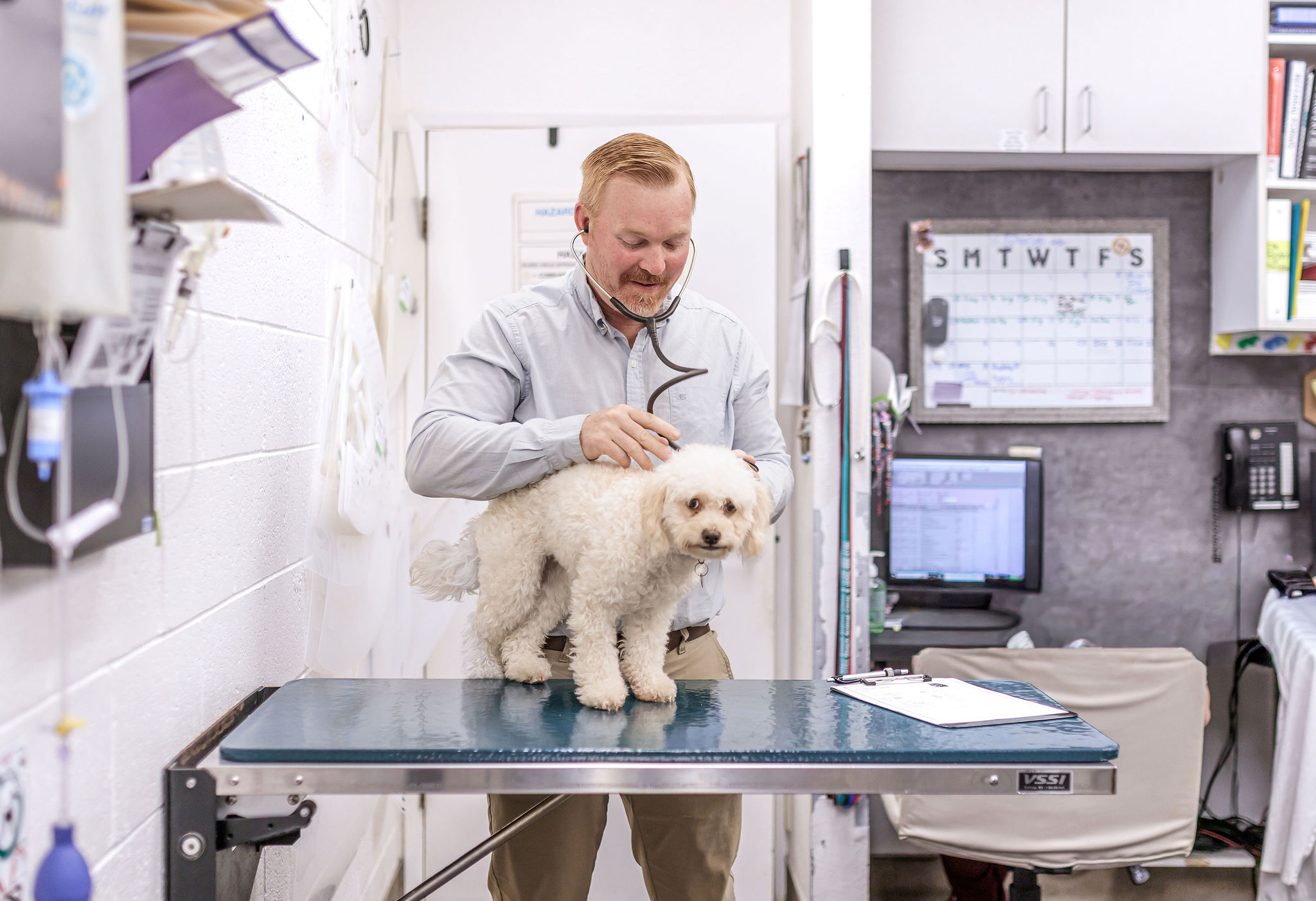
Aliso Beach Animal Clinic provides same-day urgent veterinary assessment for many stable dogs and cats during regular business hours when staffing and capacity permit.
Evaluation may include wound examination, pain management, diagnostic imaging, treatment of appropriate injuries and referral when advanced emergency care is needed.
Wildlife bite exposures should also be reported to the appropriate authorities so that rabies and other public-health considerations can be assessed.
ABAC is not a 24-hour emergency hospital.
Learn about same-day urgent veterinary care · Laguna Beach pet emergency guide
Call ABAC: (949) 499-4190Mountain Lion Safety for Children, Hikers and Dog Walkers
Children
- Keep children close to supervising adults when walking near open space.
- Do not allow young children to run ahead along secluded trails.
- Avoid unsupervised play near dense vegetation, especially after credible local sightings.
- Teach children not to approach or follow wildlife.
Hikers and Runners
- Travel with others when practical.
- Stay on designated trails.
- Remain alert and avoid distractions that obscure nearby activity.
- Avoid dawn, dusk and nighttime outings in areas with recent activity.
- Do not approach wildlife or animal carcasses.
- Follow posted park advisories.
Dog Walkers
- Keep dogs securely leashed.
- Choose visible walking routes.
- Be especially attentive around brush and canyon edges.
- Never let your dog investigate a suspected prey carcass.
- Leave the area calmly if wildlife activity makes the route unsafe.
OC Parks publishes mountain lion advisories reminding visitors that wilderness environments contain inherent risks and that group travel, alertness and responsible behavior are important.
Mountain Lion Safety: Frequently Asked Questions
Should a mountain lion be removed if it repeatedly enters a neighborhood?
Not automatically. Repeated sightings justify documenting activity, reporting observations, reviewing attractants and requesting professional guidance. Wildlife authorities assess the animal’s behavior and any public-safety risk before determining an appropriate response.
Does seeing a mountain lion during the day mean it is dangerous?
No. Mountain lions can be active during daylight. The time of a sighting alone does not establish aggression, illness or abnormal behavior. An animal approaching or threatening people requires a different response than one passing through and avoiding contact.
Can a mountain lion jump a backyard fence?
Yes. Mountain lions are capable jumpers and climbers. Ordinary residential fencing should not be considered complete protection for an unattended dog or outdoor cat. Covered enclosures and supervision are safer.
Should residents organize a group to chase a mountain lion away?
No. Neighbors should not organize pursuit, crowding, trapping or other improvised confrontations. If the animal presents a threat, contact authorities. For an immediate human-safety emergency, call 911.
What if mountain lion cubs are seen?
Do not approach, touch or attempt to rescue the cubs. A mother may be nearby or may have temporarily left them while hunting. Report concerns to CDFW for professional evaluation.
Will removing deer attractants help?
CDFW recommends deer-proofing properties and avoiding practices that attract deer close to homes. Deer are an important mountain lion food source, so reducing artificial prey concentrations can contribute to prevention.
What should an HOA do after repeated sightings?
Assign a community contact, encourage direct reports to CDFW, maintain a factual incident log, review shared-property conditions, distribute pet-safety information and request professional advice when appropriate. Do not attempt amateur wildlife removal.
Are mountain lions common in Orange County?
Mountain lions inhabit suitable Southern California habitat, including natural areas associated with Orange County. They are generally elusive, and encountering one remains uncommon compared with more frequently observed neighborhood wildlife.
What should I do if my pet is bitten by a mountain lion?
First ensure human safety. Once safe, obtain immediate veterinary guidance. Penetrating injuries and internal trauma may be serious even when external wounds appear small. Report the wildlife incident to appropriate authorities.
How can neighborhoods protect people without harming mountain lions?
Consistent pet supervision, responsible feeding practices, secure animal enclosures, improved visibility, wildlife education and appropriate reporting can reduce preventable conflicts. These approaches support coexistence and respect native wildlife.
Mountain Lion Awareness Across Coastal Orange County
Mountain lion prevention is relevant to residents living near undeveloped hillsides, coastal canyons and open-space corridors.
This includes communities in and around Laguna Beach, South Laguna, Three Arch Bay, Emerald Bay, Dana Point, Monarch Beach, Laguna Niguel, San Juan Capistrano, Aliso Viejo and other parts of South Orange County.
These geographic references describe communities where wildlife-awareness guidance may be useful. They do not represent claims of verified recent mountain lion sightings in each location.
For related local wildlife guidance, read:
Authoritative Mountain Lion Safety References
This guide draws on published recommendations from state and federal wildlife authorities. Wildlife management decisions should be directed by the responsible agencies.
-
California Department of Fish and Wildlife —
Mountain Lions in California
Species biology, conservation, human interactions and state wildlife-management information.
-
California Department of Fish and Wildlife —
Human-Wildlife Conflicts: Mountain Lions
Prevention, conflict response, public-safety considerations and management guidance.
-
CDFW Wildlife Incident Reporting System
Official statewide wildlife sighting and incident reporting.
-
CDFW — Mountain Lion Sightings and Pet Safety
Practical recommendations for pets, outdoor enclosures, landscaping and wildlife deterrence.
-
National Park Service — Mountain Lion Safety
Official guidance for close encounters, children, outdoor recreation and attacks.
-
OC Parks — Mountain Lion Safety Advisement
Orange County wilderness safety and encounter precautions.
-
San Clemente / Dana Point Animal Services
Local wildlife sighting reporting and animal-services information.
Pet Injured During a Wildlife Encounter? Contact Aliso Beach Animal Clinic
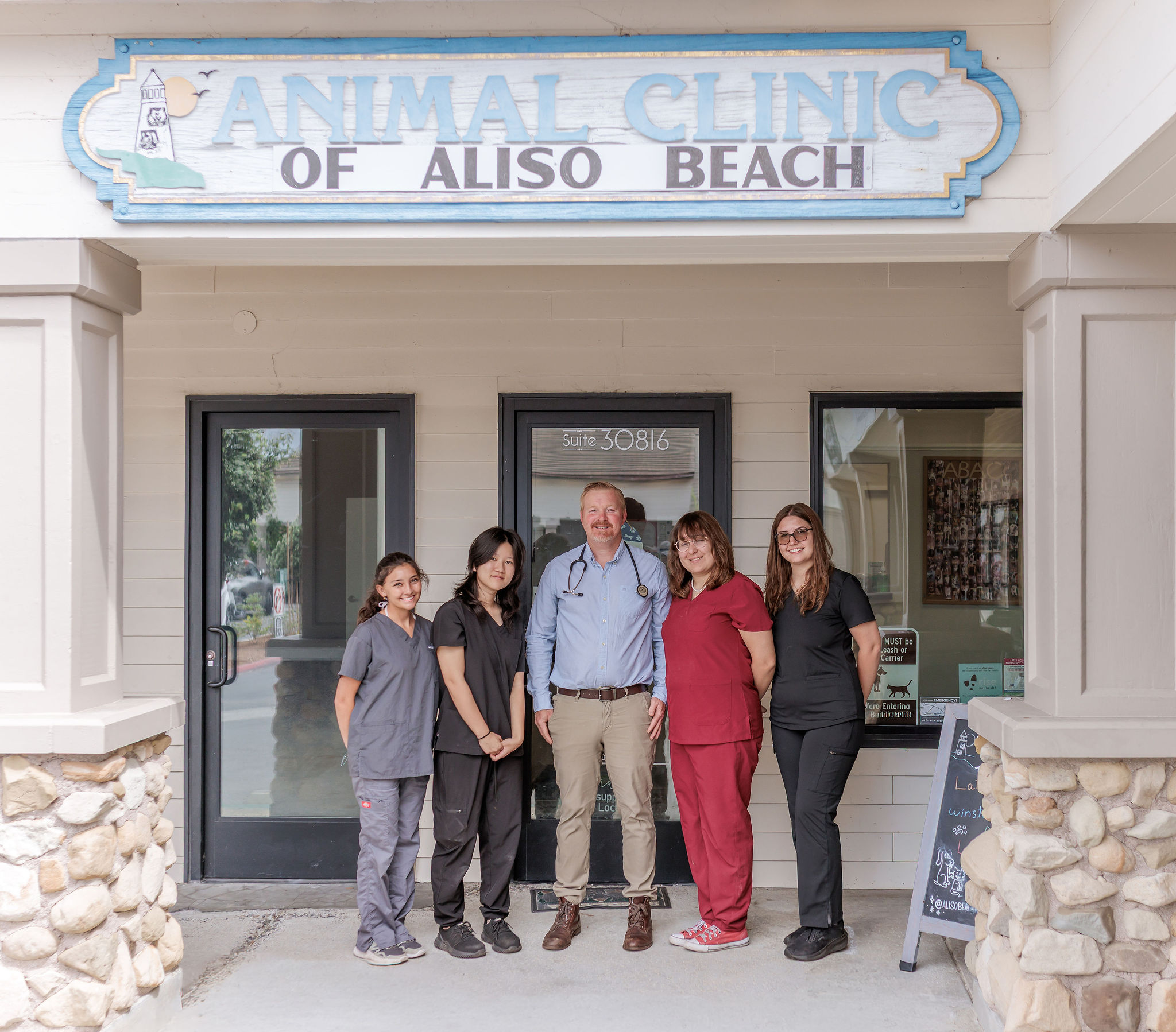
Aliso Beach Animal Clinic is an independently owned veterinary hospital providing individualized medical and urgent veterinary care to dogs, cats and other companion animals.
If your pet is injured during a wildlife encounter, call our team for guidance during regular hospital hours.
Aliso Beach Animal Clinic
30816 Coast Highway
Laguna Beach, CA 92651
Across from Montage Laguna Beach
Phone: (949) 499-4190
Urgent Veterinary Care Call Our Veterinary TeamABAC is not a 24-hour emergency hospital. Pets with severe trauma, collapse, uncontrolled bleeding or respiratory distress require immediate emergency veterinary evaluation.